

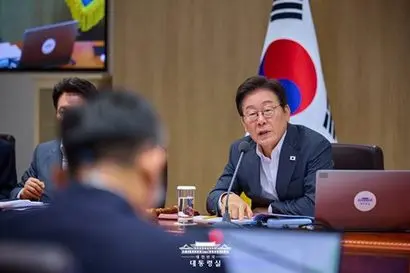
[비즈한국] As President Lee Jae-myung repeatedly criticizes industrial accidents, there is growing interest in the Serious Accidents Punishment Act, which was implemented in 2022. Minister of Justice Jung Sung-ho even pointed out during a recent cabinet meeting that the lack of sentencing guidelines for the Act has led to an excessive number of suspended sentences. However, it is known that the Supreme Court Sentencing Commission, which determines sentencing guidelines, discussed the creation of new guidelines for the Serious Accidents Punishment Act at its plenary session in late June but did not select it as a final priority for implementation.
"Too Few Precedents Yet": Excluded from Sentencing Targets
The Serious Accidents Punishment Act, implemented in 2022, mandates punishment of at least one year in prison or a fine of up to 1 billion won when a serious accident occurs due to a management executive's failure to fulfill safety obligations. It currently applies to workplaces with five or more employees.
However, within the legal community, the outlook has generally settled on a pattern where "a suspended sentence is the norm; if the scale of damage is large, a prison sentence of 1 to 3 years might be handed down in the first trial, but it is often commuted to a suspended sentence in the second." Since there are no specific sentencing guidelines, labor circles have frequently criticized the judiciary, claiming that "courts are siding with corporations and issuing slaps on the wrist."
This is the context behind the focus on the Supreme Court Sentencing Commission. Sentencing guidelines are a set of standards established by the Supreme Court that define the range of sentencing for each type of crime, which are then reflected in the rulings made by judges. While not strictly mandatory, if a judge makes a decision that deviates from these guidelines, they must specify the reasons in the verdict. Because it is difficult to disregard these standards without reasonable justification, many cases are decided within the framework of the sentencing guidelines. Almost every judge checks these guidelines and compares their case with similar ones to determine the severity of the sentence.
As a result, the Sentencing Commission, an independent body under the Supreme Court, discussed proposals for creating or revising sentencing guidelines for imprisonment under the Serious Accidents Punishment Act and Labor Standards Act violations (such as unpaid wages) during its plenary session in late June. However, it was not selected as a final target crime.
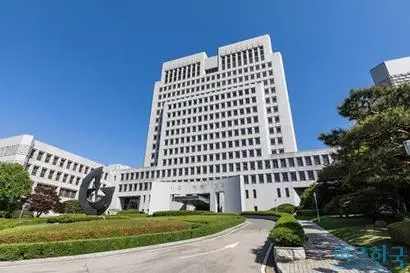
Experts evaluate the main reason for this decision to be the lack of a sufficient number of cases over the past three years. A legal professional who previously worked at the Supreme Court Sentencing Commission explained, "While it is true that political circles have a great interest in cases under the Serious Accidents Punishment Act, there are still too few precedents. Establishing guidelines based only on current precedents might fail to reflect the various cases that will emerge in the future."
In fact, the Sentencing Commission itself stated to the media, "We took into account that the constitutionality of some provisions is currently being reviewed by the Constitutional Court due to constitutional complaints and requests for judicial review of constitutionality, and that, compared to other groups of crimes, there is a lack of accumulated sentencing cases."
Possibility of New Sentencing Guidelines Within This Year
However, the Lee Jae-myung administration's policy of expanding corporate responsibility for labor accidents is expected to have a significant influence on the Supreme Court Sentencing Commission.
Regarding recent industrial accidents, President Lee Jae-myung mentioned the Serious Accidents Punishment Act and criticized it, saying, "Most cases end with a suspended sentence," and adding, "There is a disconnect between the entities that profit from failing to implement safety measures and the entities that are actually punished." Minister of Justice Jung Sung-ho, head of the ministry overseeing the Act, also stated at a cabinet meeting, "There are no sentencing guidelines for the court, so we are strongly requesting them from the Supreme Court Sentencing Commission."
Because of this, there is speculation that sentencing guidelines for the Serious Accidents Punishment Act could be created as early as this year. A lawyer specializing in labor-related cases at a large law firm predicted, "In the case of the Serious Accidents Punishment Act, there are too few precedents and corporate negligence varies widely, so it takes a long time to gather evidence for indictment, and many cases that do not gain media attention are not prosecuted at all. However, since the Lee Jae-myung administration is sending strong warning messages about industrial accidents, the court will likely respond in kind and establish sentencing guidelines oriented toward 'stricter prison sentences'."
The legal expert with experience at the Sentencing Commission also anticipated, "If precedents are scarce, they can simply set the guidelines broadly for now and revise them as more precedents accumulate. Ultimately, since the law dictates a minimum of one year in prison, even if the number of actual prison sentences in the first trial increases slightly, it is unlikely to go beyond the level of being commuted to a suspended sentence in the second trial, except for major corporations."