

[비즈한국] In the summer of 2025, the Netflix animation 'K-pop Demon Hunters' is sweeping global charts. Set in Seoul, this action-fantasy animation immediately captured the hearts of Gen Z with its premise of K-pop girl group members hunting demons. Within a week of its release, it entered the TOP 10 in 190 countries, and countless challenge videos are flooding social media.
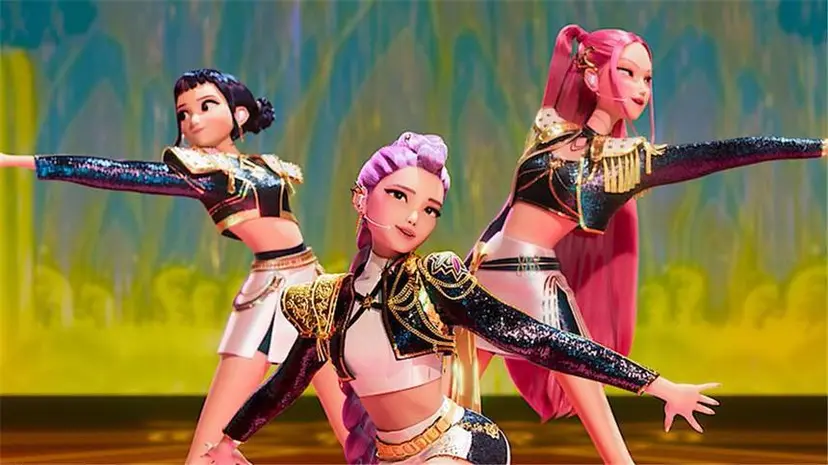
It also quickly entered the top ranks in major European countries, including the UK, France, Germany, and the Netherlands, immediately after its release. According to the 2025 Q2 report released by Netflix, K-pop Demon Hunters is one of the most successful animated films produced by the platform. The film's soundtrack is the highest-charting film OST on the 2025 Billboard 200, and during the Q2 earnings announcement, 'Golden' hit No. 1 on both the Billboard Global chart and the UK Official chart, becoming the most popular song in the world. Currently, this soundtrack has become the first K-pop album to simultaneously reach No. 1 on the Spotify film OST chart and the US Apple Music chart.
Netflix collaborated with various tech-based companies for the global success of this work. These companies are gaining attention for their proprietary technologies in video generation, automatic dubbing, and digital human implementation, demonstrating significant potential in the global content ecosystem. This column introduces European startups that hold high potential for collaboration with the content industry, especially OTT platforms, and possess strong technological applicability.
AI Dubbing Technology that Preserves Emotion, Dutch Startup Dubformer
Headquartered in Amsterdam, Dubformer is an AI-based dubbing startup founded in 2023 that is growing rapidly based on its 'Emotion Transfer' technology, which focuses on conveying vocal emotions. While conventional machine dubbing offers monotonous voices, Dubformer has developed technology that dubs naturally into various languages while preserving the actor's emotions, intonation, and rhythm. Users can quickly produce high-quality, multilingual dubbed content with just a single voice input, making this technology particularly suitable for the rapid localization and high-quality content production required by global OTT services.
Dubformer's founder and CEO, Anton Dvorkovich, has over 10 years of experience in the field of machine translation and dubbing. The company has also gained significant industry trust with early investments from angel investors such as Arul Menezes, founder of Microsoft Translator, and Funa Maduka, former director of international original films at Netflix.
In fact, Netflix is showing great interest in AI-based dubbing technology through its internal research project, DeepSpeaker. DeepSpeaker is an AI voice cloning technology that converts an actor's voice into other languages while preserving emotions, speech patterns, and intonation, and is expected to set a new standard for dubbing quality. It is a field actively being explored by global OTT services, including Netflix, as it can drastically reduce the cost and time for multilingual distribution while maintaining viewer immersion. The 'Emotion Transfer'-based AI dubbing pursued by Dubformer aligns precisely with these industrial demands, attracting attention for its potential in technological collaboration and commercial adoption.
Automatic Character Generation in Videos, AI Avatar Platform Colossyan
Colossyan is an AI video generation startup that started in Budapest, Hungary, and is now headquartered in London. The company has developed technology that automatically generates video content featuring digital avatars based on user-inputted text. Without the cameras, lighting, actors, and editing staff required for traditional video production, users can create highly immersive presentations, educational content, and even short drama-style videos in just a few minutes. While currently popular in the e-learning and corporate presentation sectors, its potential for application in content production is immense.
Colossyan's greatest strength is its avatar templates that reflect diverse languages, cultures, and races, along with natural gestures and facial expressions. Previously, to dub a single drama into multiple languages, one had to cast voice actors in each country and repeat studio work. However, using Colossyan's platform, one can easily create localized versions where AI avatars speaking each country's language deliver the lines directly, based on the same script.
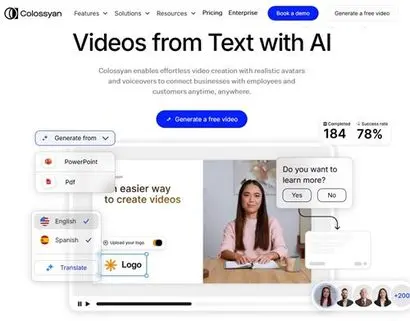
Secondly, it aligns well with the demand for automated marketing content from OTT platforms. Whenever global content is launched, different messages must be delivered for each country; using Colossyan's avatar technology, dozens of versions with different languages, actors, and messages can be produced quickly. For example, in the case of a global work like K-pop Demon Hunters, promotional avatar videos tailored to fans in South Korea, the US, Germany, France, and other countries can be distributed simultaneously. This is evaluated as a highly practical tool to streamline 'localization marketing' for global OTTs.
This is a very useful function for global OTT platforms when producing content optimized for local cultures on a large scale. In particular, for content creators with limited budgets or small and medium-sized studios entering local markets, Colossyan's AI video generation technology can be an excellent alternative. Its user-friendly interface and stable SaaS-based delivery method add to its competitiveness.
Real-time 3D Digital Human Generation Platform, Didimo
Didimo, based in Portugal, has developed unique technology that generates realistic 3D digital humans from just a single selfie. This technology can be utilized in various fields such as games, film, the metaverse, and virtual shopping, and it shows great potential for OTT platforms in character creation, interactive content, and providing immersive user experiences. Didimo provides a software development kit (SDK) that allows digitally generated figures to naturally express emotions, facial expressions, and voice in real-time.
Didimo's standout feature is its ability to implement digital characters that 'behave like real humans' in an automated way, rather than just replicating faces. This is highly useful for future content formats such as OTT content marketing campaigns, personalized user content, or interactive dramas. Didimo has already conducted experimental collaborations with media and content companies worldwide, including Sony, Amazon, and CeekVR, as well as Altice (Netherlands), Soleil (Japan), and Atom Republic (UK). Sony integrated Didimo’s digital human generation API into mobile devices to allow users to easily create avatars, and the technology was also pilot-tested on Amazon's game engine, Lumberyard.
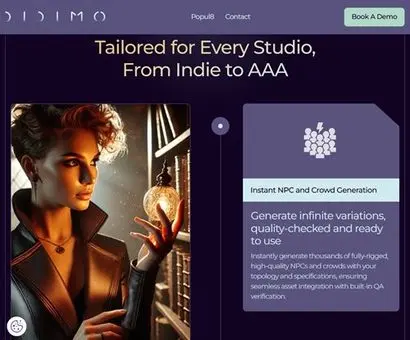
Didimo's technology presents an innovative turning point for traditional video production methods. Especially for OTT platforms and content production companies, Didimo's digital human generation technology is emerging as a new tool to implement interactive characters, virtual interviews, and immersive campaigns without the need for actors. Didimo's platform, which can generate high-quality 3D digital avatars from just one photo, can be easily integrated into existing content production workflows and is linked with various video production tools via API and SDK-based services.
This technology is closely linked to the immersive content and user-participation-centered formats pursued by OTT platforms. It enables the expansion and experimentation of existing formats, such as creating branching points in interactive dramas using digital characters instead of real people, or producing documentary content featuring virtual MCs and narrators.
The global OTT market is evolving beyond simply 'what' to show, into a competition of 'how to show it' faster, more efficiently, and more immersively. Dubbing, video generation, and digital character implementation are all core technologies that determine the quality and speed of content production, which also means that this field is increasingly becoming a technology-intensive industry.
European deep-tech startups are responding directly to this trend. Based on creative technological capabilities and expertise focused on specific domains, they are actively creating opportunities for collaboration with the OTT market. The future content market will be an era where not only 'stories' but also 'technology' determine competitiveness. It is worth paying attention to the landscape that European tech startups will shape within this flow.
The author, Lee Eun-seo, majored in law in South Korea and studied theater in Berlin. Based in Berlin, a city of art and a hub for European startups, she leads 123factory, which connects the startup ecosystems of Korea and Germany while growing alongside the city.