

[비즈한국] “To secure even a single home shopping broadcast featuring a celebrity, suppliers had to cover the appearance fees and promotional costs themselves. A written contract? There was no such thing. A single comment, ‘You have to pay up for the show to air,’ was the end of it. The same went for returns. Any unsold products were returned, and we bore all the shipping and inventory costs. The home shopping headquarters simply presented us with a document stating, ‘Let's frame this as a voluntary return at your request, not ours.’”
A court has ruled that it is a violation of the Large-Scale Retail Business Act for home shopping companies to use external personnel, such as celebrity guests or demonstration models, provided by suppliers without a separate written contract. Home shopping broadcasts frequently feature celebrities or influencers; the court ruled that unless the performer is a substantial stakeholder or an owner who shares the financial risks of the business, they are essentially considered dispatched personnel from the supplier.
The court also put a brake on the practice of offloading costs onto suppliers for free gift events or product review promotions without prior written agreements. The court clarified that the return of home shopping inventory is permitted only in exceptional cases and that the burden of proving the grounds for such returns rests on the home shopping company, which is the large-scale retailer.
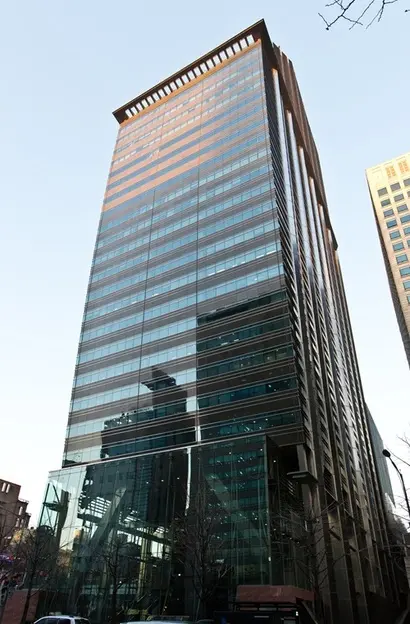
GS Retail, which operates GS Home Shopping, filed a lawsuit to cancel corrective orders issued by the Korea Fair Trade Commission (KFTC) regarding the home shopping industry's "customary practices," but the court dismissed the case. This ruling confirms that the KFTC's sanctions, which included fines in the billions of won, were valid and effective, highlighting the renewed necessity of correcting unfair practices pervasive throughout the home shopping industry.
With GS Retail deciding to appeal, the case will now be decided by the Supreme Court. Since other companies in the industry that received similar corrective orders are also engaged in legal battles, the ripple effect of the final ruling is expected to be significant.
GS Retail 'Loses' Lawsuit to Cancel KFTC Corrective Order
On the 11th of last month, the 6-2 Administrative Division of the Seoul High Court (Presiding Judges Choi Hang-seok, Baek Seung-yeop, and Hwang Ui-dong) dismissed the lawsuit filed by GS Retail against the KFTC to cancel the corrective orders.
In December 2021, the KFTC issued corrective orders to seven TV home shopping companies regarding seven issues violating the Large-Scale Retail Business Act, stating that the industry had used its dominant position to engage in practices such as shifting promotional costs, unfair use of supplier personnel, and unfair returns. The KFTC's decision carries the same legal weight as a first-instance court ruling.
The fines imposed were as follows: GS Home Shopping (GS Retail) 1.027 billion won, Lotte Home Shopping (formerly Woori Home Shopping) 645 million won, NS Home Shopping 601 million won, CJ OnStyle (CJ ENM) 592 million won, Hyundai Home Shopping057050 584 million won, Home & Shopping 493 million won, and Gongyoung Shopping 204 million won. GS Home Shopping was hit with the largest fine.
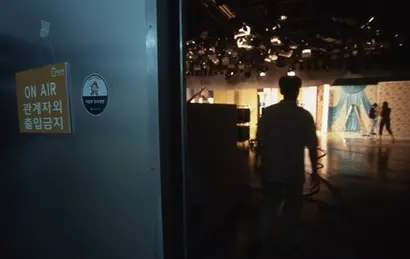
Are Celebrities Employees? How 'Dispatch' Was Recognized
The unfair use of personnel was an issue for which all seven sanctioned companies received corrective orders. The court devoted the most space to this matter, judging that GS Retail’s legal arguments were unpersuasive.
Home shopping broadcasts involve performers who introduce or demonstrate products, as well as staff who react to products or boost the atmosphere like an audience in a studio. High-profile celebrities or influencers are often hired to drive sales performance. Investigations revealed that for a year and a half ending in June 2020, GS Home Shopping conducted 505 sales broadcasts with products from 144 suppliers, having these personnel work in their studio without any written agreement on dispatch conditions.
GS Retail argued that broadcast performers are not employees, that the concept of 'dispatch' does not apply, and that suppliers hire them out of their own interest. They maintained that because they are not businesses with offline stores, they are not subject to the relevant laws, and that personnel costs in the TV home shopping standard contract are considered 'broadcast production costs,' thus unrelated to the clause in question. However, the Seoul High Court found that GS Retail's claims were inconsistent with legal interpretations and the realities of the industry.
Article 12 of the Large-Scale Retail Business Act prohibits the unfair dispatch of supplier employees. The court clearly stated that GS Retail is a large-scale retailer subject to this law. It determined that home shopping companies are included in the definition of large-scale retailers considering the basic definitions and enforcement decrees, even if not explicitly defined separately. It also broadly interpreted that studios, equipped with facilities to conduct business, qualify as workplaces.

Regarding the 'employment' and dispatch status of home shopping performers, the court stated that the actual form of work and conventional perception must be considered. The court ruled, “Employment under this Act is not limited to labor contracts under the Labor Standards Act or employment under the Civil Act; regardless of the name or form of the contract, such as delegation or contracting, it includes everyone who substantially provides labor at the large-scale retailer’s workplace for the benefit of the supplier.”
Being a celebrity does not grant an exception. The court’s judgment is that celebrities, fashion directors, chefs, stylists, and influencers are no different from employees hired by the supplier. The basis for this is that they (1) sign contracts similar to delegation or service contracts with the supplier, (2) do not contribute to their own business interests but to someone else's, and (3) provide labor on home shopping broadcasts.
The court provided specific criteria, noting that it could be judged differently under special conditions like a partnership where the performer invests their own money and shares in profits and losses. Examples of those who might not be considered employees include a celebrity chef who is an actual owner involved in everything from product development to joint investment and business operation, or a beauty brand representative who has served as an executive and holds equity since the company's inception.
Regarding whether using supplier-side performers counts as 'dispatch,' the court interpreted it based on the legislative intent of the Large-Scale Retail Business Act and the dictionary definition of dispatch, concluding that causing them to appear on home shopping broadcasts and perform sales promotion and management tasks qualifies as dispatch.
GS Retail’s argument that written agreements were difficult because contracts with guests and models are trade secrets was dismissed, noting that the burden of proving the legitimacy of cost-shifting lies with the home shopping company. The court pointed out, “If a supplier did not want to disclose costs, the company should have at least documented the specific reasons for this, but there is no evidence that the plaintiff fulfilled such duties.”
Unfair Returns and Cost-Shifting to Go to the Supreme Court
A representative issue for which GS was penalized was the violation of the prohibition on returns (Article 10 of the Large-Scale Retail Business Act). Nearly half of the total fine, 500 million won, was imposed for this item. The court clarified that returns are prohibited in principle and allowed only in exceptional cases.
For 18 months up to the second half of 2019, GS Retail returned 766 items (62,399 units; purchase value of 1.856 billion won) supplied through direct purchase transactions from eight companies including Fila Korea, receiving 'return request forms' for about 100 items and documents justifying the need for return for others. A return request form is an official document where a supplier requests the home shopping company to return the goods.
GS Retail argued this procedure was sufficient evidence of the supplier’s voluntary intent to return, but the court found it insufficient upon closer inspection. The court reasoned that there was no proof as to why a supplier would bother requesting returns while bearing the costs of shipping, re-selling, inventory storage, and the burden of refunding/deducting payments. Factors such as blank justification fields, insufficient proof of voluntariness, and weak resale plans served as the basis for the ruling.
Regarding the unfair shifting of promotional costs (Article 11 of the Large-Scale Retail Business Act) applied to events like 'two free gifts,' the court recognized that the company imposed costs on suppliers for gift and product review events without prior written agreements signed and sealed by both parties. The fact that the company wrote a confirmation letter acknowledging this during the KFTC investigation was taken into account.
With GS Retail deciding to appeal the dismissal, the case now moves to the Supreme Court. A GS Retail official stated, “We respect the High Court’s ruling, but we have decided to appeal to the Supreme Court because there are areas where we seek further judgment on the facts.”
As major companies are filing lawsuits to challenge KFTC sanctions, industry attention is focused on the future court rulings. With the KFTC measures highlighting unfair cost-shifting and personnel dispatch as legal issues, the industry is reportedly concerned, particularly about the ruling that special guests like celebrities can be recognized as supplier employees.
GS Retail stated, “Ahead of the Supreme Court ruling, we are strictly implementing internal controls to prevent recurrence, such as strengthening written agreements regarding KFTC’s corrective orders.”