

[비즈한국] Pressure from the government is mounting on SPC, where fatal industrial accidents continue to occur. Following President Lee Jae-myung’s visit to the SPC Samlip005600 Sihwa plant in Siheung, Gyeonggi Province, on the 25th, where he rebuked the company over workplace environment issues, SPC was also mentioned during a Cabinet meeting on the 29th while discussing industrial accident countermeasures. SPC hastily announced that it would abolish overtime exceeding 8 hours and improve its work environment, but industry observers suggest this may not be a complete solution.
Branded by recurring accidents, is SPC becoming the government's top target for inspection?
On the 25th, President Lee Jae-myung held a "field meeting at workplaces with major industrial accidents" at the SPC Samlip Sihwa plant in Siheung, Gyeonggi Province. Key SPC executives and employees, including Chairman Hur Young-in, SPC Samlip CEO Kim Bum-soo, SPC Compliance Committee Chair Kim Ji-hyung, and SPC Samlip Safety and Health Chief Kim Hee-sung, attended the meeting.
During the meeting, President Lee criticized SPC’s working conditions, stating, "It is problematic that the same accidents keep happening in the same way at the same sites," and "I question whether it is possible for people to work 12 hours a day from 7 PM to 7 AM, four days a week."
In response, Chairman Hur said, "It is a bit difficult to plan an improvement scheme immediately, but we will do it in stages." Two days later, SPC Group announced it would limit night shifts for production workers to within 8 hours. To eliminate overtime, SPC Group plans to expand its workforce, adjust production items and volumes, and restructure the overall production system, including production lines. The plan is scheduled to take effect on October 1st. An SPC Group official stated, "We have taken the criticism and concerns regarding long hours of night work at our production sites seriously, and we have decided to promote reforms across our entire production system, including our work patterns."
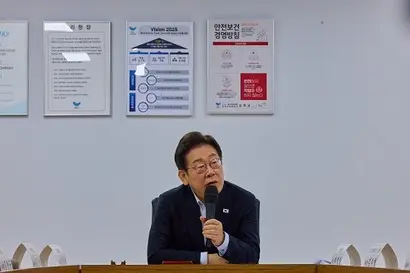
As the government expresses its firm resolve to respond to industrial accidents, it appears SPC has become the top priority for government inspections. During the Cabinet meeting on the 29th, President Lee declared this year the "first year of eradicating industrial accident deaths" and mentioned SPC. Criticizing the recurring fatal accidents, the President emphasized that "backward industrial accidents must be permanently eradicated," and again urged SPC to "please keep your word" regarding the recently announced plan to abolish night overtime beyond 8 hours.
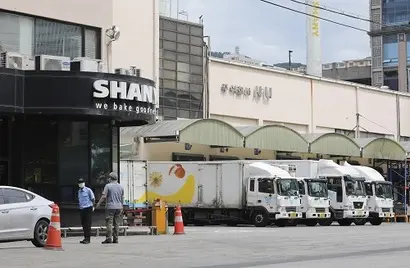
Over the past three years, eight workers have died or been injured at SPC plants. Last May, a worker in his 50s died after being caught in machinery during lubrication work at the SPC Samlip Sihwa plant. In August 2023, a worker in his 50s died after being caught in a dough-lifting machine at the Shany Seongnam plant, and in October 2022, a worker in his 20s died after being caught in a sauce mixer at the SPL Pyeongtaek plant.
Every time a fatal accident has occurred, SPC has promised to prevent recurrences, but it has faced criticism for the repetition of identical accidents. At the time of the SPL accident in 2022, Chairman Hur issued a public apology and pledged to invest 100 billion won in safety management, but the promise was rendered meaningless when another worker died the very next year.
An SPC employee pointed out, "The company promised equipment investments to prevent accidents. In the case of the 2022 accident, the problem was that the sauce mixer was not covered and lacked an interlock (a device that automatically stops machinery when a person approaches). After the accident, those direct causes were addressed. However, factory safety management cannot be solved by just fixing one point. The problem is that they haven't taken care of continuous overall management, supervision, and safety improvements."
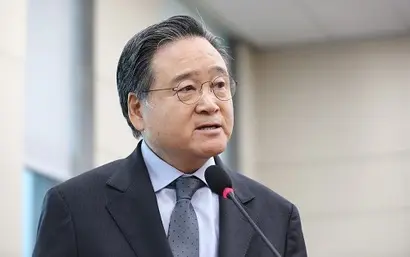
Reducing night shifts is just the first step; calls for strengthening the Serious Accidents Punishment Act
Regarding SPC's promise to abolish overtime beyond 8 hours, experts assess that it will be somewhat effective in lowering the risk of accidents. Labor attorney Jo Young-hoon of the Lawyers for Labor Rights organization explained, "Research shows that concentration on work drops when working more than 8 hours. (Abolishing overtime beyond 8 hours) will help prevent industrial accidents by preventing loss of concentration. Furthermore, the International Agency for Research on Cancer has classified night work as a Group 2 carcinogen. This means that working at night is bad for one's health, so the shift toward reducing night work is meaningful."
On the other hand, some workers express concerns that their wages will decrease as night work hours are reduced. An industry official pointed out, "Some people have to work night overtime because they need the money. You can't ignore the loss of income. The company isn't going to raise hourly wages just because of this situation, right?"
Im Jong-rin, head of the SPC Paris Baguette branch of the Korean Confederation of Trade Unions, said, "The President pointed out the 'long-hour, low-wage' work environment, but the company's current policy focuses only on eliminating long working hours, without any accompanying discussion on low wages. Factory workers are deeply worried about wage drops."
BizHankook inquired with SPC regarding whether there were any discussions on wage compensation, but did not receive a response.
Some suggest that strengthening the Serious Accidents Punishment Act to clearly hold management accountable would be a more effective measure for eradicating industrial accidents. Criticism persists that the Act lacks effectiveness as it enters its third year of implementation, with many cases ending in suspended sentences or fines. Even regarding the fatal accident at the SPL plant in October 2022, former SPL CEO Kang Dong-seok was sent to trial for violating the Serious Accidents Punishment Act, but was sentenced to one year in prison suspended for two years in the first trial. The labor sector criticized this as a "slap on the wrist."
An official from the civic group People’s Livelihood Countermeasures Committee pointed out, "Chairman Hur Young-in should be punished under the Serious Accidents Punishment Act. It makes no sense that executives face no punishment when fatal accidents due to poor management continue to happen. Management must be punished so that other companies will pay closer attention and stay alert. Currently, because there is no proper punishment even after repeated accidents, other companies are just brushing it off as a minor issue."
Attorney Jo Young-hoon added, "SPC's move to reduce night work can be a starting point for preventing industrial accidents. At the same time, it is essential to adhere to the principle of 2-person work teams and invest in ensuring that equipment and facilities are not outdated. Losing a skilled worker due to injury is a massive capital loss for a company. Ultimately, creating an environment where workers can work safely is in the long-term interest of the company."