

[비즈한국] "Everyone is anxious about whether they will be able to continue working here." The internal atmosphere at the Game Rating and Administration Committee (GRAC), which is on the verge of being shut down, is uneasy. Employees are worried about whether their operations will be sustainable. This is because, with the push to transfer game rating classifications to the private sector—a campaign pledge by President Lee Jae-myung—and the creation of a new organization dedicated to post-management, there is a growing prospect that the GRAC will be phased out.
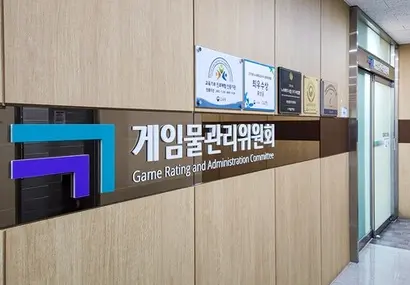
The GRAC is a public institution under the Ministry of Culture, Sports and Tourism responsible for reviewing and approving game ratings and handling post-release management. It holds the authority to assign "Not Rated for Youth" labels through pre-market review, or to ban the domestic distribution of games by refusing or revoking their ratings.
On May 27, the Democratic Party of Korea's Special Committee on Games announced plans to establish an organization dedicated to the gaming sector and potentially consolidate or abolish the GRAC if necessary. The Democratic Party intends to push for legislation related to restructuring game governance upon the launch of the Lee Jae-myung administration.
National Assembly member Jo Seung-rae, vice-chairman of the Special Committee on Games, stated, "There is a problem with the GRAC's structure, which mixes the regulation of gambling games with general games," adding, "In-depth discussions, including amendments to the Game Industry Promotion Act, will take place in the second term of the Special Committee on Games, which will launch soon."
Accepting the Policy of Private Transfer, But What About Employment?
Within the GRAC, the atmosphere is generally one of acceptance regarding the ruling party's policy direction to transfer rating classifications to the private sector. A GRAC employee, "A," stated, "As a game user myself, I agree that the current pre-market review system lags behind overseas examples," adding, "There are almost no employees who hold a conservative view that the current organizational form must be maintained."
However, there is significant job insecurity regarding the potential abolition of the GRAC. Even when the organization transitioned from the Game Rating Board to the Game Rating and Administration Committee in 2013, only about half of the employees had their employment successfully transferred. Furthermore, after the GRAC moved to Busan, some temporary workers were unable to transition to permanent contracts and left upon the expiration of their contracts.
Oh Hyun-tak, chairman of the GRAC labor union, said, "Because there is such a precedent, there is great concern about job succession," adding, "I hope the government will pay attention to employment stability so that employees can follow government policy without anxiety."
Temporary workers, such as those working as game monitoring agents, are also suffering from job instability. One temporary worker reported, "Temporary staff generally see their chances of employment succession as low and have resigned themselves to it," adding, "A notice was issued by the GRAC telling us not to be agitated, and there is a cautious atmosphere about anyone expressing their opinions."
On July 8, the GRAC had temporary workers and employees with less than one year of service sign a consent form for the advance use of annual leave, which included a clause stating that "the individual acknowledges they are a worker with less than one year of service." This raised concerns that the GRAC might be initiating steps to lay off temporary employees.
However, a GRAC official emphasized, "The consent form is unrelated to the abolition of the GRAC; it is intended to inform all employees, including permanent staff with less than one year of service, about their number of annual leave days," adding, "The GRAC will also make efforts to ensure the employment of temporary staff."

Gradual Transition to a 'Reporting System' for Private Rating Classifications
The abolition of the GRAC originated from President Lee Jae-myung's campaign pledges. During his presidential run, Lee promised that a new dedicated game organization would only handle post-management functions, while rating classifications would shift to a self-regulatory private system, gradually transitioning to a reporting-based system.
For some time, the game industry and users have criticized the current structure—where the public institution GRAC pre-reviews games—as a violation of the ban on censorship under Article 21, Paragraph 2 of the Constitution. Looking at overseas cases, organizations such as the Entertainment Software Rating Board (ESRB) in North America, Pan European Game Information (PEGI) in Europe, and the Computer Entertainment Rating Organization (CERO) in Japan are all private rating bodies.
The GRAC also appears to be following the policy stance of the government and the ruling party. On March 6, it implemented an organizational reform that established a "Post-Management Headquarters" and a "Rating Support Headquarters." GRAC Chairman Seo Tae-geon explained, "This organizational reform is a measure to proactively prepare for the transfer of rating classifications to the private sector and to transform the GRAC into an organization centered on post-management."
This reform also proposed a model for the private transfer of rating classifications. Currently, the GRAC handles the "Not Rated for Youth" classification for all games, but the future plan is for the private sector to take full charge of rating classifications for PC online, console, and mobile games. However, the GRAC plans to continue performing rating classifications for gambling games.