

[비즈한국] Chinese CDMO (Contract Development and Manufacturing Organization) companies are making their presence felt in the global market. Despite political containment from the U.S., they have shown remarkable growth and secured technical competitiveness by passing U.S. FDA (Food and Drug Administration) audits. Consequently, attention is being focused on how this might impact domestic companies that were expected to benefit from the CDMO business.
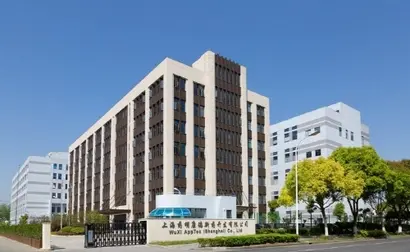
According to industry sources on the 29th, the first-half revenue for the Chinese CRDMO (Contract Research, Development, and Manufacturing Organization) WuXi AppTec reached 20.8 billion yuan (4.0179 trillion won). This is a 20.6% increase compared to the same period last year, marking a clear upward trend when compared to the 5.2% year-over-year revenue growth seen by WuXi AppTec last year (39.241 billion yuan).
In addition, WuXi Biologics, the world’s second-largest Chinese CDMO, has also recently cleared the hurdle of U.S. FDA audits. Five of its PFS (pre-filled syringe) manufacturing facilities located in Wuxi, China, passed the FDA’s Pre-License Inspection (PLI). The PLI is a procedure where the FDA scientifically verifies compliance with Good Manufacturing Practice (GMP) standards and data reliability at production facilities prior to granting product approval.
As this implies that pharmaceuticals produced by global pharmaceutical companies at WuXi Biologics facilities can receive FDA approval, the company appears to have sidestepped risks such as the Biosecure Act.
Because of this, expectations are emerging that the influence of Chinese CDMO companies will continue to grow, regardless of the conflict between the U.S. and China.
Lee Seung-kyu, Vice Chairman of the Korea Biotechnology Industry Organization, stated, "There are many new drug candidates being developed globally, but there aren't many CDMO companies that can be trusted with the work, including Samsung Biologics207940," adding, "WuXi AppTec and WuXi Biologics are evaluated as being competitive in terms of both price and technology."
The Biosecure Act, which has been under development since December 2023, aims to protect the personal health and genetic information of Americans from companies of concern. It prohibits companies receiving U.S. government funding from using equipment and services from "hostile foreign biotech companies," with WuXi AppTec and WuXi Biologics being key targets.
As U.S. government regulations intensified, WuXi AppTec sold its cell and gene therapy (CGT) business units, WuXi Advanced Therapies and Oxford Genetics, to the U.S. private equity firm Altasciences late last year, while WuXi Biologics sold its vaccine plant in Ireland to the U.S. pharmaceutical company Merck (MSD) this January.
Although the U.S. Congress is pushing to pass the Biosecure Act again within the year after it failed to be enacted last year, opposition to the legislation is strong, making it difficult to predict the outcome. In the first half of this year alone, WuXi AppTec and WuXi Biologics spent $700,000 and $570,000, respectively, on active lobbying efforts in the U.S. Congress.
As Chinese CDMO companies show signs of a rebound, some in the industry are taking a cautious stance on whether domestic CDMO firms will actually benefit.
Vice Chairman Lee noted, "The impact of U.S.-China conflicts and the imposition of tariffs does not yet seem to have manifested specifically in the biotech industry," and cautiously forecasted, "If the U.S. government's hardline stance continues, there could be some impact, but I don't think the existing atmosphere will change immediately. We need to watch the situation in the U.S. market."
However, some suggest that in the long term, global big pharma might feel burdened to collaborate with Chinese CDMOs when pursuing new contracts, which could present an opportunity for domestic CDMO companies.
An official from a domestic CDMO company expressed a rosy outlook, saying, "Because WuXi AppTec doesn't only do business with U.S. companies, we cannot conclude that the Biosecure Act has no impact just because their first-half earnings increased," adding, "Since the U.S. is checking Chinese companies through various methods, domestic CDMO companies are still expected to benefit."
Meanwhile, Samsung Biologics, which possesses the world's largest pharmaceutical production capacity, recorded 2.0138 trillion won in revenue from its CDMO business in the first half of this year. This is a 36% increase from the same period last year (1.4797 trillion won). In May, Samsung Biologics announced plans for a spin-off from its biosimilar business, Samsung Bioepis, revealing a strategy to reinforce its identity as a specialized CDMO company.