

[비즈한국] Having successfully acquired a securities firm following its acquisition of insurance companies, Woori Financial Group is preparing to leap forward as a "complete entity." Recently, Woori Financial launched advertisements promoting its status as a comprehensive financial group and held its first group management strategy workshop featuring its new subsidiaries. With Chairman Im Jong-yong emphasizing enterprise-wide AI transformation, synergy creation among affiliates, and, crucially, the innovation of internal controls as key tasks for the second half of the year, attention is focused on whether Woori Financial, which has been plagued by a series of incidents, will show a changed face.

Woori Financial has begun its full-scale journey as a comprehensive financial group. On the 18th, the company released a new advertisement featuring singer IU. As the first brand advertisement showcasing its comprehensive financial group structure, it emphasized the integration of new subsidiaries with the message: "From adding securities and insurance to the name 'Woori,' to finding new possibilities in finance."
On the same day, the group held its 2025 second-half management strategy workshop and announced plans for group synergies and AX (AI Transformation). This was the first group event held since Dongyang Life Insurance082640 and ABL Life Insurance were incorporated on July 1. At the event, Chairman Im Jong-yong emphasized, "Now that we have completed the comprehensive financial group structure with the inclusion of securities and insurance firms, it is the golden time to demonstrate tangible synergies. Each subsidiary must secure competitiveness in its core business while creating synergies through organic collaboration." Chairman Im also mentioned supporting AX talent at the group level.
The one-year report card for the merged securities arm (Korea Foss Securities + Woori Investment & Securities) is also out. While the net profit was 4 billion won in the first half of 2024 (as Woori Finance), it increased to 17 billion won in the first half of 2025, the year it launched as Woori Investment & Securities. During the same period, the number of retail customers grew by 91% (from 350,000 to 670,000). These indicators show improvement compared to before the merger.
While the long-cherished goal of becoming a comprehensive financial group has been achieved, "homework" remains. Issues with corporate governance, internal controls, and recurring financial incidents persist. On July 15, the Financial Intelligence Unit (FIU) announced that it had imposed a fine of 600 million won on Woori Bank for failing to report 772 high-value cash transactions of 10 million won or more to the FIU between July 2020 and September 2024, and for failing to fulfill customer verification obligations for 237 cases.
The number of incidents has also risen. According to Woori Financial's Sustainability Report, there were 5 cases of breach of trust and fraud, 3 cases of embezzlement and misappropriation, 1 case of facilitating private lending, 1 case of money laundering/internal transaction violations, and 7 cases currently under investigation for anti-corruption and anti-competition in 2024. In the case of breach of trust and fraud, the figure was highest in 2024 (5 cases) compared to the last six years (2019-2024), where there were 3 cases in 2019, 1 case in 2022, and zero in other years.
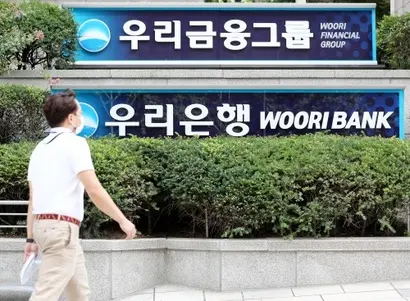
The issue of unfair loans to relatives of former Woori Financial Chairman Son Tae-seung has also been raised. In January this year, the prosecution announced that approximately 51.7 billion won in unfair loans had been provided to the former chairman’s relatives between September 2021 and August 2023, and it was recently reported in the media that investigative agencies had omitted 4.7 billion won in loans (4 cases) from that total.
Due to the aftermath of the unfair loan scandal involving relatives of the former chairman, Woori Financial received a grade 3 in its management status assessment. This led to a crisis where the acquisition of the life insurance company was almost derailed. The Financial Holding Companies Act stipulates that a subsidiary must have a management assessment grade of 2 or higher to be incorporated. However, Woori Financial bypassed the crisis when the Financial Services Commission approved the merger conditionally, based on an exception clause (in cases where financial and management requirements can be met through capital increases or the disposal of non-performing assets). Under these conditions, Woori Financial must implement internal control improvement plans and mid-to-long-term capital management plans, and report the status semi-annually to the Financial Supervisory Service until the end of 2027.
Consequently, Woori Financial is emphasizing the strengthening of internal controls both internally and externally. When announcing the core tasks for the second half of the year on the 18th, Chairman Im Jong-yong highlighted internal control innovation alongside AX promotion and group synergy implementation. These same goals were also included in the 2025 group management objectives.
The group has introduced internal control innovation systems through various channels. In December 2024, it established the "Ethics Management Office," a dedicated organization to supervise group management. This office also oversees the "Executive Relative Personal Credit Information Registration System," the first of its kind in the financial sector.
For credit management, six group companies have shared a system for sharing information on improper loans and introduced an "Abnormal Transaction Detection System (FDS)" to prevent issues such as false income entries during loan applications. They have also implemented measures to prevent financial accidents by expanding whistleblower channels and strengthening incentives.
Woori Bank has set out to change its organizational culture by introducing absolute evaluation to its Key Performance Indicators (KPI). At the 2025 second-half management strategy meeting on July 25, Woori Bank President Jung Jin-wan stated, "The absolute evaluation of KPIs will become a fair assessment standard and lead to customer-centered 'genuine sales,'" adding, "In 2026, we will expand the application of absolute evaluation to include human resources assessments." This follows analyses suggesting that relative evaluation of KPIs encourages performance-based competition, weakens internal controls, and leads to financial accidents.
Amidst this, eyes are also on the results of the Fair Trade Commission's (FTC) collusion disciplinary action, which is expected in the second half of the year. The FTC launched an investigation based on the view that the four major commercial banks (KB Kookmin, Hana, Shinhan, and Woori) limited competition between 2020 and 2022 by sharing Loan-to-Value (LTV) information and aligning terms of collateralized loan transactions. Woori Bank and others submitted their positions denying the allegations in April 2024. The FTC sent a review report to the banks this past April following a reinvestigation and requested the submission of an opinion letter containing their explanations.
The banks extended the deadline for submitting their explanation letters—originally May—to the end of June, and have yet to submit them as they have requested further extensions. The bank LTV collusion case is the first instance of a sanction against information-sharing collusion, and some predict the fines could reach as much as 1 trillion won. An FTC official stated, "It is difficult to say when the results of the sanctions will be announced, but as this is a re-examination case, we expect it to proceed more quickly than typical cases."