

[비즈한국] “AI? I tried using it because the higher-ups told me to, but it wasn’t very good.”
This is a common refrain heard in modern workplaces. Generative AI can certainly produce images and slogans in seconds, or generate a project proposal with just a few lines of prompts. Yet, many practitioners scratch their heads when looking at the results. They complain that while the output looks decent, it feels hollow, lacking context, and ultimately offering very little that is actually usable. This leads to the recurring conclusion: “I tried it, but human hands are still better.”
The design consulting group Plus X has put a question mark next to this perception. At their 15th-anniversary seminar held on July 25, the question posed by Plus X was simple:
“Is it really a problem with the AI? Or is it a problem with the people and organizations using it?”
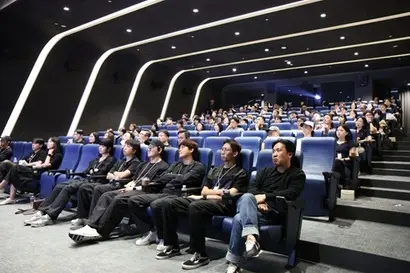
The Problem Is Not the Technology, But the ‘Way of Working’
Titled ‘From BX and UX to Development: How AI is Changing Brand Operation Workflows,’ the seminar held at the Plus X basement theater focused not on ‘technology,’ but on ‘ways of working.’ Rather than discussing what AI can do, the session featured vivid stories of how the team has handled AI, centered on how we are working with it.
Plus X, a company recognized as a leader in Korean design capabilities with over 200 domestic and international design awards—including the 2024 Korea Design Award—made a clear declaration: “We aren’t disappointed because AI’s performance is lacking; we receive such results only because we don’t yet know how to tell AI how to work.” Just like a client who orders a designer to “make it feel trendy and emotional” without providing a clear concept, we are currently assigning tasks to AI in the same vague way. AI technology has already reached a sufficient level and evolves daily, but there is a lack of systems and specialized personnel to properly leverage that capability. This is true for almost every organization, regardless of size.
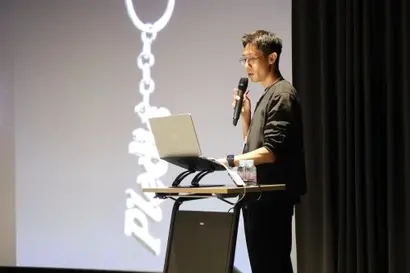
Lee Yoon-sung, BX Creative Director at Plus X, emphasized that while AI results can sometimes be underwhelming, one should reconsider whether it’s truly the AI's fault. He pointed out that outputs from AI naturally look ‘unusable’ in organizational environments lacking contextual prompts, standardized assets, or verification criteria.
Plus X presented several cases where they implemented the results of that ‘preparation’ into practice. The brand philosophy, linguistic identity, and final judgment remain the responsibility of humans. However, AI is far better at rapidly implementing and expanding hundreds of versions based on that foundation. For example, while the designer determines the angle of a typeface’s curve, AI generates the hundreds of images, textures, and 3D versions that apply that angle. As the division of labor becomes clearer, AI becomes a true colleague.
UX/UI case studies shared in the latter half of the seminar supported this argument. By utilizing plugin features of the AI-based design collaboration platform ‘Figma’ and generative image tools, productivity improved so significantly that one junior designer could create 20 drafts a day. Furthermore, they demonstrated how the process of creating ‘usable’ work—including design review, vectorization, and library organization—is becoming largely automated.
AI Must Be ‘Internalized,’ Not Just Adopted
Plus X emphasizes the internalization of AI systems within an organization rather than mere adoption. They have real-world experience in this: Plus X introduced a case where they built an AI work environment for a major corporation’s design department. This four-month project included prompt structuring, internal asset organization, automation tool setup, and a maintenance system. The key was designing a system that maintains brand consistency even when the person in charge changes. It is a case where the phrase “people change, but the prompts remain” became a reality within the organization.
Plus X views AI not just as a ‘tool,’ but as a turning point that changes the way of working. This is why they operate mid-to-long-term training through their own platform, ‘Share X,’ and have even introduced a ‘level system’ tailored to the learner’s proficiency. They believe that while anyone can use AI, the era where everyone uses it ‘well’ has yet to arrive.
In fact, the presenters agreed that “AI is easy, but using it well is harder than you think.” AI models evolve daily, updates are frequent, and each tool has different characteristics. Understanding the principles and applying a systematic approach is now more important than just knowing the technology.
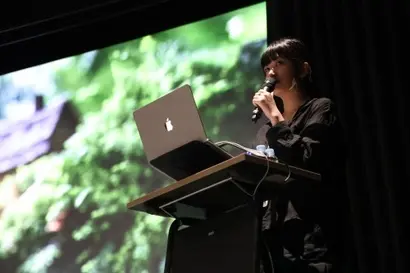
To reliably integrate the potential of generative AI into practical work, Plus X introduced a new job category within the organization: the ‘Prompt Designer.’ This role goes far beyond the common perception of a ‘person who inputs prompts.’ A prompt designer not only designs sophisticated questions for AI based on an understanding of brand philosophy, design language, and user experience, but also analyzes which AI model is suitable for the purpose, studies the latest technological trends, and determines how to apply them to practical work. They are professional practitioners who strategically design and operate AI utilization, rather than mere task workers.
Within Plus X, prompt designers act as practical coordinators and connecting links that bridge various fields such as brand experience, user experience, interface design, and development. For example, if a project uses different AI tools for image generation, text summarization, and video editing, the prompt designer decides whether to use them by considering the suitability and combination efficiency of each tool. Even after adopting AI, they analyze performance based on quality, repeatability, and brand consistency to suggest improvements.
The reason Plus X introduced this job category is not simply to use AI well. It is a structural experiment and strategic shift to ensure the entire design organization coexists with AI and produces meaningfully significant results.
Change Starts with Deeper Questions
We live in an era where anyone can use generative AI. However, connecting it to practical results within a consistent philosophy and set of standards remains a human responsibility. Technology has already developed sufficiently. Now is the time to learn how to properly utilize it and redesign our way of working. That change begins with questions much deeper than one might think.
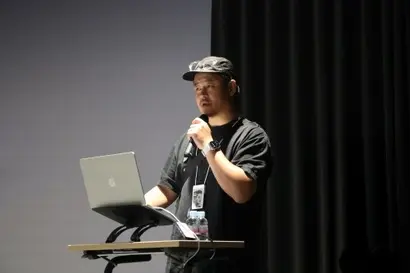
The Plus X 15th-anniversary seminar was filled with concrete and practical answers to these questions. It showed the process of building an organizational culture and system to work with AI, rather than just how to use AI tools better.
The change has already begun. However, such change did not happen overnight. It is the result of accumulated systematic preparation, continuous learning, and improvement through failure. This is why Plus X plans and operates the education platform ‘Share X’ with Fast Campus, creates new roles like ‘Prompt Designer,’ and builds systematic AI workflow processes. All of this is not an option, but a necessity—if you want to survive in the AI era. It is synonymous with transforming into an organization that can grow alongside AI, rather than just using it.
Perhaps saying “I tried it, but it wasn’t very good” is simply a confession—or an excuse—that one is not yet prepared.