

[비즈한국] A criminal group that recently committed fraud by abusing Carrot’s real estate service has been apprehended. Regarding this, the real estate industry is reacting by saying that an expected incident has finally occurred. Since the beginning of this year, concerns have grown over increasing real estate fraud through Carrot, and as actual cases of damage have come to light, arguments regarding the platform's responsibility have even been raised. The industry points out that since direct real estate transaction fraud is still rampant nationwide, it is urgent to establish safety measures.
51 Victims Defrauded of Deposits After Fake Listings Were Posted
A criminal group that recently carried out a new type of real estate fraud through Carrot has been referred to the prosecution. They posed as licensed real estate agents and landlords to post fake property listings on Carrot, then induced victims into contracts and swindled their deposits. There are 51 victims in this case alone, and the total damages are estimated at 350 million KRW.
What is noteworthy is the reaction of the real estate industry upon hearing about the incident. An industry official said, “For several months, word has been circulating that suspected fraud cases in Carrot’s real estate service were surging. The method used by the group apprehended this time is also information that had already been shared since the beginning of the year.”
An official from the Korea Association of Realtors stated, “A person named Mr. A, who is in the rental business, once shared relevant information with the industry, saying there was a group committing fraud through Carrot’s real estate service. It was a warning to be careful because such cases existed, and the modus operandi is similar to the group caught this time.”
The situation Mr. A experienced is as follows. Mr. A, a rental business owner, was looking for tenants for a newly built officetel when he received a phone call from someone asking to see the house. When Mr. A said he would meet them in person to show the house, the caller requested, “Just give me the password, and I’ll go see the house and leave.” Since it was a new officetel and most units were vacant, Mr. A provided the password without suspicion. Since there was no follow-up contact, he assumed they were not interested in signing a contract.
However, some time later, Mr. A was shocked to see someone he had never met living in that unit. It turned out that the person who received the password had posted the house as a listing on Carrot’s real estate service, signed a fake contract, and had them move in without authorization.
An official from the Korea Association of Realtors said, “Mr. A’s building had several vacant units, and there were over 10 similar victims. Feeling that the situation was serious, Mr. A posted a warning about ‘Carrot real estate transactions’ in the building and also contacted the association.”
The industry emphasized that caution is needed as fraudulent acts on Carrot Real Estate are rampant nationwide. The Korea Association of Realtors pointed out, “We hear that similar incidents are continuing to occur not only in Seoul but also in Busan and other areas. As there are still institutional loopholes in non-face-to-face real estate transactions, it is necessary to trade very carefully and cautiously.”

Carrot Real Estate Transactions Surged to Nearly 60,000 Last Year
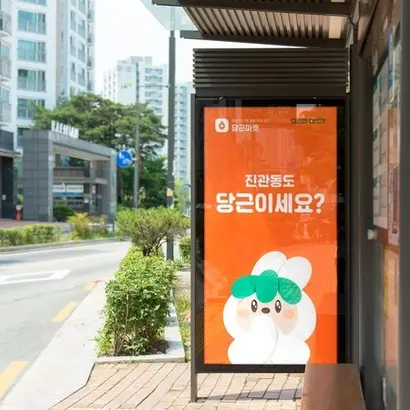
Carrot Market, which grew as a second-hand trading platform, seems to be putting effort into expanding its real estate service this year. In April, Carrot Market conducted its first brand campaign for Carrot Real Estate. It carried the message that one can comfortably trade homes just like second-hand goods using the Carrot app.
The core of the real estate service operated by Carrot Market is that transactions between individuals are possible without going through a licensed real estate agency. While there are some listings registered by licensed agents, users without agent qualifications can also register listings and buy or sell real estate. The demand for Carrot Real Estate is on the rise as it allows users to save on brokerage commissions through direct transactions between individuals. According to data released by the office of Rep. Yoon Jong-goon of the Democratic Party of Korea, Carrot real estate transactions surged from 268 in 2021 to 59,451 last year.
An industry official explained, “The use of the real estate service is spreading, centering on users who have a lot of experience with second-hand trading through Carrot. The younger generation, accustomed to second-hand trading between individuals, does not feel much resistance to real estate transactions either.”
However, concerns follow that the risk of fraud has increased due to the nature of direct transactions. Since transactions happen between individuals without a licensed agent, the responsibility for verifying property registration, mortgages, and ownership rights falls entirely on the user, and the design of standard contracts and special clauses can be lax. The office of Rep. Yoon Jong-goon stated that the number of real estate fraud cases in which investigative agencies requested investigation cooperation from Carrot Market increased from 1 in 2023 to 17 last year. The damages amount to approximately 1.7 billion KRW.
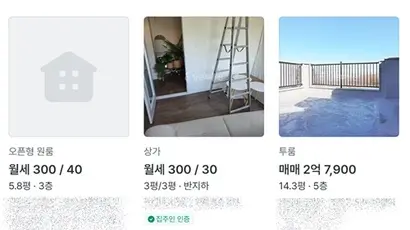
Carrot Market operates systems such as ‘Landlord Verification’ to reduce the risks of direct real estate transactions. A Carrot Market official explained, “All users posting listings are required to undergo real-name identity verification, and we provide a ‘Landlord Verification’ badge if the user’s information matches the data in the property registry. We also have a feature for viewers to request landlord verification from the poster in case a third party such as a tenant or family member registers a listing.”
The industry points out that as real estate fraud is evolving daily, strong safety measures are needed. An industry official noted, “There is no problem with posting a listing without landlord verification. The atmosphere is such that even Carrot Real Estate users do not feel reluctant toward listings without landlord verification,” adding, “Since the landlord verification system exists but is not mandatory, the risk remains.”
Although the Korea Real Estate Board has been monitoring fake listings on Carrot Real Estate since April, personal listings are not included in the monitoring, so caution is required. An official from the Korea Real Estate Board said, “We only check listings posted by licensed real estate agents. We do not monitor property listings between individuals.”
Carrot Market stated that it is devising countermeasures to respond to evolving fraud risks. A Carrot Market official stated, “To reduce user damage from crimes abusing the platform, we are checking and elaborating on existing response systems. As fraud methods become more sophisticated, we plan to strengthen the overall prevention system of the platform so that similar damages do not recur.”