

[비즈한국] A court has ruled that text-to-speech (TTS) features that automatically read book text aloud cannot be arbitrarily provided by reading platforms without the consent of the copyright holder. The court determined that this technology is not merely a convenience feature, but a significant act that constitutes "reproduction and transmission" under copyright law. The ruling signifies that when a platform operator converts book content into audio, it is effectively reproducing and transmitting the content, and therefore must obtain permission from the rights holder.
As a result, it has become difficult for platforms to avoid copyright liability simply by claiming the technology is a "feature provided for user convenience." This ruling is considered a landmark case that highlights the necessity of protecting copyright holders' rights, establishing consultation procedures, and managing rights across the e-book and audio content industries, where AI and TTS technologies are spreading rapidly.
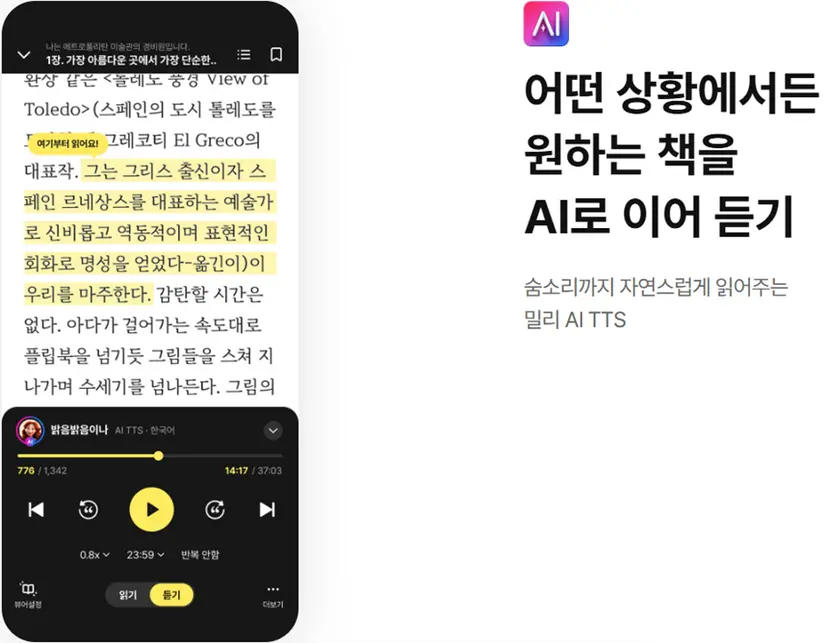
The Seoul High Court ruled in favor of the reading platform Willa in the second trial of an exclusive publishing rights infringement lawsuit filed against KT's e-book platform, Millie's Library. Reversing the first-instance decision, the High Court held that Millie's Library providing users with access to book content via its TTS function—when the exclusive publishing rights for the audio content belong to Willa—constitutes copyright infringement. Millie's Library's argument that the TTS feature is merely an act of "reading" and cannot be considered "reproduction" was rejected.
Following the court's judgment that the act of a reading platform providing text-to-speech without the consent of the copyright holder (such as an assignee of exclusive publishing rights) falls under the traditional scope of copyright protection, changes are expected in contract structures and the overall industry's rights management system.
Millie's Library Loses Appellate Trial on Exclusive Publishing Rights Infringement
On the 19th of last month, the 5th-2 Civil Division of the Seoul High Court (Presiding Judges Kim Dae-hyun, Kang Sung-hun, and Song Hye-jung) overturned the part of the first-instance ruling that went against the plaintiff, Influential (the operator of Willa), and ruled in favor of the plaintiff. The court ordered that Millie's Library must cease providing TTS features for the disputed books on its app and website.
In July 2022, Millie's Library and Willa entered a legal battle over exclusive publishing rights regarding audio content on the Millie's Library platform. Willa demanded the suspension and removal of content, arguing that Millie's Library provided audiobooks and TTS services for books over which Willa held exclusive publishing rights without authorization. The six books in question were ones for which Willa had signed contracts with two publishers, acquiring exclusive and sole rights to produce, sell, and distribute them. This lawsuit gained attention in October of the same year when Millie's Library included it in the investment risk section of its securities registration statement during its IPO process.
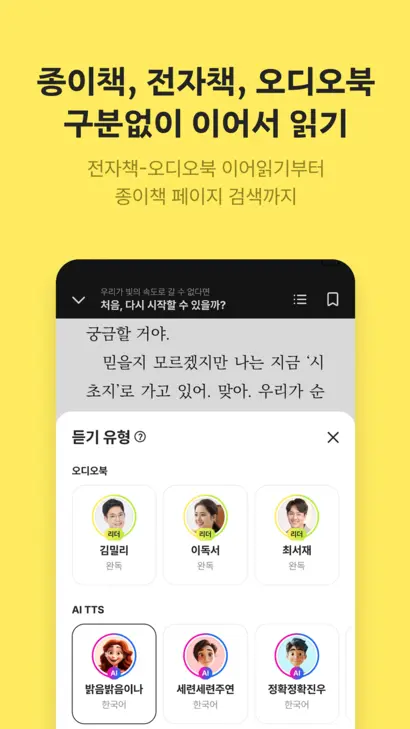
Millie's Library and Willa are major platforms driving the "audio-based" reading market. While Millie's Library, the largest reading platform in Korea, has built competitiveness through its vast collection of e-books, Willa stands out as the platform providing the most exclusive audiobooks, featuring readings by professional voice actors. Text-to-speech (TTS) is a technology that converts text into audio, and unlike general audiobooks recorded by professional voice actors or humans, it can significantly reduce production time and costs. For this reason, services using TTS technology have recently been spreading, centered around reading platforms like Millie's Library and Willa.
Millie's Library is the company most actively adopting AI technology among reading platforms. Its AI TTS feature, introduced in July last year, is available in the same manner as existing TTS but applies AI voice synthesis technology that mimics actual human intonation, pronunciation, and even subtle breathing by learning from various voice samples.
Judged as an Act of Reproduction and Transmission Beyond a Mere Convenience Feature
While the first trial result was close to a "partial victory" for Willa, Millie's Library lost on all key issues in the second trial, including the injunction against providing the TTS feature.
Unlike the first trial, which recognized the infringement of Willa's exclusive publishing rights only for the audiobook service, the appellate court ruled that providing the TTS feature was also an infringement. The core issue of the lawsuit was whether the act of a platform operator providing book content as audio via a TTS feature constitutes infringement of the exclusive publishing rights to audio content, and whether the platform can be considered the subject of that act.
Millie's Library had argued regarding its TTS service, "Since we do not directly reproduce or transmit the audio content, the act of providing the TTS feature itself cannot be viewed as infringing on Willa's exclusive publishing rights." They also argued that it did not meet the criteria for infringement, citing exceptions for private use (Article 30 of the Copyright Act) or temporary reproduction (Article 35-2 of the Copyright Act).
The court clarified that copyright infringement can be established if an act can be considered reproduction or transmission, even if a separate audio file (tangible object) is not created, stored, or distributed via the TTS feature.

The court determined that whether the audio file generated via the TTS feature is a separate protected object or not is fundamentally irrelevant to setting the scope of exclusive publishing rights. Regardless of whether a physical file remains, the court viewed the technical act of converting text to audio and providing it to the user as an act of reproduction and transmission of the copyrighted work.
The second trial identified Millie's Library as the direct subject of the reproduction and transmission. The court cited as grounds: that a .wav file (Windows standard audio format) is temporarily generated when the TTS function is executed; that the user has no choice other than to use the TTS function; and that the program operation, technical development, and feature execution take place within a dedicated app managed and controlled by Millie's Library. This contradicts previous interpretations that viewed the user as the subject and the platform as merely providing the tool.
The court ruled, "In the process of converting the .epub (e-book standard format) file of a specific book into a .wav file, the Millie's Library users have no role other than to designate the book and press the 'TTS' button on the app interface provided by Millie's Library," adding, "It is reasonable to view Millie's Library as managing and controlling the act of reproducing this case's books into audio data."
However, the court also clarified that even if exclusive publishing rights are broadly defined in a contract, they cannot exceed the limits of the law. Regarding the scope of exclusive publishing rights, the court interpreted that even if a contract explicitly includes comprehensive rights to excerpt, summarize, adapt, or transform content into audio for reproduction and transmission, it cannot be unilaterally extended to include the creation of derivative works under copyright law.
Exclusive Rights Applied to TTS Feature; Attention on Possible Appeal to Supreme Court
This ruling is noteworthy as it goes beyond a legal dispute between two companies, offering criteria for the scope of platform operators' responsibility and the judgment standards for rights holders' exclusive rights in a content market where AI and TTS technologies are spreading rapidly. While there was a prevailing perception that copyright infringement is difficult to prove if no tangible object like an audio file is clearly generated, this case can be seen as opening the possibility of establishing reproduction and transmission by focusing on the act of provision through the TTS feature itself.
As it becomes difficult to consider such technology merely as a "user convenience feature," the consensus is that structural changes will occur in the copyright distribution ecosystem, including contracts, collaborations, and revenue sharing for rights holders. There is a prediction that in the digital content industry, where new technologies are actively adopted, legal risks can be minimized by establishing consultation, contractual relationships, and copyright management systems from the early stages of service.
Following the first-instance ruling, the services for the relevant books were discontinued and they have since been removed from the Millie's Library app. While a final decision on whether to appeal to the Supreme Court has not been made, it is possible that the final judgment will be handed down by the Supreme Court, given the legal significance of the issues and the major repercussions for the industry.
Millie's Library did not issue a separate official statement regarding this ruling. However, it is understood that the company maintains the view that services like TTS are an extension of functional considerations for user convenience and accessibility rather than for profit generation. Millie's Library has introduced various features with the intent to lower barriers to entry and expand reading experiences. In the case of TTS, given its nature in supporting reading activities for groups like the visually impaired, the discussion is expected to continue on how to find a balance between utilizing new tech-based features and protecting copyright.