

[비즈한국] The term 'Koreanism' has recently become a hot topic. It began appearing in media around 2006. Unlike today, where it is frequently discussed in the content industry, it first emerged in the fashion world. Specifically, it was mentioned through the activities of fashion models. At the time, the activities of Han Hye-jin and Hye Park, starting in 2005, were linked to Koreanism. The term 'Korean looking' was used, meaning they possessed a distinctly Korean face. To highlight Korean individuality, the faces of women in Shin Yun-bok's paintings were also mentioned. This differed from the past portrayals by Westerners of Asians, which were characterized by sharply slanted eyes and protruding cheekbones.
Along these lines, the definition of Koreanism as expressing the power of Korean culture through Korean eyes, rather than the Orientalism of the Western gaze, also emerged at this time. Subsequently, Korean images began to be favored in the art market, and the same trend appeared in the field of traditional furniture. In any case, academic papers and applications regarding Koreanism mainly came from the fashion sector. The key keyword for the collections presented by our companies at the 2024 Paris Fashion Week was also Koreanism.
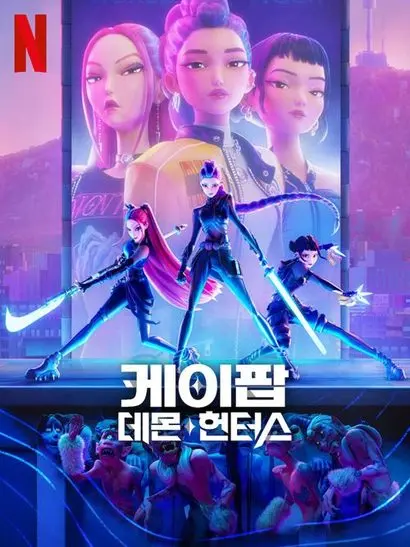
However, in July 2025, the term Koreanism suddenly appeared in the field of video content. This is due to the words of Maggie Kang (Kang Min-ji), the director of the Netflix animation 'K-Pop Demon Hunters.' In a media interview, she stated, "I researched meticulously so that every scene and design element would feel as 'Korean' as possible." Domestic media outlets bundled this under the term Koreanism because many Korean spaces, objects, subjects, and images appeared in the work.
'K-Pop Demon Hunters' features Korean foods that are currently hot globally, namely gukbap (rice soup), gimbap, and tteokbokki. These are captured in such detail that the gimbap and tteokbokki are served on the green plates with white dots that were used in old-fashioned snack bars. The scene where spoons and chopsticks are placed on a tissue while eating gukbap also became a hot topic. In addition to Namsan Tower, the fortress wall road of Naksan Park, from where Namsan Tower is visible, was also described in detail. It also highlights that visiting a traditional herbal medicine clinic to get medicine when feeling unwell is a common experience for both the older and younger generations. Naturally, the specific research into K-pop fandom culture is also one of the elements that ignited the fans' enthusiasm.
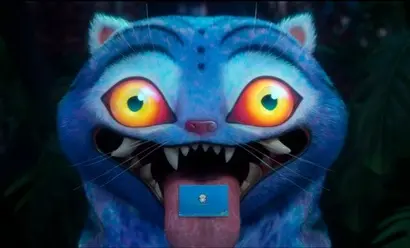
It is not just about real locations, daily life culture, or K-pop culture. Traditional culture is also indispensable. Beyond the various swords used by the hunters (Sain-geom, Chilseong-geom, Woldo), accessories, and norigae (traditional ornaments) patterns, characters such as grim reapers and dokkaebi (goblins) appear. The highlight is the tiger. It was popular even before its name, 'Derpy,' became known. Derpy is a traditional Korean tiger figure found in folk paintings, reborn as a cute and lovable character rather than a beast.
Some even point out the conditions for Koreanism. It suggests that even if presented through foreign capital or platforms, it must be based on an understanding of the essence of Korea, maintain a Korean identity, convey a Korean sensibility, and fuse them in a modern way. In other words, Koreanism means understanding the essence and reality of Korean culture, and based on this, being able to create cultural content from a Korean perspective and share it with modern global citizens.
The important thing is that just because content has a Korean style, it does not necessarily mean it will succeed. Previously, Netflix's first Korean animation 'Lost in Starlight' was released on May 30, but it did not become a topic. This was despite it being full of Korean elements and a long-distance romance story about young men and women in the near future that the younger generation might like. It made one wonder who would actually watch this as creative content.
If so, was the Korean style, or Koreanism, truly the focal point of 'K-Pop Demon Hunters'? In fact, the initial plan for 'K-Pop Demon Hunters' was very different from what it is now. Originally, the occult was the focus, and K-pop was not the central material. Director Maggie Kang thought that the initial form of shamanism resembled a concert with dance and music, and since the demon hunting setting required the demon hunters to hide their identities, she thought of a K-pop group. Adding K-pop brought the atmosphere to life, and the large-scale performance scenes made the movie spectacular.

Director Maggie Kang's virtue did not lie in this alone. She strived for perfection while utilizing K-pop. She did not just use K-pop as a tool, background, or material. She reflected K-pop culture well and, above all, involved a large number of active creators, including Teddy and Riee Hata. She included both hit songs and original songs by top idol groups like Twice, allowing familiarity and novelty to coexist. Moreover, the realistic research on Korea is very detailed and authentic. This is because the director was born in Korea, spent her childhood there, and had an affection for K-pop. These points ignited the response of the K-pop fandom, and fans consumed everything within the content. Core fandoms do not shy away from anything, whether it be food, songs, or merchandise.
In short, 'K-Pop Demon Hunters' did not succeed solely because of the Korean style, or Koreanism. It received a response from the core fandom because it created content that K-pop fans would be interested in and support. We must remember that K-content moves thoroughly around fans, not artists, to achieve better results in the future. We should not be obsessed with Koreanism itself. The path of combining and embodying the needs of global content consumers with our identity is inevitable.
The author, Kim Heon-sik, has been walking through or navigating the forest of popular culture phenomena since his 20s, with the expectation that there is a way to make the world a better place through culture. In the 21st century, where artificial intelligence and quantum computers are active, he continues to follow the same path with the same belief.