

[비즈한국] The acquisition of Hi Air by the Sangsangin Securities001290 consortium is nearing its final stages. The Sangsangin Securities consortium became the largest shareholder after acquiring a stake in Hi Air through a paid-in capital increase this February. Hi Air is currently undergoing corporate rehabilitation procedures, which are expected to conclude soon with the backing of the Sangsangin Securities consortium.
According to BizHankook's coverage, the Sangsangin Securities consortium plans to conduct an additional paid-in capital increase for Hi Air this September. Once completed, this is expected to be a significant boost to Hi Air's finances. However, uncertainties remain. Given the recent sluggishness in the aviation industry, there is no guarantee that Hi Air will achieve the expected performance results.
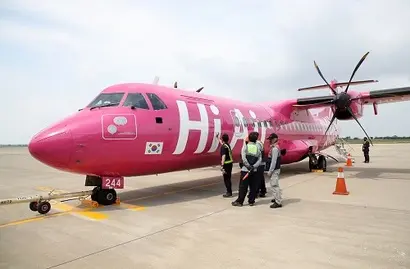
Hi Air drew attention from the aviation industry when it launched its first flight in December 2019. However, its financial condition deteriorated rapidly due to the subsequent COVID-19 pandemic. Ultimately, the company filed for corporate rehabilitation at the Seoul Rehabilitation Court in 2023, and the court approved the rehabilitation plan this February.
The consortium led by Sangsangin Securities is pursuing the acquisition of Hi Air. The consortium has already become the largest shareholder of Hi Air through a vehicle called "Imagine Corporate Finance 4th." Following the approval of the rehabilitation plan, shares held by existing shareholders were retired, and Imagine Corporate Finance 4th acquired its stake by participating in Hi Air's paid-in capital increase.
Currently, Hi Air is moving toward normalization thanks to the support of the Sangsangin Securities consortium. It is reported that more than 99% of its rehabilitation debts have already been repaid. The prevailing view is that the corporate rehabilitation process could conclude as early as July.
Against this backdrop, the Sangsangin Securities consortium is considering an additional paid-in capital increase for Hi Air, targeting this September. Given the financial strength of Sangsangin Securities, the capital increase is expected to be a major help to Hi Air. While Sangsangin Securities acknowledged it is pushing for a capital increase, it did not disclose specific figures.
The problem is the recent slump in the aviation industry. Due to the economic downturn, major domestic airlines have seen weaker performance compared to the same period last year. Low-cost carriers (LCCs) such as Jin Air272450, Air Seoul, Air Busan298690, and Jeju Air089590 all saw drops in revenue and operating profit in the first quarter of this year compared to the same period last year. In the case of T'way Air091810, revenue increased by 5.61% from 422.9 billion won in the first quarter of last year to 446.6 billion won in the first quarter of this year. However, it swung to an operating loss of 35.5 billion won in the first quarter of this year, compared to an operating profit of 76.1 billion won in the same period last year.
Hi Air is classified as a small-scale air transport operator, not an LCC. Small-scale air transport operators are limited to a maximum of 80 passenger seats (50 for international flights). While a direct comparison is difficult as there are currently no other small-scale air transport operators in normal operation in South Korea, the outlook is that it will not be easy for Hi Air to post strong results given the recent poor performance of LCCs.
Choi Go-woon, an analyst at Korea Investment & Securities, analyzed, "For LCCs, the price range for July flights to Japan has dropped to around 200,000 won. As the reduction in fares to overcome the impact of the Muan Airport incident has become entrenched, they are unable to recover even during the peak season." He added, "Since the fundamental demand base for LCCs is wavering, more attention should be paid to financial risks than expectations for a turnaround in the second half of the year."