

[비즈한국] Recently, Chinese game companies have been flooding the market with elaborate game advertisements utilizing AI technology, but critics are increasingly pointing out a massive disconnect between these ads and the actual game content. While the false and exaggerated advertising of Chinese game companies has been a constant source of controversy, there are no effective ways to sanction them. Experts suggest that "fake" game advertisements, made to look more convincing through generative AI, have surpassed simple exaggeration and reached the level of deceiving users.

No Trace of "Ghibli-esque" Style, Only Mass-Produced RPGs
The ad features a hand-drawn style with warm colors and natural scenery reminiscent of Studio Ghibli animations. Shots of a boy cycling along a winding path in a seaside village or soaring over a vast meadow are immersive enough to make viewers want to play the game themselves.
These are clips from the advertisements for 'Eggmon World: Journey' circulating on social media platforms like Facebook. Developed by the Chinese firm Apollo Technology, the mobile MMORPG (Massively Multiplayer Online Role-Playing Game) Eggmon World put significant effort into promotion even before its official launch on the 2nd, selecting the EBS character 'Pengsoo' and comedian Jo Se-ho as official models.
However, unlike the sentimental videos shown in the ads, the actual game is closer to a typical auto-battle-based collectible RPG. Its interface and combat style are difficult to distinguish from other Chinese mobile games, and it is widely criticized for a lack of substantive storytelling. Issues regarding copyright, such as character designs similar to 'Digimon,' have also been raised among users. The cinematic연출 or open-world atmosphere featured in the ads are almost nowhere to be found in the game interface.
While foreign games have long been controversial for using exaggerated advertising far removed from actual gameplay, critics argue that the recent full-scale adoption of generative AI has significantly amplified the level of exaggeration, deceptiveness, and frequency of these ads.

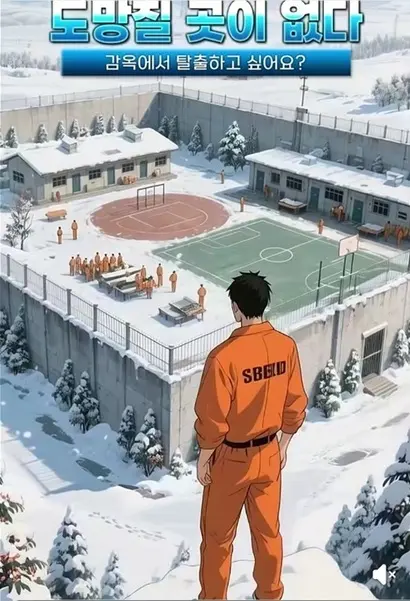
Other games, such as the prison operation simulation mobile game 'Land of Jail' developed by China's JustGame and the new mobile RPG 'Mecha Assemble: Zombie Swarm' by ONEMT, have also been found to be actively using AI-generated images in their social media ads. Both games use sensory-rich scenes or cinematic cuts unrelated to actual gameplay to capture users' attention.
User reactions to such advertisements are cold. Reviews on app markets like the Google Play Store feature comments such as, "Where is the graphics shown in the ad? It's just an old game with a new skin," "It’s a tactic to bait users into spending money while neglecting actual operations," and "I played it because of the ad, but the actual game has childish graphics and is completely different."
"Laws" Exist, but "Sanctions" Don't: Stuck in a "Gray Zone"
Advertisements that bear no resemblance to the actual game are likely illegal under domestic law. Article 34, Paragraph 1, Clauses 1 and 3 of the 'Game Industry Promotion Act' prohibit "advertising or distributing/posting promotional material for games with content different from the actual rated game" and "advertising by displaying game content information differently."
However, there is no clear path to a fundamental solution. This is because such advertisements are primarily distributed by foreign game companies based on global platforms like SNS and YouTube, and even when laws exist, they are difficult to enforce in reality.
The role of reviewing whether game content and advertisements are problematic falls on the platforms themselves. They have established standards stating that "advertisements must accurately reflect actual gameplay or content" and can restrict images or videos that are irrelevant to the game. However, it is not easy to sanction game companies even when they fail to comply.
Some point out that the emergence of generative AI technology has rendered these standards ineffective. Video advertisements focused on cinematic direction are relatively easy to escape scrutiny. AI-generated videos are crafted so naturally to look like scenes from the actual game that, for platforms focusing on explicit text or obvious image violations, it is difficult to determine if they are deceptive.
Although the Game Rating and Administration Committee (GRAC), an organization under the Ministry of Culture, Sports and Tourism, has the authority to regulate game advertisements, there is a limitation: it is difficult to intervene unless the legal violation—even in cases of exaggerated cinematic direction or AI-based false images—is clear.
Some game companies persist in using exaggerated and false advertising because they know the chances of being sanctioned are low. These companies use ads to lure users into installing the game and then utilize familiar monetization tactics, such as character collection and growth-based reward systems, to generate profit in a short period.
A gaming industry insider stated, "Even if the content of an ad becomes controversial, it is rare for it to be deleted or lead to punishment. Given the nature of these mass-produced Chinese games, they target short-term user acquisition and profit. Once they recover their investment, they open new servers to extend the game's lifespan or repackage the existing game for re-release." In effect, a vicious cycle is being entrenched where false advertising is repeated because a certain level of profit is guaranteed.
There are concerns that as advertising technologies like AI become more sophisticated, marketing cases that exploit the loopholes in regulations and reviews will inevitably increase, but creating new advertising review standards or sanction measures is no easy task.
Wi Jong-hyun, president of the Korea Game Society, said, "While text-based exaggerated ads are relatively easy to judge for authenticity, it is very difficult to determine how much video ads differ from the actual game content." He added, "For example, if a system that doesn't exist is included in an ad, it can be seen as clearly false, but a level of making skill effects look flashier or exaggerating the atmosphere is closer to a gray zone that is legally difficult to sanction."
"When you say a combat scene is exaggerated, it is not easy to establish a standard of whether it is 20% or 40% exaggerated. It is a difficult condition for regulatory agencies and platforms to define how much to allow," he added.