

[비즈한국] On July 16, American electric vehicle manufacturer Rivian announced that it would establish a hub dedicated to AI and autonomous driving technology in London, UK. Recognized as a formidable rival to Tesla, Rivian plans to build an engineering organization focused on autonomous driving software, advanced driver-assistance systems (ADAS), and in-vehicle AI infrastructure through its European expansion.
This decision is being viewed as more than just a simple expansion of overseas operations; it is seen as the opening signal for a full-scale "AI war" centered around European technical talent.
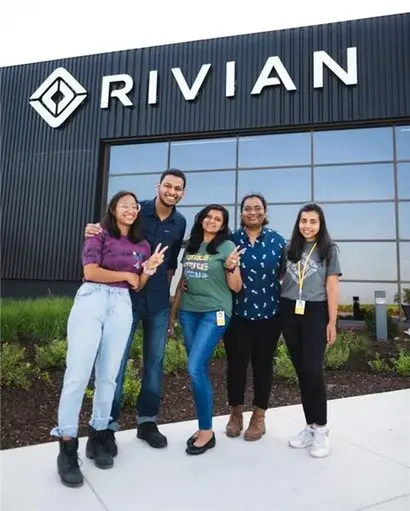
London, the Key Stage for the AI War
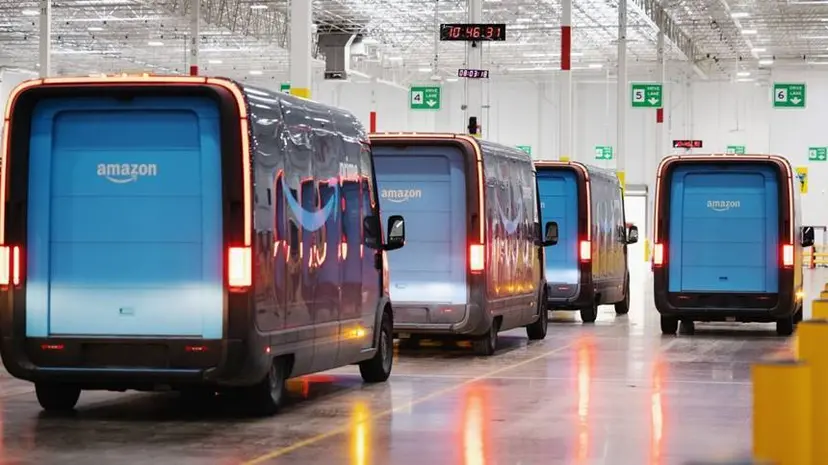
Founded in 2009, Rivian is an American EV company that has sought to differentiate itself through eco-friendly off-road vehicles and AI-based autonomous driving technology. Upon its NASDAQ debut in 2021, it was valued at approximately $80 billion (111 trillion KRW) and dubbed a "Tesla Killer." It notably made headlines after securing an order for 100,000 electric delivery vans from Amazon.
Its flagship models, the R1T (pickup truck) and R1S (SUV), are performing well in the U.S., targeting off-road enthusiasts and adventurers. Recently, the company has been accelerating its global market expansion ahead of the launch of its mass-market R2 model.

Rivian plans to fully integrate AI-based autonomous driving technology into its second-generation vehicle platform (Gen2). Alongside this, the company has unveiled a technology roadmap focused on AI architecture, feature scalability based on Over-the-Air (OTA) updates, and next-generation driver experiences.
In its announcement, Rivian stated, "London, which is home to a wealth of world-class AI talent, perfectly aligns with Rivian’s future strategy," explaining why it chose London as a base. The company also announced that it plans to hold an 'AI & Autonomy Day' in London in the second half of 2025 to reveal its technological blueprint.
Rivian is currently developing autonomous driving functions such as its "Drive Pilot" system, which is being compared to Tesla’s FSD (Full Self-Driving) and General Motors’ Ultra Cruise. There is growing interest in the event scheduled for the second half of this year. As Amazon is Rivian's largest shareholder and a key client, it is expected that Amazon will support the development of autonomous delivery vehicles through its AI and cloud (AWS) technologies.
In the mobility industry, there is an expectation that as the competitive landscape shifts beyond ADAS toward full autonomous driving, Rivian's London hub will serve as an outpost for securing technological leadership and responding to the market. The synergy created as Rivian's hub engages with local AI talent and academic networks in London is also a point to watch.
American Big Tech Moves into Europe
Rivian is not alone. American AI companies such as Google, Microsoft, OpenAI, and Anthropic have recently been establishing AI research labs in major European cities like Paris, London, and Munich. This serves as evidence that Europe is transforming from a conservative, regulation-focused market into an outpost for technological experimentation and talent acquisition.
Notably, the French and British governments are implementing proactive investment policies, pouring billions of euros into AI infrastructure. France announced that it would invest 10.9 billion euros (17.6 trillion KRW) in AI over five years starting in 2024, and the UK has also announced plans for 14 billion pounds (26 trillion KRW) in data center investments.

The European AI startup ecosystem views the establishment of Rivian's London hub as an opportunity. While competition for talent with large corporations is expected to intensify, there are also prospects for increased collaboration with American capital and expanded access to global R&D networks.
In particular, as Rivian has signaled collaboration with local universities and research institutions in London, doors may open for AI and mobility startups to participate as partners for technology verification and Proof of Concept (PoC).
American investors are also paying attention to European startups following these movements. European startups are considered to have better "cost-effectiveness" for investment, as they can develop AI technology at more reasonable capital costs than in the U.S. Consequently, there is anticipation that the interest from American VCs and accelerators will lead to a more advanced ecosystem.
Europe has long been symbolized by its focus on data protection and technological regulation. However, in recent years, it has shifted rapidly toward technological self-reliance and strategic investment in fields such as AI, semiconductors, EVs, and mobility. Rivian's London hub is a symbolic example of this change.
If the establishment of AI hubs by global companies similar to Rivian continues to spread across Europe, it should be interpreted not as mere corporate expansion, but within the broader picture of Europe securing its technological sovereignty.
The author, Eunseo Lee, majored in Law in Korea and studied Theater in Berlin. Based in Berlin—a city of art and a hub for European startups—she leads 123factory, connecting the startup ecosystems of Korea and Germany while growing alongside the city.