

[비즈한국] Hyundai Duty Free has begun downsizing its downtown stores. It will close the Dongdaemun store at the end of this month and reduce the scale of the Trade Center store. Although Hyundai Duty Free attempted to expand its business last year by changing its corporate name and strengthening domestic and international marketing, it appears to have shifted toward downsizing after just one year, unable to overcome the market downturn.
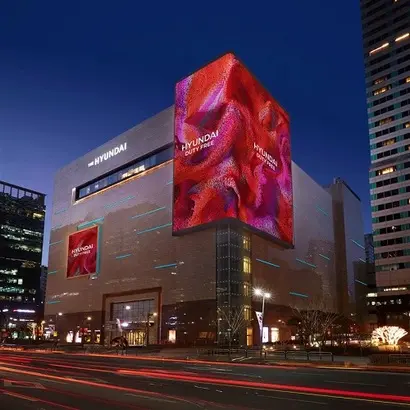
Business Strategy Changed in Just One Year: Resorting to ‘Closures and Reductions’ to Survive
Hyundai Duty Free will end operations at its Dongdaemun store at the end of July. Currently, Hyundai Duty Free operates a total of four locations, including two downtown duty-free stores and two stores at Incheon International Airport (Terminal 1 and Terminal 2). With the closing of the Dongdaemun store, only the Trade Center store in Samseong-dong will remain as a downtown duty-free presence. Even that store is being downsized. The Trade Center store currently occupies three floors (8th to 10th floors) of the Hyundai Department Store Trade Center, but it plans to reduce its footprint to use only two floors (8th and 9th floors).
Hyundai Duty Free explains that it is entering a phase of operational efficiency for its downtown duty-free business due to the industry downturn. A representative from Hyundai Duty Free stated, "We have decided to pursue management efficiency to overcome the crisis facing the duty-free industry as a whole, improve management conditions, and resolve deficits."
Hyundai Department Store Group is a latecomer to the duty-free industry. It entered the market after obtaining a license for a downtown duty-free store in Seoul in 2016 and opened the Trade Center store in 2018. It secured the business rights for Incheon Airport Terminal 1 in 2019 and expanded its scale by opening the Dongdaemun store in 2020. In particular, the Trade Center store achieved 630 billion won in annual sales in its first year, exceeding expectations (550 billion won). Some even speculated that Hyundai Department Store would form a ‘Big 4’ lineup alongside Lotte, Shilla, and Shinsegae.
However, since the growth of the duty-free market stalled after COVID-19, Hyundai Duty Free has been unable to escape from sluggish performance. Last year, Hyundai DF recorded an operating loss of 28.8 billion won. Although the deficit narrowed from the previous year (31.3 billion won), it has not posted a profit once since entering the duty-free business.
Just a year ago, Hyundai Duty Free showed an aggressive management stance by changing its name from ‘Hyundai Department Store Duty Free’ to ‘Hyundai Duty Free.’ It was active in seeking growth engines and investing in brand renewals, such as attracting new brands and strengthening marketing. However, as the recovery of the industry was delayed, the atmosphere suggests a pivot in strategy toward downsizing the business after only a year.
A Hyundai Duty Free official explained, "Because the industry situation is not good, we have set up a management efficiency plan and are currently in the process of implementing it accordingly."
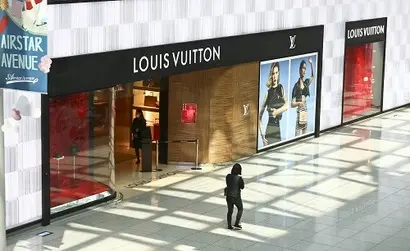
Improving Profitability Through Luxury Goods? Skepticism in the Industry
After the closure of the Dongdaemun store, Hyundai Duty Free plans to reorganize its duty-free business centered on the Trade Center store and Incheon Airport stores. The strategy is to increase profitability through MD (Merchandising) reorganization focused on luxury brands. The Trade Center store plans to strengthen its competitiveness by attracting luxury brands such as Gucci Beauty, Balenciaga, and Loewe after clearing out low-efficiency brands.
The Incheon Airport store is also reorganizing its structure centered on high-profit luxury MD. Hyundai Duty Free explained that as it secured brands like Gucci, Balenciaga, Fendi, and Saint Laurent last year, its Q1 revenue this year increased by more than 10% compared to the same period last year. A Hyundai Duty Free official stated, "We plan to continue attracting competitive brands and strengthening domestic and international marketing," adding, "We intend to respond flexibly to market changes by strengthening the competitiveness of our online and offline channels."
However, industry experts point out that as Hyundai Duty Free reduces its business scale, its buying power could also weaken. There is concern that since a certain scale of stores and sales is required to extract favorable terms from suppliers, it will be difficult to obtain price cuts or special negotiation conditions if the purchase volume decreases.
A duty-free industry official mentioned, "Because the duty-free business is a direct-purchasing structure, buying power weakens if economies of scale become difficult to achieve," adding, "As the scale of sales decreases, it will have a negative impact on business competitiveness."
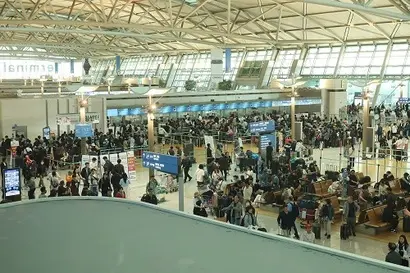
The rent structure of Incheon Airport is also cited as a factor making it difficult to recover profitability. Since 2023, Incheon Airport has linked duty-free shop rent to the ‘number of international passengers.’ It is a structure where the rent changes every month depending on the number of passengers using the airport. The problem is that while duty-free sales are stagnant, the number of passengers is increasing rapidly, causing the rent burden to be relatively higher. In particular, as international passenger numbers are expected to increase more this year than last year, concerns about the deterioration of profitability in the industry are significant.
For this reason, some argue that a change in the luxury-oriented business strategy is necessary. Lee Jong-woo, a professor of business administration at Ajou University, analyzed, "We are in an era of 20 million foreign tourists. The number of visitors to the airport is overflowing, but duty-free sales are not increasing. The fact that duty-free shops cannot draw out their consumption is a problem," and added, "It means they are failing to properly read the changed consumption patterns of tourists."
Professor Lee emphasized, "It is a problem to still adhere to the luxury strategy that was focused on Chinese tourists in the past," and added, "As the preference for luxury goods has weakened recently, it is necessary to pivot to a customized consumer strategy, such as discovering trendy brands."