

[비즈한국] K-Culture, now a global phenomenon, didn’t emerge overnight. A look at the diverse cultural trends that appeared 30 years ago in 1995 reveals its origins. The cases from that time also provide a foundation for reflecting on what cultural policy should be.
First, the rise of K-Culture was backed by changes in the digital environment. A content system that allowed for easy and free internet usage appeared. "Windows 95," launched on August 24, 1995, was the beginning of the content revolution. Microsoft’s Windows 95 allowed users to break completely away from text-based DOS command systems. Anyone could issue commands to a computer using icons and a mouse without knowing specific codes. Its strength lay in the ease of communication and connection. Using the TCP/IP protocol, it became possible to use a network via phone lines. At the time, IBM-compatible personal computers with the Windows operating system were much cheaper than Apple's Macintosh, which already had internet access, so they rapidly dominated the digital world. As internet browsers came into use, the perception that knowledge and information resided on the internet, rather than on CDs, strengthened, and searching became crucial. Around this time, the term "digital nomadism" became popular.

Once high-speed networks were established in 1997, internet communication developed rapidly. The younger generation in Korea gained ideas and inspiration by freely accessing content such as music, movies, dramas, comics, and novels. After PC communication Hitel took off in 1995, countless small groups were formed. The sports sector was the most active; the small group "Wings," formed on December 23, 1995, on the Hitel soccer club to support the newly founded Suwon team, is the origin of "Grand Bleu," Korea's first supporters' group. It could also be considered the beginning of the "Red Devils," who appeared in 2002. This led to the consolidation of square culture and fandom culture among the younger generation.
In the music sector, SM Entertainment was founded in 1995 and began preparing idol groups in earnest. The result was the five-member boy group H.O.T., which debuted in 1996. Following them, S.E.S., Shinhwa, TVXQ, and Super Junior saw consecutive success. The birth of a unique system was crucial. Moving away from the existing record label-centric system, SM created a "total management" system that covered everything from planning and production to the scouting, training, and formation of trainees. This became the identity of today’s Korean K-pop management system. Above all, following the initial Hallyu wave of Clon starting in Taiwan, H.O.T. became the first idol group to perform in Beijing in 2000, signaling the start of the idol group-led Hallyu phenomenon.

It wasn’t just idol music that stood out in 1995. The emergence of indie bands also marked its 30th anniversary. 1995 was the year the area in front of Hongik University established itself as the holy land of indie music. It began that year with a memorial event for the first anniversary of Kurt Cobain’s death at the Hongdae club "Drug." This was when legendary indie musicians such as Crying Nut, No Brain, Sister's Barbershop, and Pipi Band revealed themselves to the world. These indie bands served as a source for K-pop, providing constant inspiration.
Now, let's examine the contribution of media content. In the broadcast video content sector, cable TV launched. Through 24 channels, music, variety shows, movies, and dramas were presented in a diverse manner. In particular, it became possible to watch movies at any time, which were previously limited to theaters, video stores, or terrestrial TV. Mnet, a music-specialized broadcast channel, contributed significantly to the development of K-pop by specializing in music videos. It helped elevate the level of K-pop music videos even before the full-scale YouTube era. tvN and others, which initially focused on reruns, gradually increased their original content. Because they were less regulated than terrestrial channels, they produced many provocative and experimental works, which in turn raised the standards for K-dramas.
Looking at the film industry, CJ ENM035760 was established in 1995. Beginning with "Joint Security Area" (2000), CJ ENM produced a series of hits and laid the material foundation for what would later lead to "Parasite" winning four Academy Awards. In the broadcasting sector, fostering companies specializing in drama production laid the groundwork for studio systems like today’s "Studio Dragon."
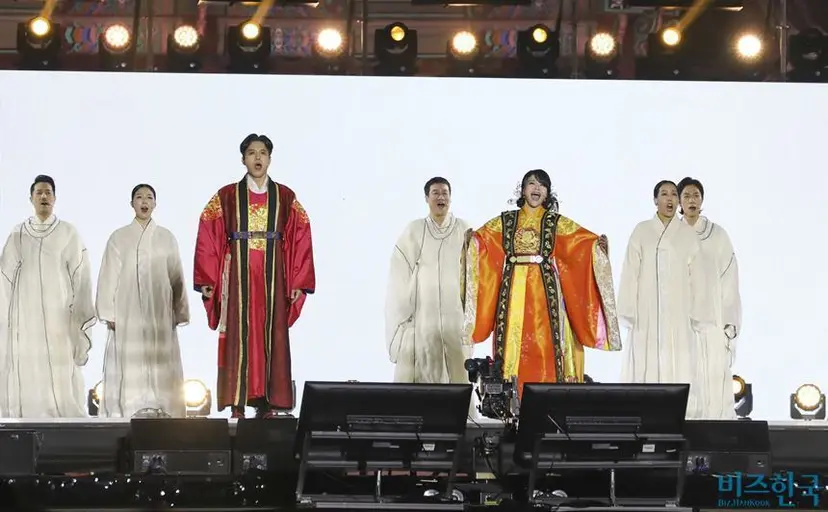
It didn’t stop at video content. The musical "Empress Myeongseong" premiered in 1995. In a performance scene where most works were based on foreign originals, "Empress Myeongseong" became the first case of an original musical based on a real historical figure from Korea to enter the U.S. and U.K. markets. It can be said that this laid the foundation for the musical "KPOP" (referenced as 'Maybe Happy Ending' in the text) to win six Tony Awards recently.
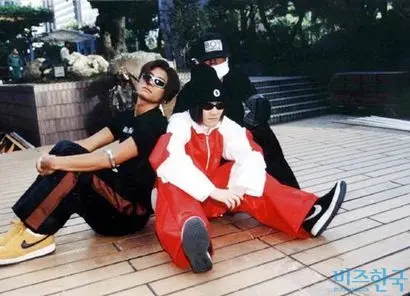
From the perspective of creative freedom, the prior censorship of music was abolished on November 18, 1995. When the song "Sidaeyugam" from Seo Taiji and Boys' 4th album was ruled unbroadcastable by the Performance Ethics Committee, fans campaigned for the abolition of the prior censorship system. By then, singer Chung Tae-chun had already been fighting for the abolition of the system since 1990. The following year, the Constitutional Court of Korea ruled the prior censorship system for movies unconstitutional (93Heon-Ga 13, 91Heon-Ba 10). With the disappearance of the prior censorship system, it became possible to freely create movies and dramas and sing songs. The foundation for cultural democracy had been established.
Some say that the Hallyu phenomenon was created by national policy. However, rather than the state, the Hallyu phenomenon is a natural occurrence created by creators, companies, and the fans—the consumers—as democracy progressed. It is also a precious fruit of Korean democracy following high-speed economic growth. The word "Culture," which means culture, originated from the Latin "Cultura," which means "to cultivate or nurture." Absolute time is required to nurture anything. Trying to pull on crop sprouts to help them grow faster (Allmyo-Jojang) can actually ruin them. The aforementioned cases, which marked their 30th anniversary this year, speak to the essence of such cultural outcomes. Thirty years is a generation. Now is the time for K-Culture to step forward again to think about the future and prepare for another 30 years. Government policy should also focus on this.
The author, Kim Heon-sik, has walked through or cleared paths through the forest of pop culture phenomena since his 20s, with the expectation that there is a way to make the world a better place through culture. In the 21st century, where artificial intelligence and quantum computers are active, he continues on the same path with the same belief.