

[비즈한국] "Missile Specialist" LIG Nex1079550 is sharpening its edge to leap forward as the world’s top missile manufacturer. Moving beyond its history of government-led domestic development and localization of weapon systems, the company is now preparing an ambitious challenge with self-developed guided weapons—designed and planned entirely in-house. The core of this initiative are the "250-pound class small modular missile" and "1000-pound class modular missile" currently in development by LIG Nex1.
Unveiled on July 10 at the "5th Aviation Guided Weapons/Avionics Development Seminar" held in Daejeon, the essence of these two missiles is the shift from "demand-response" to "demand-creation." In other words, rather than simply delivering weapons based on military requirements, the company is presenting new guided weapons essential for future warfare, allowing them to rapidly develop innovative next-generation arms and preempt future demands.
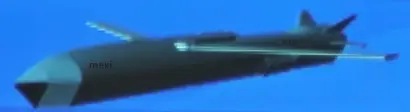
This is a natural transition considering the environment of modern warfare. The speed at which drone and AI weapons are emerging, as seen in the three-year-old Russia-Ukraine war, can never be matched by traditional R&D methods for weapon systems. To quickly surpass leading competitors like MBDA of Europe and Rafael of Israel, LIG Nex1 has chosen a path focused on intelligence via AI, modularity for interchangeable functions and equipment based on the mission, and innovation in production systems.
The first missile, the 250-pound small modular missile, is similar in size to the SDB-II guided bomb from RTX of the U.S. or the SPEAR missile from MBDA of Europe. Its most significant features are its autonomous flight capability—making it effectively a Collaborative Combat Aircraft (CCA)—and its scalability to assume various roles depending on the mission. It is comparable to the AAP-150 small unmanned wingman currently being developed by KAI or the KUS-RP from Korean Air003490.
To achieve this, the 250-pound class small modular missile utilizes carbon composite materials for a high-level stealth design. It allows for the selective application of various modules, including infrared seeker, decoy, strike warhead, electronic warfare, surveillance/reconnaissance, and communication relay. Propulsion can also be widely selected between a glide model without an engine or a propelled model equipped with an engine.
The versatility of the 250-pound small modular missile is endless, matching the diversity of its modules. Equipped with electronic jamming (EW) and electromagnetic pulse (EMP) modules, these small missiles can neutralize enemy drones attacking along the coastline through aerial interference, or act as decoys to force the depletion of enemy air defense missiles.
Specifically, when multiple 250-pound class small modular missiles operate in a swarm to attack advanced warships like North Korea's Cheoeon-class, the deception and jamming missiles can neutralize enemy radar while strike missiles attack the vessel's vulnerable points. Meanwhile, communication relay missiles can transmit detection data to identify optimal strike timing, enabling intelligent coordinated attacks.
The 250-pound class small modular missile is scheduled to undergo concept research through 2025, with prototype production slated for 2028.
The second missile, the 1000-pound class modular missile, will be developed in a first phase as a ground-launched variant from 2025 to 2029, followed by flight tests for air-launched versions from 2029 to 2032. Integrating modular, networked, and intelligent technologies, this missile can be easily converted for anti-ship or land-attack roles through module swapping.
Similar in size and weight to the NSM missile from Kongsberg of Norway, the 1000-pound class modular missile features different seekers and warheads for anti-ship and land-attack variants. However, it utilizes imaging infrared (IIR) seekers for terrain-following low-altitude flight and automatic target recognition, performing navigation and terminal guidance using AI.
These two missiles are highly noteworthy, not only for their development concepts but also for their potential as LIG Nex1's "next-generation flagship products." In particular, the modular concept allows for the replacement of seekers or warheads based on the mission, enabling much faster application of new technologies than in the past. With the integration of AI and network functions, they appear highly likely to evolve beyond simple missiles into "expendable Collaborative Combat Aircraft (CCA)."