

[비즈한국] In his press conference marking 30 days in office, President Lee Jae-myung emphasized that the "Livelihood Recovery Consumption Coupons," to be issued starting on the 21st, are "a measure for domestic demand." By personally mentioning that these measures are necessary to restore consumer sentiment, the President acknowledged that such sentiment is currently suppressed. In reality, concerns stemming from the prolonged slump in domestic demand and slowing exports have heightened the "precautionary saving" mentality, leading to a steady decline in consumption.
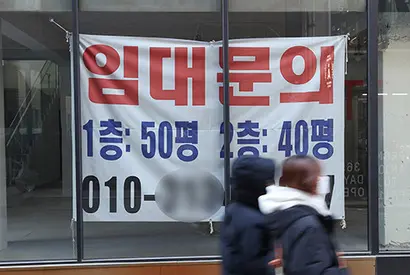
Reducing consumption due to concerns about future household conditions is a natural response. However, if this tightening of belts continues for a long period, it could lead to a vicious cycle of "domestic demand slump → decline in corporate earnings → employment insecurity → decrease in consumption → further domestic demand slump." Accordingly, experts point out that the government must properly manage the Livelihood Recovery Consumption Coupons to ensure they contribute to the recovery of domestic demand.
In a press conference held on the 3rd to mark his 30th day in office, President Lee Jae-myung addressed questions about the Livelihood Recovery Consumption Coupons, saying, "The local economy on the front lines is in a very poor state." He added, "Looking at a reservoir, the very deep parts can endure a bit of drought, but the shallow parts, which make up the majority, suffer too much damage. They may reach a point of no return." He continued, "The economy has a very strong psychological component; if people believe the economy will improve, consumption increases," expressing his expectations for the coupons by adding, "Wouldn't pouring a bit of primer into this spark a virtuous cycle?"
The Livelihood Recovery Consumption Coupons will be distributed in a first round from July 21 to September 12, with 150,000 to 400,000 won provided per person depending on income level. Subsequently, a second round will be held from September 22 to October 31, providing an additional 100,000 won per person to 90% of the population, excluding the top 10% income earners.
The current state of South Korea's domestic demand is so poor that it requires mobilization, even if only through measures like consumption coupons. According to Statistics Korea, the average propensity to consume for all households (one or more persons) in South Korea began to decline in the third quarter of last year and has fallen for nine consecutive months through the first quarter of this year. The average propensity to consume is the ratio of consumption expenditure to a household's disposable income; a lower ratio compared to 100% means that expenditures make up a smaller portion of disposable income.
The average propensity to consume in South Korean households had been on a downward trend due to economic anxiety following the COVID-19 pandemic, but it turned upward in the third quarter of 2022, rising 2.8 percentage points year-on-year to 70.2%. Subsequently, it recorded a two-year upward trend until the second quarter of 2024, with increases of 1.7 percentage points year-on-year in the fourth quarter of 2022, 5.1 percentage points in the first quarter of 2023, 3.8 percentage points in the second quarter, and 0.7 percentage points in the second quarter of 2024.
However, the average propensity to consume turned back to a downward trend in the third quarter of last year, falling 1.3% compared to the same period the previous year, followed by a 1.1 percentage point drop in the fourth quarter, with the decline widening to 2.1% in the first quarter of this year. This nine-month decline and the widening gap are interpreted as evidence that the "precautionary saving" mentality—where people reduce current consumption to prepare for the future—is spreading across society due to heightened anxiety over employment, such as potential job losses caused by the prolonged domestic demand slump. Concerns over the sluggishness of exports, the backbone of the Korean economy, due to rapid changes in trade policy such as tariffs imposed by the Donald Trump U.S. administration, have also influenced the spread of this precautionary saving mentality.
Furthermore, the burden of debt repayment has grown as household debt increased amid economic instability, further worsening the contraction in consumption. Non-consumption expenditure, which refers to unavoidable costs for households such as taxes and interest, reached an all-time high of 1,122,474 won per month in the first quarter of this year, an increase of 46,805 won compared to the same period last year. The average monthly non-consumption expenditure of South Korean households, which was 872,915 won in the first quarter of 2021, surpassed 1 million won in the first quarter of 2023 at 1,062,813 won and increased slightly to 1,075,942 won in the first quarter of 2024, before seeing a larger jump in the first quarter of this year.
As mandatory non-consumption expenditures rise, households have no choice but to further cut their consumption. A situation is unfolding where, on top of suppressed consumer sentiment due to the spread of a precautionary saving mentality, actual purchasing power is also shrinking.