

[비즈한국] Next year's minimum wage has been set at 10,320 won per hour. This is a 2.9% increase, or 290 won, from this year. Converted to a monthly salary, it amounts to approximately 2,156,880 won. While the government emphasizes that labor and management have found common ground for the first time in 17 years, the reality is that it was only a partial agreement. The Federation of Korean Trade Unions (FKTU) approved it, but the Korean Confederation of Trade Unions (KCTU) opposed it, and the business sector also expressed strong dissatisfaction with the rate of increase. In fact, there is never an agreement that satisfies everyone. A more fundamental question lies elsewhere.
“Is ours a country where one can live alone on the minimum wage?”
The reality is still closer to ‘no.’ With the current minimum wage, it is difficult to maintain an independent life not only in Seoul but even in small provincial cities. Based on Seoul, if you add up a 5 million won studio apartment deposit, 500,000 won in monthly rent, 300,000 won for food, 150,000 won for transportation, and about 170,000 won for communications and utilities, it costs at least 1.12 million won per month. If you add medical expenses, clothing costs, and emergency savings to this, at least 1.5 million won or more per month is necessary.
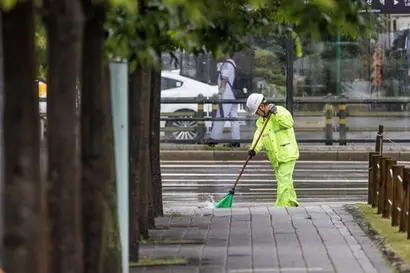
However, once 4 major insurance premiums and taxes are deducted from the monthly minimum wage conversion of 2.15 million won, the actual take-home pay is around 1.9 million won. Realistically, it is difficult to maintain an independent life on this amount. Things are not better in the provinces. Large cities like Busan and Gwangju also have high living costs, and in small and medium-sized cities, jobs themselves often stay at the minimum wage level. In other words, a structure where one has to worry about 'survival' even after working diligently for 40 hours a week does not fit the image of a country that prides itself on being a developed nation.
South Korea is clearly one of the world's top 10 economies, an OECD member, and a country possessing global companies and cultural content. Its GDP per capita has also exceeded $35,000. Just by the numbers, it meets the conditions of a 'developed country.' However, a true developed country should not be a "country where everyone is well-off" but rather "a country where no one is left behind." The fruits of economic growth should be spread evenly throughout society, and even those at the very bottom should be able to live with dignity.
Then, is South Korea's minimum wage lower than in other countries? Looking at the absolute amount, it is in the upper-middle range. South Korea's hourly rate of 10,320 won is higher than Japan's (961 yen, approximately 8,200 won) or the U.S. federal minimum (7.25 dollars, approximately 9,900 won), and lower than France (11.65 euros), Germany (12 euros), and the UK (11.44 pounds). However, the picture changes when looking at this figure as a 'ratio to the median wage.' South Korea is at about 52%, which is mostly below the OECD average of 55–58%.
Furthermore, there is a significant difference in real purchasing power. Minimum wage earners in major European countries improve their quality of life through various social benefits, such as housing subsidies, reduced transportation costs, and medical support, in addition to their basic wages. In contrast, for South Korea, the minimum wage is effectively the entire 'survival wage.' The stock of public rental housing is half the OECD average, and welfare benefits such as housing or livelihood benefits have strict eligibility requirements and high administrative barriers, leading to a low actual receipt rate.
Of course, the burden argument raised by the business sector has a valid context. Rising labor costs act as a real cost pressure on small and medium-sized enterprises and the self-employed. One cannot ignore the possibility that an increased minimum wage could lead to reduced employment or shorter working hours. Especially for small business owners whose management conditions have worsened since COVID-19, a structure that demands wage increases without government support is unbalanced.
Therefore, simply raising the minimum wage will not provide a fundamental solution. What we should learn is the concept of a 'social wage,' which builds a real living wage through 'minimum wage + welfare.' France supplements the limitations of low wages through rental housing subsidies, family allowances, and transportation support, while Germany provides housing and living expenses through a basic security system (Bürgergeld). Nordic countries do not have a statutory minimum wage, but they protect the lives of workers through strong union negotiations and public welfare.
Currently, South Korea has a structure where 'minimum wage = survival line.' Because the concept of a social wage is absent here, wage increases become a struggle for survival, and the structural cycle of conflict between workers and business owners is repeated. To reduce conflict and increase sustainability, we need to redesign how the minimum wage is decided. Instead of a bargaining structure that is repeated like a political battle every year, we need an automatic adjustment formula that reflects inflation, productivity, and median wages, or a mid-to-long-term guideline.
At the same time, support for self-employed individuals and small and medium-sized businesses must be strengthened. Burdens should be shared through practical policy tools such as social insurance premium subsidies, tax breaks, and management consulting. Policies to narrow the wage gap between regular and non-regular workers, and between large corporations and SMEs, must also be implemented in parallel.
Shouldn't this become a 'country where every single worker can live with dignity'? It doesn't matter if that person is a convenience store part-timer, a nursing assistant, a food delivery driver, or a cleaning service employee. Designing wages and systems so that when they work diligently for 8 hours a day, 40 hours a week, they can live alone and maintain their dignity—that is the dignity of a developed nation and the responsibility of the state.