

[비즈한국] The craze for the Korean Wave, K-Culture, and K-Food is nothing new. The shopping spree by overseas tourists, which once began in department stores and cosmetic shops, has now blown into large discount marts.
In particular, as buying snacks and various food items at discount marts as souvenirs before heading home has become a trend, marts and the food industry are rapidly keeping pace with overseas tourists through customized products and enhanced convenience.
Traditional staples evolve... "Seaweed as snacks, ramen in various flavors"
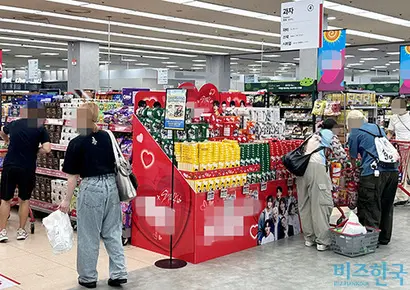
I visited the Lotte Mart Zetaflex branch near Seoul Station. Given its proximity to the Airport Railroad, it has become famous through word-of-mouth among foreigners as the final stop to buy souvenirs before taking a flight back home from Incheon Airport.
Despite being a weekday afternoon, the mart, visited by foreigners of various nationalities from both the East and the West, had more foreign customers than Koreans. In fact, statistics show that foreign sales at Lotte Mart’s Zetaflex Seoul Station branch reached 40% last year.
The most sought-after items by foreigners were, unsurprisingly, seaweed. While the foot traffic was centered around Japanese and Chinese visitors, a notable change was apparent: the variety of seaweed-related products has increased.
"Japanese customers buy a lot of crispy seaweed snacks (gim-bugak). They especially look for shrimp-flavored crispy seaweed, and even kimchi-flavored ones, though they are a bit spicy. They seek them out not just as a side dish for rice, but as a snack to go with alcohol." The store clerk shouted "Biiru (beer)" in Japanese while conducting a tasting event for tourists.
Ramen, a traditional best-seller, is also evolving. As it is now well-known among foreigners that Korean ramen is spicy, tourists were picking out products that suit their palates, ranging from seaweed soup ramen and Toowoomba ramen to jajang ramen and glass noodle (dangmyeon) ramen.
An elderly Indian couple who approached me checked the ingredients carefully, asking, "Please confirm if this jajang ramen contains fish or meat," before putting it in their cart. After I explained that they use soy protein for the meat depicted on the packaging since they are vegetarians, the couple felt reassured and continued their shopping.
Steady sales of snacks: "Filling carts with boxes, constantly restocking"
Among the countless items in the mart, the best-sellers were definitely snacks. Choco pies made with chocolate brownies and sticky rice had the highest preference. While products made with chocolate are generally favored, there is also significant demand for Korean-style rice crackers and traditional snacks.
In particular, as confectionery companies are launching idol marketing campaigns influenced by K-pop and the Korean Wave, products like Pepero, which features Stray Kids as advertising models, were actively chosen. Lotte Wellfood launched a limited edition Pepero featuring photos and autographs of the members after hiring Stray Kids as promotional models.
One Japanese tourist said, "It's not just about the taste; the snack boxes featuring Korean idols are a type of 'merchandise.' I intend to give them out as gifts to my friends after I return home."
Snacks are light, relatively inexpensive, and, above all, do not require refrigeration and have a long shelf life, which makes them the most popular choice for souvenirs. Some tourists were filling entire shopping carts with boxes and sending them home directly via international courier service.
Tourists who find their own information: Even stew seasoning and broth tablets in the cart?
While looking around the marts, one thing stood out: tourists browse websites or notes on their phones or notebooks and shop with a specific goal in mind. This is because we live in an era where tourists actively search for information about Korea.
In fact, searching social media or Google reveals numerous questions in foreign languages such as English or Japanese asking, "What should I buy when I go to Korea?" as well as guides advising, "You must buy this when you go here."
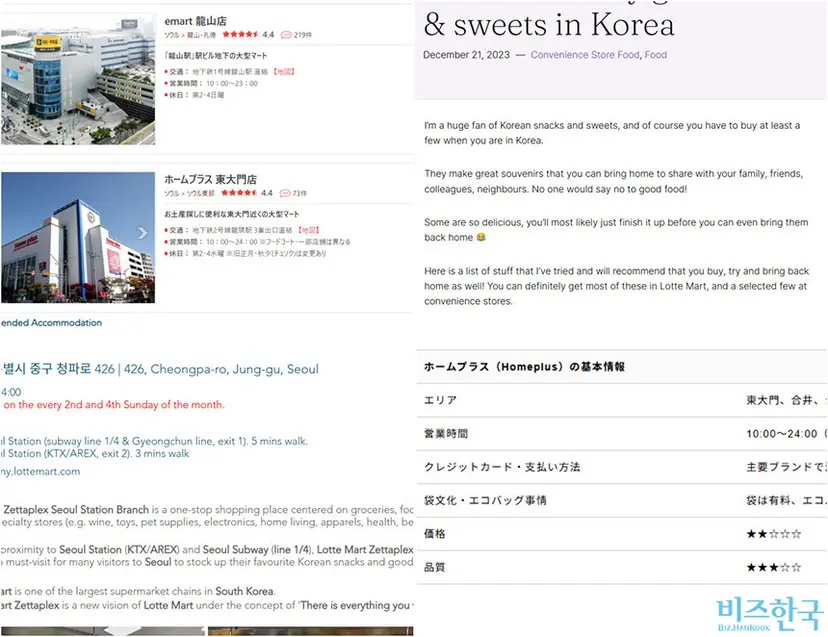
Some sites don't just introduce Korean marts but also compare the features of the three major mart chains in Korea: E-mart139480, Homeplus, and Lotte Mart. They even share information on what to be careful about in Korean marts and which branches offer the best accessibility and convenience for foreign tourists.
Thanks to this information, foreign tourists are purchasing a variety of items that might even surprise Koreans. A prime example is stew seasoning. Instead of buying tubs of doenjang (soybean paste) or gochujang (red chili paste), middle-aged Japanese and Chinese tourists often look for individually packaged doenjang-jjigae or sundubu-jjigae seasoning, which are compact and allow them to easily recreate authentic Korean cuisine. They also picked up Korean ingredients like glass noodles and salted seafood (jeotgal).
Additionally, young tourists sought out low-sugar products like sugar-free candies or kombucha for health management, while the middle-aged demographic shopped according to their needs, buying items like traditional Korean tea, abalone porridge, or easy-to-use broth tablets for cooking after returning home.
Retail industry targets overseas tourist demand: "Buy souvenirs at the mart and send them straight home"
Driven by this demand from overseas tourists for Korean marts, the retail and food industries are taking steps to target them. The aforementioned Lotte Wellfood is not only using idol marketing but is also stepping up efforts to ensure tourists buy their products as "Korean souvenirs."
A prime example is the launch of Pepero and sticky rice pie boxes with designs that highlight Korean tradition. In fact, one store clerk noted, "Even when the same product is available in standard packaging, foreign guests tend to purchase more of the items featuring traditional Korean patterns or drawings."
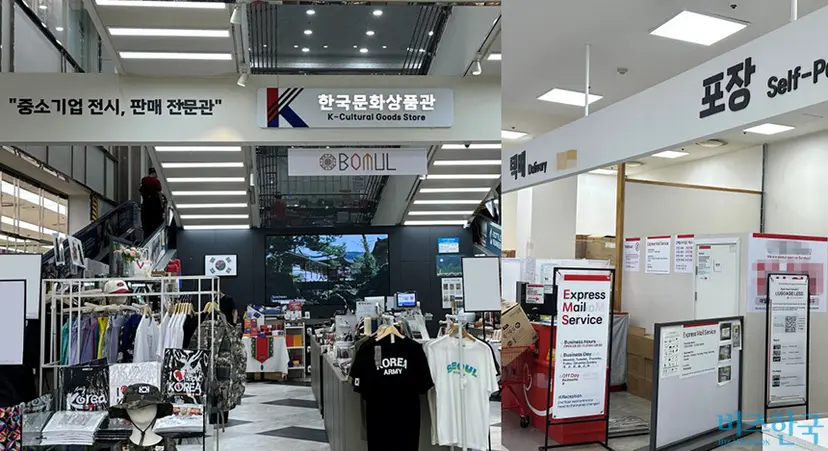
Marts have also begun improving convenience and promoting products to cater to these foreign visitors. Marts with high tourist traffic have installed courier service counters next to the checkout lines to enable immediate overseas shipping. They have also deployed staff who can speak foreign languages, such as English, and have set up dedicated sections for Korean products tailored to overseas tourists.
Furthermore, they are working hard to enhance convenience by providing foreign language guidance on whether products can be taken on board airplanes, and by displaying texts and photos to explain recipes to those who might be unfamiliar with them.