

[비즈한국] Companies sometimes make decisions that are difficult to explain with money alone. Knowing the laws and systems hidden within those decisions helps in understanding the deeper context. "Useful Business Law" introduces clues that help explain the flow of business.

Defamation and insult cases are generally perceived as "personal" matters. As evidenced by media reports, there are many instances where celebrities, YouTubers, and content creators file complaints due to the mental distress caused by malicious comments, leading to the perception of such cases as individual issues.
Recently, however, it has become difficult to dismiss these as mere personal problems. This is because the weight of the online sector in the marketing market has grown significantly. There are even many businesses that operate exclusively online with no offline presence. For such companies, online defamation or insults can seriously damage their external reputation, making it difficult to sustain the business if left unchecked. As companies now view how to handle defamation or insults as a critical issue, these complaints have taken on the character of "corporate cases" or "legal entity cases."
For example, if a restaurant chain relies on delivery apps for most of its revenue, it would be difficult to sustain the business if malicious reviews are continuously posted on those apps. Similarly, if a company commissions a creator for an advertisement and malicious comments are posted about that creator on platforms like YouTube or Twitter, both the creator and the company are forced to halt the campaign.
As such, managing and curbing malicious comments is an important business issue. However, management is not easy. Expressing subjective opinions or making evaluations based on objective grounds are protected as fundamental constitutional rights, such as freedom of expression, so one cannot simply conclude that another person's expression should be restricted just because it doesn't align with their own thoughts. Large corporations also approach this issue with caution to avoid the backlash of being accused of "abusing the system to suppress the legitimate expression of consumer opinions."
Against this backdrop, victims who discover malicious comments often report the infringement of their rights to the customer service centers operated by online platforms. Filing a report has many advantages over filing a criminal complaint. Online platforms verify the report, review the explanation provided, and then take temporary measures to block the post; in the case of domestic platforms, this series of actions is carried out very quickly, often within 1 to 2 weeks. Although termed "temporary," the suspension of the post continues unless the author repeatedly demands its removal.
Actions taken by online platforms are not a matter of grace, but an obligation. It is natural for them to bear responsibility as long as they generate profit through platform operation, as they have indirectly contributed to the realization of defamation and other issues through the platform's operation.
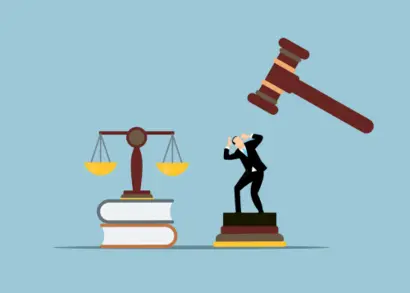
Therefore, the Supreme Court has ruled that in the cases below, online platforms have a duty of care to delete posts and block future posts of similar content, and that failure to act within a reasonable period for such tasks constitutes an illegal act:
① When the illegality of defamatory content posted on an internet space provided by a comprehensive information service provider is clear, and the provider has received a specific and individual request to delete or block the content from the victim whose reputation has been damaged.
② Even if a direct request was not received from the victim, if it is clearly evident that the provider was aware or could have been aware of the circumstances under which the post was made, and if it is technically and economically possible to manage or control the post.
As such, defamatory posts can be quickly blocked by filing a report of rights infringement with online platforms. There are even specialized companies that handle this process technically on behalf of clients. Nevertheless, when monitoring reveals posts where defamation or insults are clear, a criminal complaint may be necessary.
For instance, when filing a report for rights infringement, one must justify the reason for the report; providing evidence of prior criminal convictions for similar acts can help persuade the platform of the necessity of temporary measures.
One should also consider the deterrent effect of criminal punishment, as the public takes the significance of such punishments very seriously. Obtaining just one criminal conviction can be more efficient in resolving issues than filing hundreds or thousands of reports.
When keeping the possibility of a criminal complaint in mind as a means of resolution, there are a few points to note. First, the criminal process takes a considerable amount of time until conclusion. Responding only after a problem has occurred is often too late, and even if a criminal conviction is obtained, it may be too late to be of any help. Therefore, rather than responding after malicious comments have exploded, one should monitor message boards, identify posts where defamation or insults are clear, and initiate complaints once a certain number of cases have accumulated.
Malicious commenters also know their posts can be problematic. This is why many use non-real-name boards or leave comments without logging in, using a "temporary nickname." In such cases, it is impossible to identify the commenters through simple cooperation; one must secure a search and seizure warrant to check the server's access logs. However, online platforms often reply that they have deleted records due to the expiration of the retention period after 30 days have passed. This means that if you file a complaint more than 30 days after the date of posting, there is a high possibility that the investigation will be suspended because the suspect cannot be identified.
The scope recognized as defamation or insult is narrower than one might think. Even if a victim feels offended, a third party may judge the expression to be unproblematic. For example, the Supreme Court ruled that terms like "shameless, scoundrel, sheep's head and dog meat, far-right corrupt forces" (2020Do16897) did not constitute insult, and the Seoul Northern District Court similarly ruled against the charge for expressions like "bubbly, movie bombed, washed-up." Therefore, one needs to consult with relevant parties before concluding that an expression is insulting.
Furthermore, it is frequent that charges are dismissed because the public interest is recognized and there is no intent to slander, or because investigators find it difficult to determine whether facts are true or false in cases of defamation. Based on my experience handling various cases, the expressions most likely to lead to criminal punishment were those sexually insulting women.
Filing reports or complaints due to malicious comments is an uncomfortable experience. In many cases, the assigned investigators view these matters as minor incidents, making it difficult to persuade them. Nevertheless, it is necessary to consider what measures are most effective for an individual or company that has suffered damage.
While some are uncomfortable with raising issues about malicious comments citing freedom of expression, it is not an easy issue to dismiss considering the mental suffering of the victim or the business difficulties faced. It is a problem that would not have needed to be addressed in the first place had no one left a malicious comment.