

[비즈한국] On June 27, the government unveiled a surprise set of real estate measures, citing the need to curb soaring home prices and household debt. The core of this unprecedented, high-intensity regulation included a blanket 600 million KRW limit on mortgage loans in the metropolitan area and regulated zones, a mandatory actual move-in requirement within 6 months of purchase, and a total ban on mortgage loans for multi-home owners.
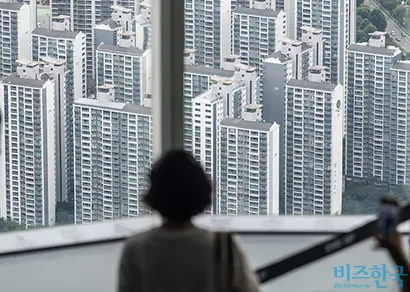
The market was plunged into shock by these measures, and the sighs of genuine homebuyers—wondering, “Are we really unable to buy a house now?”—have grown louder. Within just a few days, cases of people giving up on housing transactions have surged, and chaos is spreading as banks scramble to adjust loan products to comply with the new regulations. If the government's intentions are met, these loan regulations could suppress speculative demand and cool down the overheated housing market. In fact, some forecast that high-priced apartment districts, such as those in Seoul, will enter a short-term “breather” as demand shrinks due to these measures.
However, concerns about the side effects are even greater. The sudden regulatory bomb is hitting ordinary citizens and genuine homebuyers hard, creating a backlash characterized by balloon effects and a "trading cliff" across the market. Furthermore, by tightening relocation loan funding for redevelopment and reconstruction projects, there are signs that urban housing supply may also shrink.
The Backlash of Loan Regulations… A Fatal Blow to Homebuyers, Only the Cash-Rich Smile
While the government explains that these measures are “aimed directly at overheated housing price areas like the Gangnam 3 Districts,” the repercussions are returning as a widespread burden on all genuine homebuyers. Above all, the threshold for home ownership has risen significantly for middle- to low-income households and those in their 20s and 30s who lack a high ratio of cash to home price.
For example, with loans capped at a maximum of 600 million KRW regardless of the property price, buying an apartment in Seoul with an average pre-sale price of 1.5 billion KRW now requires the buyer to come up with over 900 million KRW in cash on their own. In the case of a new 84㎡ apartment (exclusive area), often called the "standard" family home, with an average pre-sale price of 1.578 billion KRW, a genuine homebuyer would have to secure approximately 978 million KRW in cash even after taking out the 600 million KRW loan.
Even for mid-to-small sized 59㎡ units, the average pre-sale price is around 1.18 billion KRW, meaning one cannot even dream of applying without nearly 600 million KRW in equity. This threshold is even higher for popular complexes in the metropolitan area. For instance, the pre-sale price for an 84㎡ unit at the "Jamsil Le-El" reconstruction complex in Songpa-gu, scheduled for sale soon, is expected to be around 2 billion KRW. With the winner required to have over 1.4 billion KRW in their own funds, people are saying, “Only the cash-rich can survive.”
Analysis shows that roughly 74% of apartments in Seoul are directly or indirectly affected by the government's 600 million KRW loan cap. Even buyers in areas like Gangnam and Seocho, who previously could secure hundreds of millions of won in loans based on income and housing prices, now have to cover everything above 600 million KRW in cash, making it effectively impossible for buyers with limited financial capacity to make a purchase.
The reduction in benefits for first-time buyers and homeless households is another issue. With this measure, the LTV preferential limit for homeless people in the metropolitan area was lowered from 80% to 70%, and even policy mortgages like the "Diddimdol" loan and "Bogeumjari" loan are now subject to the uniform 600 million KRW cap. Critics argue that the ladder to home ownership for young people and ordinary citizens who rely heavily on loans has essentially been kicked away.
In the past, the Moon Jae-in administration blocked loans for houses exceeding 1.5 billion KRW, but prices rose anyway. Ultimately, it only caught those without money, while the cash-rich remained unaffected. In reality, the wealthy can bypass regulations with their cash-pumping power, but buyers with fewer assets are facing a backlash that reduces their very opportunity to purchase a home.
There is also a high possibility that this regulation will block existing homeowners from "upgrading" their homes, exacerbating the damage to genuine buyers. As the third stage of the stress DSR regulation was additionally implemented on July 1, calculating a borrower’s repayment ability more conservatively, it is becoming difficult even to fully secure the 600 million KRW “maximum.”
The application of the third stage of stress DSR, which factors in interest rate hike risks, is expected to reduce loan amounts by an additional 15-20%, disrupting the plans of ordinary heads of households who intended to buy homes relying on loans. The fact that household debt surged by over 7 trillion KRW in June, just before the DSR regulation announcement, reflects this desperation among those trying to catch the "last train."
Many prospective buyers who missed the last train are now frustrated in front of the heightened loan threshold. Along with self-reproach such as, "I should have just bought a house earlier," some are already abandoning signed sales contracts due to lack of funds. It is an ironic situation where a policy intended to help genuine buyers is instead strangling them the most.
Is Supply Freezing Due to Regulations? Side Effects of Limiting Relocation and Intermediate Payment Loans
The aftermath of the 6.27 measures is having negative ripple effects across the entire supply and demand structure of the real estate market. In particular, side effects on the housing supply side are concerning. In the name of managing household debt, the government applied the 600 million KRW ceiling to intermediate payment and balance payment loans in the pre-sale market. As a result, the cash burden winners must prepare by the time of move-in for high-priced complexes will increase exponentially, and applicants lacking financial resources will be forced to give up their move-in even if they win the subscription.
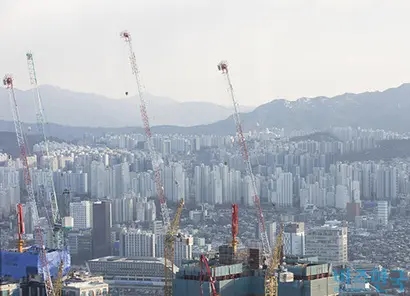
In an actual case, the "Ottere Foret" reconstruction complex in Seongdong-gu, Seoul, which issued a pre-sale notice on June 27, was lucky enough to apply existing regulations and receive intermediate payment loans. However, a problem arose: out of the 1.4 billion KRW borrowed as intermediate payments for an 84㎡ unit priced at 2.4 billion KRW, the buyer cannot move in unless 800 million KRW is repaid by the time of the final balance. This is because only 600 million KRW can be converted into a balance loan, and the remaining intermediate loan amount must be paid off before moving in.
For complexes that have not yet begun pre-sales, the 600 million KRW limit is applied from the initial intermediate loan stage, restructuring the market so that only the cash-rich can effectively win subscriptions for high-priced complexes where pre-sale prices reach billions of won. This is a point that could lead to a future contraction of the new pre-sale market and an increase in unsold properties.
For construction companies, it becomes difficult to sell to ordinary buyers, and if pre-sales fail, there is a higher possibility of delaying or cancelling supply schedules. In fact, a forecast that "subscription competition rates will cool down after the regulations" is spreading through the industry, and a state of high tension is emerging among construction companies as schedules for some planned "lottery-like" subscription complexes are being delayed.
Redevelopment and reconstruction project sites are also on high alert. In the 6.27 measures, the government also tightened regulations on relocation loan funding for project union members. Specifically, for reconstruction and redevelopment union members in the pre-management disposition plan approval stage, those holding two or more homes are completely banned from receiving relocation loans, and for non-homeowner members (those who have union membership but do not own a separate home), the relocation loan limit has been capped at 600 million KRW.
For union members, this means significant restrictions on securing the necessary relocation funds to tear down their existing homes. In particular, in urban redevelopment areas such as Seoul, where existing home prices are high, 600 million KRW is often far from sufficient, and multi-homeowner union members may find it difficult to participate in projects at all because loans are blocked. The concern that if relocation loans are not supplied smoothly, union member relocation consent will be delayed and, consequently, projects will be delayed, is becoming a reality.
This leads directly to a contraction of urban housing supply. Reconstruction and redevelopment are vital sources of new housing in places like Seoul; if project speed slows down or projects fall through, the future housing supply shortage is bound to intensify. A red light has been turned on for the supply of new apartments due to decreases in move-in volumes. In fact, Seoul's apartment move-in volume is expected to be halved from about 46,700 households this year to about 24,000 next year, and nationwide, the volume of move-ins scheduled for 2025 is predicted to decrease by more than 100,000 households compared to the previous year. If relocation loans for maintenance projects are also choked off in this situation, it will likely lead to a prolonged housing crisis. Side effects on the Jeonse (lump-sum deposit) market cannot be overlooked either.
With this measure, "Jeonse loans conditional on transfer of ownership" have been completely banned, blocking the practice of taking in tenants for new apartments and using the deposit to cover the remaining balance. Due to the requirement to move in within 6 months upon receiving a loan, people must move in and live there after buying a home, which may reduce the number of Jeonse and monthly rent listings.
Furthermore, the Jeonse loan guarantee limit was reduced from 90% to 80%, reducing the amount of deposit a tenant can secure through loans. This has the potential to increase the housing burden on homeless ordinary citizens who cannot afford high Jeonse prices.
Some predict that as tenants who find it difficult to get Jeonse loans turn their eyes to monthly rent, the "conversion of Jeonse to monthly rent" will accelerate, and combined with expectations of interest rate cuts, Jeonse prices could turn upward again. Ultimately, genuine ordinary homebuyers could face a double whammy of it being difficult to buy a house and hard to find a Jeonse unit.
Regulation-Only Approaches Have Limits… The Fundamental Solution is Expanding Supply
The government announced that it would calm the real estate market by strengthening loan regulations, but experts warn that this policy fails to be a structural solution and carries a high risk of only increasing side effects. First of all, the regulations were too uniform and abrupt.
Suppressing demand through regulation alone has clear limits, and the burden falls entirely on the common people. Therefore, for housing price stabilization, a dual strategy of demand suppression along with supply expansion is necessary. To establish a healthy housing market order in the long term, beyond temporary transaction stagnation, sufficient housing supply tailored to demand and precise support measures for genuine buyers must proceed in parallel.
We have already experienced many times that regulation-only real estate policies produce numerous aftermaths such as balloon effects, trading cliffs, supply shrinkage, and Jeonse crises, ultimately creating only innocent victims. This time is no exception. The intention to catch the two rabbits of household debt management and home price stabilization is understandable, but "too much is as bad as too little."
The policy stance must now be fundamentally re-examined. A balanced alternative that centers on protecting genuine buyers and expanding housing supply is urgent. The government must proceed with effective measures that can increase housing supply. It should ease irrational regulations so that private reconstruction and redevelopment projects can pick up speed, and public housing supply plans must be made visible as soon as possible.
It is necessary to meticulously prepare financial support mechanisms for genuine homebuyers such as young people and newlyweds. For first-time buyers, the LTV preferential range should be expanded again, and precise policy coordination, such as making loan limits flexible according to the reality of housing prices by region, is required. Even if the goal of curbing multi-homeowner speculative demand is achieved through other means such as taxes and ownership regulations, the ladder to home ownership must not be kicked away from homeless genuine homebuyers.
For the government's confidence—that "loan regulations are just a taste, and there are plenty of demand suppression and supply measures"—to have a realistic effect, it must pivot, even now, from a regulation-only approach to comprehensive measures that embrace genuine buyers and supply aspects. We must keep in mind that sustainable solutions that the market and the public can feel lie not in excessive loan shackles, but in stable housing supply and the restoration of a housing ladder for the common people.
Kim Hak-ryeol, widely known by the pen name "Pasyong," head of the Smart Tube Real Estate Research Institute, served as a team leader at the Korea Gallup Real Estate Research Institute. He operates and hosts the Naver blog "Pasyong's World Expedition" and the YouTube channel "Stew TV." His books include 'Power of Gyeonggi-do Real Estate (2024)', 'Absolute Principles of Seoul Real Estate (2023)', 'Future of Incheon Real Estate (2022)', 'Kim Hak-ryeol's Absolute Principles of Real Estate Investment (2022)', 'Future Map of South Korean Real Estate (2021)', 'Only Places That Will Rise, Rise From Now On (2020)', and 'South Korea Real Estate User Guide (2020)'.