

[비즈한국] The number of homes purchased by the Korea Land and Housing Corporation (LH) to assist victims of Jeonse fraud has surpassed 1,000. On July 4, the Ministry of Land, Infrastructure and Transport announced that following the implementation of the Jeonse Fraud Victim Assistance Act, LH has purchased 1,043 affected properties, and the number of people officially recognized as Jeonse fraud victims has reached 31,437.
The Jeonse fraud housing purchase program is a relief measure where LH buys properties affected by fraud and provides them to victims as public rental housing. With the revision of the relevant law last year, the criteria for purchase were expanded. However, there are ongoing criticisms that the government's recent "purchase of affected housing" policy is not functioning effectively in practice. Some are even calling for additional measures to address Jeonse fraud.
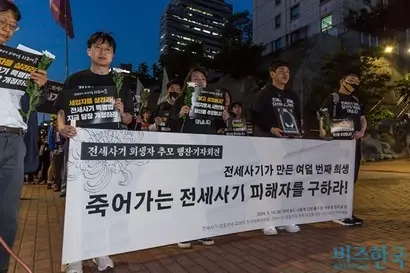
According to the Ministry of Land, Infrastructure and Transport, 1,037 cases were approved as Jeonse fraud victims in June alone. Since June 2023, a total of 31,437 cases have been recognized as Jeonse fraud victims under the Jeonse Fraud Victim Assistance Act. Of these, 30,968 are Korean nationals and 469 are foreign nationals. There have been 8,939 applications for victim status that were not approved.
The government's main countermeasure introduced last November was the expansion of "LH Jeonse fraud housing purchases." Through revisions to the Jeonse Fraud Victim Assistance Act, the scope of properties eligible for LH purchase was widened, with the goal of allowing victims to reside in these units for up to 10 years.
The Ministry of Land, Infrastructure and Transport stated that the number of homes purchased by LH has now exceeded 1,000. As of June 25, the ministry reports that 12,703 preliminary consultation requests for property purchases have been received from victims, with 4,819 of those eligible for purchase-lease arrangements. While 835 cases were deemed ineligible for purchase, those rejected prior to the legal revision are subject to re-examination. According to the ministry, only 31 cases have been rejected since the law was amended.
The issue is effectiveness. Jeonse fraud victims argue that the LH purchase method alone cannot provide sufficient protection. Although the ministry promotes the increase in purchase figures due to legal revisions, critics argue that the purchase criteria remain ambiguous and the eligibility for public housing is too restrictive.
At a seminar held at the National Assembly on July 2 titled "Seeking Solutions to the Problems of LH Jeonse Fraud Housing Purchases," victims and experts criticized the delays and structural limitations of LH's program. Professor Lim Jae-man of Sejong University pointed out a massive gap in support, noting that while victims whose homes were purchased recovered an average of 80% of their deposits, those excluded from the program only saw a recovery rate of 25-46%.
Jeong Tae-woon, head of a victim group in Daegu, criticized the fact that purchase criteria for properties involving trust fraud have yet to be finalized, leading to cases where victims are forcibly evicted in the meantime. Last year, LH announced that it would include non-compliant buildings, trust-fraud properties, and properties with senior tenants—previously ineligible—in its purchase program, but critics point out that no clear criteria for these have been established.
Foreign nationals also face difficulties in receiving meaningful support. Lee Ha-eun, vice-chair of a Gyeonggi-based victim committee, pointed out that foreign victims are often excluded from purchases and face forced eviction. Consequently, she argued that even for fraud occurring in the same building, the recovery rate varies up to 100% based on factors like priority repayment rights and auction profits. In reality, even if foreign nationals are recognized as Jeonse fraud victims, they remain excluded from public housing rental subsidies.
During the seminar, several proposals were raised, including: priority debt acquisition by "bad banks" like the Korea Asset Management Corporation (KAMCO) and the suspension of auctions/public sales; bulk acquisition of collectively collateralized debt and affected properties; preparation of minimum guarantee plans such as monthly housing cost subsidies; and debt forgiveness for Jeonse loans if the landlord declares bankruptcy and the deposit repayment obligation is discharged.
A common issue cited regarding the purchase program is the limited scope of relief. Park Hyo-joo, team leader of the Housing and Tax Team at People's Solidarity for Participatory Democracy, told BizHankook, "There are over 30,000 total victims, but only 1,000 purchases have been completed. Although LH began purchasing in November last year, the conditions are so strict that many properties are ineligible. Of the 1,000 homes purchased, zero were trust-fraud properties. This was a concern raised last year, and even with expanded criteria, it remains difficult to purchase illegal buildings or trust-related properties. The same applies when the legal rights involved are complex."
Even if a property is selected for purchase, the actual acquisition takes time. "Once victims apply, it takes a long time for LH staff to assess the state of the home, conduct appraisals, and wait for court auctions to conclude," Park explained. "This is why there are constant demands for faster purchases."
Choi Eun-young, director of the Korea Center for City and Environment Research, explained, "The LH purchase method had clear limitations from the start. Because the eligibility is restricted, many victims realistically fall into structural blind spots. Critics have been saying since last year that this measure alone cannot solve the problem because the cases are so diverse. I have seen unique cases in certain regions where even priority repayment rights do not apply. Therefore, it is necessary to provide various solution options. We are watching to see what new measures the government will introduce."
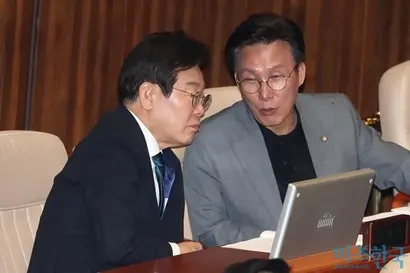
Political circles are also raising the need for additional measures. On July 3, Kim Byung-ki, acting leader of the Democratic Party of Korea, pointed out, "Although the law was revised last August to allow LH to purchase trust-fraud properties, specific purchase criteria have still not been established. As a result, there have been zero purchases of trust-fraud properties to date." Kim stated he would take action to resolve the issue.
It remains unclear whether the government will introduce further measures. While President Yoon Suk-yeol included "a society free from Jeonse fraud, and restoring the housing ladder for the working class through affordable monthly and Jeonse rent" as a campaign pledge, no independent countermeasure package specifically for Jeonse fraud has been released.
A Ministry of Land, Infrastructure and Transport official stated, "We plan to speed up the purchase of affected homes under the special act and work closely with the National Assembly to push for further revisions to the special act to strengthen crime prevention and victim relief."