

[비즈한국] An analysis of the sustainability reports (ESG reports) published this year by the four major publicly traded K-pop agencies (HYBE352820, SM, JYP, and YG) shows that they have regressed in key indicators, such as greenhouse gas emissions intensity. All four entertainment companies showed a trend of declining core ESG metrics, including greenhouse gas intensity, voluntary turnover rates, and profitability. Critics point out that these entertainment companies, which carry the stigma of being "prime culprits" of carbon emissions due to the mass production of plastic albums, have failed to implement substantial ESG management.
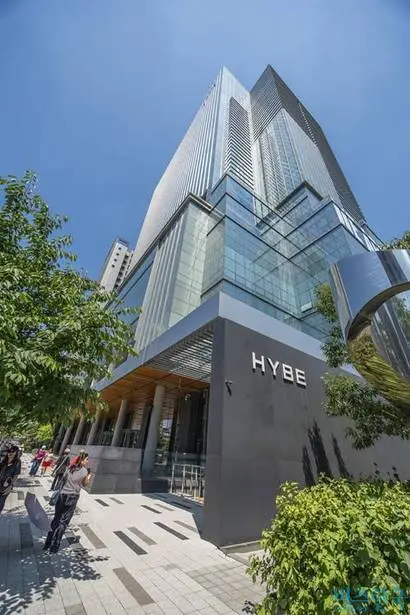
Sustainability reports are self-published documents that quantify a company's performance in Environmental (E), Social (S), and Governance (G) areas, such as carbon emissions and turnover rates, and are verified by third-party institutions. While publishing these reports is not a mandatory disclosure requirement, they serve as crucial non-financial performance metrics that form the basis for investment decisions by institutional investors and global funds.
Major domestic agencies JYP and SM Entertainment have been publishing sustainability reports since 2022, while HYBE and YG Entertainment began in 2023. The stated purpose is to practice ESG management and reduce carbon emissions and plastic usage, but the effectiveness of these efforts remains in question.
Greenhouse gas emissions and intensity both on the rise
Greenhouse gas emissions for the four major listed entertainment companies have increased compared to last year. According to the 2024 sustainability reports published by each company this year, greenhouse gas emissions (based on Scope 1+2, direct and indirect emissions) for 2024 compared to 2023 rose by approximately 14.3% for HYBE, 15.6% for SM, and 8.3% for JYP. Among the "Big 4," only YG saw a decrease, falling by approximately 27.8%. However, because YG's concert revenue also declined, its greenhouse gas emissions intensity actually increased.
Greenhouse gas emissions intensity is an indicator of a company's carbon efficiency; a higher figure means more greenhouse gases were emitted to generate the same amount of revenue. A rise in this figure indicates a lack of carbon reduction management. Greenhouse gas emissions intensity increased by more than 9% for all four agencies. HYBE rose from 0.314 last year to 0.346 this year (+0.032). SM increased from 0.21 last year to 0.23 this year (+0.02). JYP rose from 0.208 last year to 0.248 this year (+0.04). YG also increased from 0.37 last year to 0.41 this year (+0.04).
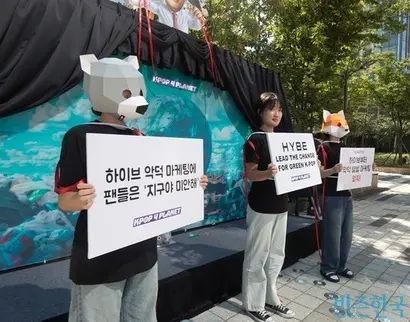
YG sees '1 in 5' employees quit… turnover rates rise across the board
The rate of voluntary resignations also increased at all four companies. The voluntary turnover rate for HYBE rose from 12.6% last year (based on 2023) to 16.5% this year (based on 2024), an increase of 3.9 percentage points. SM increased from 16.7% to 17% (+0.3%p). JYP rose from 10.8% to 14.5% (+3.7%p). YG saw the highest rate among the Big 4, rising from 17% last year to 22.5% this year (+5.5%p). This means that 1 in 5 employees left the company.
Operating profit declines, HYBE and YG turn to losses
While greenhouse gas emissions rose, operating profits declined. All four companies saw a drop in consolidated operating profit compared to the previous year (2023). HYBE fell by approximately 37.8% (295.6 billion KRW in 2023 to 184 billion KRW in 2024), SM by approximately 23.1% (113.5 billion KRW to 87.3 billion KRW), and JYP by approximately 24.3% (169.4 billion KRW to 128.2 billion KRW). YG saw the largest decline, dropping approximately 123.7% (from 86.9 billion KRW in 2023 to -20.6 billion KRW in 2024).
Net income also decreased for all. Consolidated net income fell by approximately 101.9% for HYBE (183.4 billion KRW to -3.4 billion KRW), approximately 99% for SM (82.7 billion KRW to 0.8 billion KRW), approximately 7% for JYP (105 billion KRW to 97.7 billion KRW), and approximately 74% for YG (76.9 billion KRW to 20 billion KRW).
However, the ESG ratings for the four companies evaluated by the Korea Institute of Corporate Governance and Sustainability (KCGS) this year all improved overall to at least a 'B' grade, which is considered 'Average.' Last year, HYBE had an ESG grade of C (Weak), but this year it received a B+ (Good), an improvement of two levels. YG, which also received a C last year, was awarded a B this year. SM maintained its B+ grade from last year, while JYP—which held a B+ grade last year—dropped one level to a B this year due to worsening governance, making it the only one of the Big 4 to see its ESG grade decline.
Pop culture critic Kim Heon-sik assessed that structural improvements in the entertainment industry are necessary for true ESG management. Kim noted, "Record sales by entertainment companies remain environmentally unfriendly. High carbon emissions are inevitable. Furthermore, due to the nature of the industry and its high labor intensity, improvements in the labor structures of the K-pop industry are needed."