

[비즈한국] The web drama "EXO Next Door," aired in 2015, became the first web drama to surpass 10 million views. Following this, K-pop agencies began producing web dramas in earnest.
There are several reasons why agencies started producing web dramas. First, it was the realization of a dream—an opportunity to produce their own dramas. Additionally, they could diversify revenue by creating derivative content for K-pop fans at a lower production cost. The budget for one standard drama could cover 3–4 web dramas. There was also no need for complex contracts between idol group IP holders and drama production companies. Furthermore, it served as a training process to refine the acting skills of idol group members, preemptively avoiding acting-related controversies.
The mobile-native younger generation seemed optimized for consuming web dramas. They don't watch television, opting instead to consume content through social media. Moreover, as "digital quarterism"—the inability to focus on one thing for more than 15 minutes—became widespread, it was discovered that the preference for short-form content was extremely high. This trend eventually led to the emergence of the short-form drama genre. Compared to web dramas, which run about 10 minutes, short-form dramas are 1–2 minutes long with a tighter billing system. This reflected both the characteristics and the limitations of their revenue models.
However, this trend actually highlighted a "digging culture" where people delve deeply into specific fields. Younger generations don't just prefer short content; they don't mind long-form content if it involves subjects or materials they love. In particular, the mobile environment is perfect for "digging in," as it provides the conditions for "binge-watching" regardless of length.
Moreover, web dramas and short-form dramas are limited in terms of genre. Interest-grabbing content was easily confined to romances. Even if romance dramas cost less to produce, they still require a high level of planning because they must consider both public appeal and artistic quality. Furthermore, because web dramas and short-form dramas are realistic content featuring actual people, there were inherent limitations in setting and direction.
Specifically, there were limits to creating visual effects on a small budget. There were even dramas featuring K-pop idols that lacked singing and performances—things that K-pop fans want to see the most. In this situation, K-pop agencies began to withdraw from web and short-form dramas. They also overlooked the fact that the younger generation worldwide enjoys animation more than general movies or dramas.
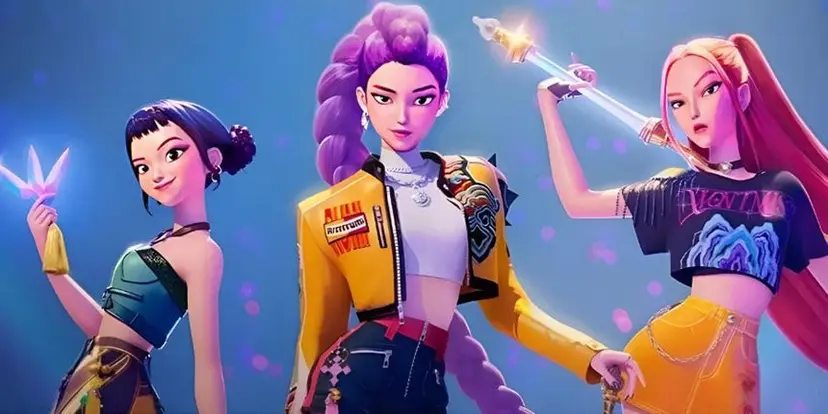
The recently released animation "K-Pop Demon Hunters" was enough to cause a cultural shock because it very effectively grafted the cultural potential of animation onto K-pop. Director Maggie Kang said she was inspired by watching BTS's online concert during the COVID-19 pandemic, but it reminded me of the virtual boy group "PLAVE."
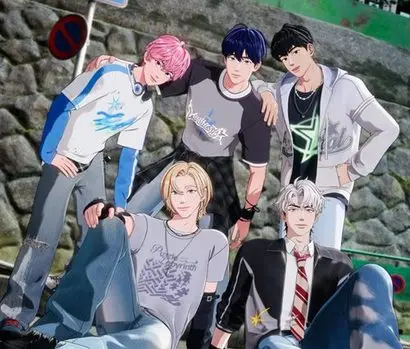
Even though Korea has the world's best virtual idols, it hasn't even managed to connect them with animation. What was confirmed through the COVID-19 pandemic was the younger generation's attention to virtual humans. As non-face-to-face culture spread, whether someone is a "real" person or not became less important. If the content is something they want and like, they don't care if it's fake.
Meanwhile, the younger generation has also started binge-watching content via platforms like Netflix, and one such category is animation. This is the reason why Japanese animation continues to be a hit among young Koreans. Web dramas and similar content were viewed more as free content rather than a genre worth paying for, whereas animation has been reborn as a genre worth the price of admission. K-pop agencies essentially watched this trend from the sidelines.
This is not just a limitation of the agencies; it is because Korea is heavily polarized between the two extremes of realism and fantasy. Animation is what connects the two. In Korea, animation is often thought of as a genre for infants or children, but in Japan and the U.S., it is considered a "young adult" genre enjoyed by the younger generation. This signifies industrial value.
Above all, animation is more appealing than live-action content. It can depict scenes that human actors cannot and can bring imagination to life. Through cartoonish imagination, a much wider variety of stories can be told. It is also possible to deepen storylines that cannot be captured in short-form content. Furthermore, it can reflect real people; the appearance, voice, and even the singing and performance of actual idol groups can be implemented. On top of this, more stunning aesthetic attempts and completions can be achieved. "K-Pop Demon Hunters" demonstrates these points well.
Now, thanks to generative AI, the environment makes it easy for anyone to attempt to create not just comics, but animations as well. CJ ENM035760 unveiled its own generative AI agent and an animation series produced through it on June 30. It was a short-form animation, but feature-length production is also possible soon.
K-pop agencies also need to actively engage in animation production. No matter how successful "K-Pop Demon Hunters" is, it was not made by Korea. It is a Japanese production with American capital and platforms. If Korea cannot create animation related to K-pop itself, it will simply end up doing all the hard work only for others to reap the rewards.
This is not limited to agencies. A comprehensive change and response regarding animation content are needed across Korea. The younger generation doesn't only like short things. Whether or not it is a real person is not important; what matters most is realizing or satisfying their desires. This point should be aimed for as a principle of content creation.
Author Kim Heon-sik has been walking through and navigating the forest of pop culture phenomena since his 20s, driven by the expectation that there is a way to make the world a better place through culture. In the 21st century, where AI and quantum computers are at play, he continues on the same path with the same belief.