

[비즈한국] Although it has been nearly a month since the Lee Jae-myung administration took office, it seems more time is needed to see the precise blueprint for our national defense policy. The new government's defense policy must address highly complex demands, including not only strengthening military power and expanding defense exports but also incorporating measures to rectify the issues surrounding the December 3 martial law incident and prevent its recurrence.
Within this complex defense policy, there is something that must be scrutinized: we need a thorough reassessment of whether the title of "5th strongest military in the world," which previous administrations have proudly touted, is truly realistic.
Why should we reject this proud evaluation of being the "world's 5th strongest" and re-examine our military capabilities from scratch? It is because all previous administrations have relied on this flawed statistic, leading to an overestimation of our military's shortcomings and an underestimation of its strengths. Only by correcting this can we achieve "real force modernization" that can effectively respond to the North Korean nuclear threat and provocations from neighboring countries.
The figure that ranks South Korea as the 5th military power in the world comes from the "Global Firepower (GFP)" rankings. GFP analyzes over 60 indicators annually to announce military rankings, placing Korea 5th in the world, ahead of Japan, the UK, and France. For reference, Pakistan is ranked 12th, Israel 15th, and North Korea 34th.
The problem is that this figure is neither transparently disclosed nor a credible comparative indicator. GFP calculates rankings by including a country's quantity of weapons, population, industrial indicators, logistics, coastline length, and natural resources. Most of its data relies on the CIA's "World Factbook" rather than independent research, and it only tallies weapon counts and troop sizes without reflecting weapon performance, aging, or soldier proficiency.
Above all, it contains no information regarding nuclear weapons. Since the number of nuclear warheads or missiles is excluded from the count, a contradiction arises where the UK and France, which possess nuclear forces, are ranked lower than South Korea. Given the power of nuclear weapons, it is difficult to conclude that Korea is militarily superior to Pakistan, Israel, or North Korea simply because it ranks higher. While GFP may be meaningful as a reference for long-term warfare capability by considering a nation's economic power alongside its military, it is not an accurate metric for military strength itself.
So, what is the power that really matters for national security, which the GFP rankings cannot reveal? I believe the answer lies in the commonalities between the three-year-old war in Ukraine and the 12-day Israel-Iran conflict: "strategic strike capability."
Strategic strike capability is the power to weaken the enemy's ability to wage war, thereby ending the conflict early. Although Russia had the advantage in troop and equipment numbers, it lacked sufficient air power and exhausted its missile inventory in a prolonged conflict. Russia used drones to compensate for this, but the explosive power of one Shahed-136 drone is only 1/40th of the bombs used in a single F-16 sortie, limiting its effectiveness in destroying enemy command posts or key military facilities.
Conversely, in its 12-day war with Iran, Israel conducted bombing runs with dozens to as many as 200 F-15, F-16, and F-35 fighter jets every day, concentrating firepower equivalent to 3,000–6,000 Shahed drones daily. Thanks to this, Israel secured air superiority and the initiative early in the war, although the limitation that it could not strike Iran's deep underground nuclear facilities was also exposed.
Ultimately, for us to possess a "true world 5th" military, large-scale, long-range precision strike capabilities are essential for strategic victory. Fortunately, the current government's State Planning Committee also appears to be strengthening this aspect by ordering force development focused on "Massive Punishment and Retaliation." However, relying only on existing methods of force modernization has clear limitations.
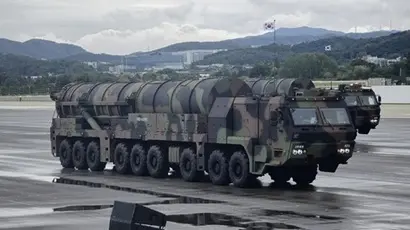
For example, our boasted "monster missile," the Hyunmoo-5, can destroy key North Korean underground targets, but its high production cost makes it difficult to secure sufficient quantities. The Korea Air and Missile Defense (KAMD) system, designed to counter North Korea's new missiles, also faces growing cost burdens as it becomes increasingly sophisticated.
To solve this, we need to develop new, cost-effective concepts, such as using ground-based launchers utilizing naval vertical launch systems (KVLS-2) instead of expensive Transporter Erector Launchers (TELs), developing large-scale, low-cost attack drones using advanced engine technology, and utilizing high-mobility suicide drones for low-altitude ballistic missile defense. I hope the Lee Jae-myung administration goes beyond a simple numbers game of being a "top 5 military power" and builds the actual capabilities needed to respond to security threats.