

[비즈한국] The members of BTS have all completed their military service and returned to civilian life. Expectations are high for the music, performances, and activities they will showcase once again. The prospect that if BTS does not resume group activities in the second half of the year, there may be no K-pop nominees at the 2026 Grammy Awards for the first time in three years, speaks volumes about their stature. So, what will "BTS 2.0" look like? It can be viewed through the lens of new paths and storytelling.
Undoubtedly, BTS is treading a path that no one has taken before. Or rather, they are building the path themselves. It is a path created together with their fandom. What makes BTS unique is that they are perfecting their storytelling in the very process of forging that path. When we think of "storytelling," we might think of movies, dramas, or music videos, but BTS and ARMY are creating that storytelling in reality.
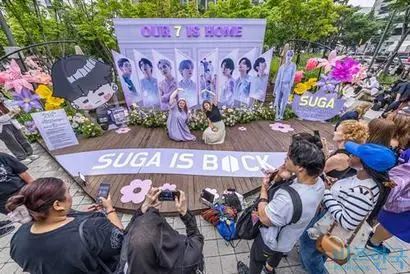
Conflict is crucial to storytelling. Conflict represents the hardships and adversities faced by the protagonist. People find not just sympathy, but inspiration and the strength to live, in stories that document how the protagonist overcomes these trials. Storytelling requires a concept and a worldview as prerequisites. Above all, the worldview—the mindset and philosophy of overcoming hardship and adversity—is what matters most.
For the members of BTS, military enlistment was a series of hardships and adversities. In South Korea, military service is still widely perceived by young men as a "gap" in their lives. For young celebrities, it has been described as a "military hiatus." This was considered particularly fatal for idol members. Idols usually debut in their teens and are active throughout their twenties; stepping away from the scene was seen as no different from retirement. Moreover, in an era where trends change rapidly, young people are bound to feel anxiety and fear.
Furthermore, discussions in political circles regarding military service exemptions for BTS unsettled the members, even though they had already officially announced their intention to enlist. Their agency seemed swayed by these political debates and proposals. However, not only is it difficult to create new standards for military exemption, but applying such new standards would inevitably lead to controversy and noise.
Above all, the environment for enjoying music has changed. Idols are increasingly becoming "long-running idols." We now see cases of idol groups, who previously struggled to last more than 5 or 7 years, surviving for over a decade. This includes not only BTS, but also BLACKPINK, TWICE, and SEVENTEEN. Furthermore, their fandoms have expanded far beyond Korea to a global scale, providing a solid foundation of support.
This is no longer an era where a few media outlets monopolize content about musicians. The smart mobile environment has become another stage for idols. BTS identified this early on and used mobile platforms as a medium to consistently deliver content to their fans.
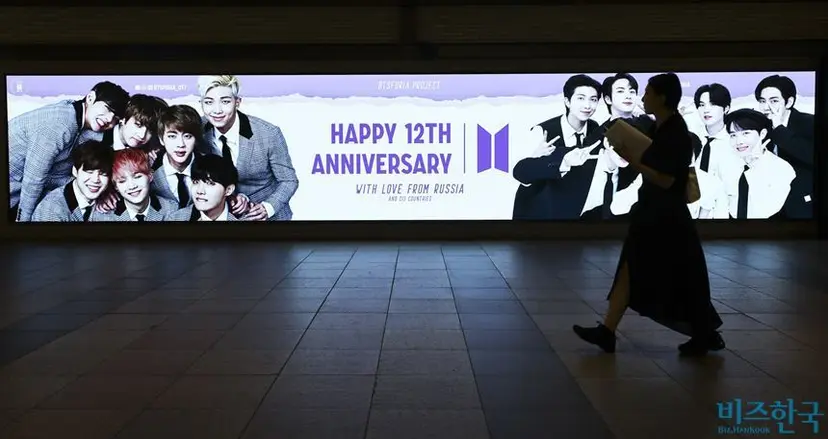
The BTS members enlisted sequentially, producing as much content as possible before their departure and releasing it at appropriate intervals during their service. The remaining members pursued solo activities, keeping the BTS brand alive. Not only did they secure a wealth of personal content alongside their group activities, but they also elevated their individual brand value. It was, in every sense, the establishment of their status as artists.
In the meantime, the members who were discharged first continued their individual activities, keeping the name of BTS constantly in the public eye until the others returned. They overcame hardship and adversity in a wise manner, which is not something that can be done alone. While the large number of members could have led to conflict and division, BTS overcame this through mutual affection and teamwork. They even dismissed calls for the removal of specific members with their "I Purple You" spirit.
BTS, which builds its storytelling around the human life cycle, has successfully navigated the daunting process of military service. Consequently, they will be able to weave deeper, richer life philosophies and wisdom into their songs and performances. Furthermore, because the experience of military service is rare globally, it carries even greater meaning and value. It will serve as a badge of honor and a point of pride in their brand.
BTS’s massive, global storytelling—which encompasses the individual, the group, society, the nation, and eventually the world—continues today and will evolve even further. The core will remain a story of overcoming crises together, not alone. In an era where society is moving toward extreme individualism and "every man for himself," I look forward to the continued impact of BTS as they lead K-culture in providing a meaningful alternative for the future.
The author, Kim Heon-sik, has spent his time exploring the landscape of pop culture phenomena since his twenties, driven by the hope that there is a way to make the world a better place through culture. He continues this journey with the same conviction even in the 21st century, an era dominated by artificial intelligence and quantum computing.