

[비즈한국] It has been confirmed through BizHankook's coverage that the Hannam Neighborhood Park development project in Yongsan-gu, Seoul, was officially scrapped on the 25th. The Seoul Metropolitan Government had been engaged in a 10-year legal battle over the validity of the project plan with the landowner, Booyoung Housing, and ultimately won the case last March. However, it is reported that the city was unable to proceed with the actual land acquisition due to the burden of land compensation costs totaling 460 billion won. The implementation plan for the Hannam Neighborhood Park project lost its legal effect today, marking five years since its official announcement. Moving forward, the Seoul Metropolitan Government is expected to establish a district unit plan for the area to induce public contributions from Booyoung Housing.
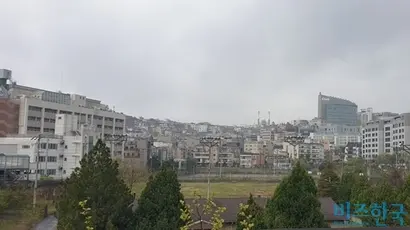
'Failure to Acquire Land for 5 Years': Hannam Neighborhood Park Implementation Plan Expired
According to the Seoul Metropolitan Government on the 25th, the implementation plan for the Hannam Neighborhood Park development project expired as five years have passed since it was officially announced. Under the National Land Planning and Utilization Act, if the project executor of a long-term unexecuted urban planning facility does not apply for land expropriation within five years from the date of the implementation plan's announcement, the plan loses its legal effect. The implementation plan for the Hannam Neighborhood Park was announced on June 25, 2020. Consequently, the urban planning facility designation for this project, which had been in place for 20 years since its initial announcement, also lost its effect along with the expiration of the implementation plan under the National Land Planning and Utilization Act.
The reason the Hannam Neighborhood Park implementation plan failed to materialize is attributed to the massive costs of land acquisition. According to data obtained by BizHankook through a public information request to the Seoul Metropolitan Government, the city estimated the land compensation costs for the Hannam Neighborhood Park project at 460 billion won. This meant that in order to proceed with the project, the city would have needed to pay approximately four times the 120 billion won known to be Booyoung Housing’s purchase price from 10 years ago. While the Seoul Metropolitan Government had considered issuing municipal bonds to secure funding for land acquisition, it reportedly felt a heavy financial burden in acquiring the entire site.
An official from the Seoul Metropolitan Government stated, "As of today, the implementation plan for Hannam Neighborhood Park has lost its legal effect. A related official announcement will be made in the future," adding, "We plan to pursue urban management measures for the site to prevent 난개발 (disorderly development)."
'Inducing Public Contribution': Seoul City Begins Establishing District Unit Plan
The Seoul Metropolitan Government has begun the process of establishing a district unit plan for the former Hannam Neighborhood Park site. The city intends to complete the district unit plan in the second half of this year by either modifying the surrounding Hannam District Unit Plan or establishing a separate plan for the site. A district unit plan is an urban management scheme that determines land use and building layouts to manage urban spaces systematically and efficiently. Under the National Land Planning and Utilization Act, the mayor may designate a district unit planning zone for areas released from park designation that require planned development or management.
The Seoul Metropolitan Government may use the district unit plan to induce public contributions from Booyoung Housing. Currently, the Hannam Neighborhood Park site is zoned as a Type 1 General Residential Area, allowing only buildings with a floor area ratio of 200% or less and a height of up to 4 stories. For Booyoung Housing to build high-rise residential complexes like the nearby Hannam The Hill or Nine One Hannam, an upward adjustment of the zoning is required. As it establishes a district unit plan for this site, the Seoul Metropolitan Government could offer deregulation, such as zoning adjustments, on the condition of public contributions.
It is understood that Booyoung Housing has not yet established a project plan for the Hannam Neighborhood Park site. The Seoul Metropolitan Government requested the submission of a project plan for the site last year, but Booyoung Housing has not yet submitted one. An official from Booyoung Housing stated only that they are "waiting for the public notice of the expiration (of the Hannam Neighborhood Park implementation plan)" and that "there is no additional information yet."
10-Year Legal Battle Between Seoul City and Booyoung Housing Over Park Development
This area was designated for park development as early as the Japanese colonial period. The Japanese Government-General of Korea designated the Hannam-dong, Bogwang-dong, and Itaewon-dong areas as public parks in March 1940. After liberation, the area was used as a U.S. military base and barracks, then left as vacant land after the U.S. military withdrew in 2015. Although the Ministry of Land, Infrastructure and Transport (then the Ministry of Construction) decided on an urban planning facility development plan for the current scale in April 1979, the site was later discussed for de-designation when the government established guidelines for the release (sunset) of long-term unexecuted urban planning facilities in 2015.
The Hannam Neighborhood Park development project took concrete shape 10 years ago. Despite arguments to scrap the park project in the area, the Seoul Metropolitan Government decided on a development plan for 28,197 square meters of land in 677-1 Hannam-dong in September 2015 and announced the topographical map. In April 2020, after completing public review, the city authorized the urban planning facility project implementation plan, which specified the development project in June of that same year. This implementation plan included the intention to acquire and use the land owned by Booyoung Housing for the park.
Booyoung Housing filed a lawsuit in 2015 seeking to cancel the decision on the park development plan. While the first court ruled in favor of the plaintiff, Booyoung Housing, the appellate court overturned the decision and ruled against them. Booyoung Housing appealed immediately, but the Supreme Court dismissed the appeal in 2018, confirming the ruling against the company. Undeterred, Booyoung Housing filed another lawsuit in 2020, demanding that the authorization of the implementation plan, which specified the park development plan, also be invalidated. However, they lost in the first trial in April 2023, the second trial in November last year, and were ultimately defeated again in the Supreme Court this March.