

[비즈한국] The Bank of Korea (BOK)’s digital currency pilot, "Project Hangang," which involves commercial banks, is set to conclude this month. After finishing the three-month experiment from April to June, the BOK plans to carry out follow-up tests involving peer-to-peer transfers and digital vouchers following a system maintenance period. However, with the new government accelerating the institutionalization of digital assets—including the private issuance of "stablecoins"—and the banking sector expressing reservations about additional CBDC testing, attention is turning to whether these plans will proceed as intended.
The Bank of Korea and seven banks (KB Kookmin, Shinhan, Hana, Woori, NH NongHyup, Busan, and IBK024110) will end their deposit token digital wallet pilot project on the 30th. Payments and top-ups using deposit tokens will be unavailable starting July 1, and any remaining token balances will be deposited into linked accounts. Shinhan Bank and others have announced that starting July 16, they will remove the deposit token menu within their apps, and transactions will no longer be possible.
Project Hangang is part of the Bank of Korea’s research and development into Central Bank Digital Currency (CBDC). A CBDC refers to a digital currency manufactured, issued, and distributed by a central bank. A CBDC issued using distributed ledger technology has a fixed value and can replace legal tender. Deposit tokens represent bank deposits tokenized into a digital asset, allowing them to be used like cash. This project aimed to test the seamless functionality of voucher features on deposit tokens issued based on CBDC, and to allow citizens to experience the utility of digital currency.
The BOK has been reviewing the feasibility of introducing a CBDC for a long time. It first revealed its CBDC testing plan in April 2020. After selecting partners, it conducted simulations from August 2021 to November 2022 to implement CBDC distribution and payment service functions. Following the simulations, in November 2023, the BOK, the Financial Services Commission, and the Financial Supervisory Service established a detailed plan for "CBDC Usability Testing" to conduct live transaction tests of digital currency.
As an experiment involving the general public, Project Hangang was conducted cautiously. Seven banks selected as innovative financial service providers—KB Kookmin, Shinhan, Hana, Woori, NH NongHyup, Busan, and IBK—participated, and the number of wallets was limited to a maximum of 100,000 (100,000 participants). Citizens aged 19 or older who hold deposit accounts at these banks were eligible to apply for a wallet.
The deposit tokens were issued not as a general-purpose currency for use by individuals or companies, but as "institutional" digital currency for use only by financial institutions. The seven banks hold the digital currency issued by the Bank of Korea and use it as a real-time asset for interbank fund transfers and final settlements.
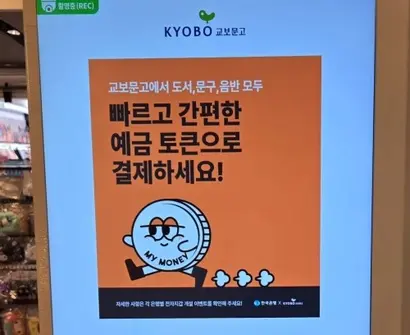
Project participants could convert deposits into tokens and use them to purchase goods or services at designated merchants. Participating merchants included online and offline locations such as Kyobo Book Centre, convenience store 7-Eleven, Ediya Coffee, NongHyup Hanaro Mart, Hyundai Home Shopping, delivery platform Dangyoyo, and Cosmo (a K-pop merchandise store).
Once the first phase of testing concludes, the BOK plans to push for a second phase based on the analyzed results. The second phase, involving follow-up live transactions, focuses on peer-to-peer transfers and the application of digital voucher programs. Since only financial companies designated as innovative financial services can participate, it appears likely to continue with the seven banks. The BOK plans to undergo about two months of system maintenance after the test ends and proceed with the second test after consultation with the banking sector.

However, moving to the second phase of testing does not seem easy. First, there is a difference in position with the government. The new government is actively promoting private issuance of stablecoins, while the BOK is focusing its efforts on CBDC utilization. Stablecoins are virtual assets pegged to real-world assets, but they are issued by private entities. In South Korea, only the central bank (BOK) is constitutionally permitted to issue currency, making private issuance of won-denominated stablecoins impossible under current law.
President Lee Jae-myung is positive about the issuance and distribution of won-based stablecoins. As he made this a key campaign pledge, the possibility of institutionally allowing private issuance has increased. On the 10th, Representative Min Byeong-deok of the Democratic Party of Korea and others proposed a "Digital Asset Basic Act" that would allow stablecoin issuance through a pre-authorization system.
Unlike the government, the BOK maintains a conservative attitude. If the private sector issues stablecoins that act as currency, it could affect monetary policy or the macroeconomy. During the "2025 BOK International Conference" held on the 2nd, BOK Governor Rhee Chang-yong remarked to Christopher Waller, a Governor of the U.S. Federal Reserve, "We need to think about whether to allow non-banking sectors to issue won-denominated stablecoins," adding, "Unlike the U.S., Korea has capital regulations. We must consider the issue of non-banks bypassing capital regulations."
BOK Deputy Governor Yoo Sang-dae expressed the same view at a meeting on the 24th. Deputy Governor Yoo emphasized, "Even if stablecoins are introduced, it is desirable to allow issuance primarily through banks, which are subject to high levels of regulation, and gradually expand to non-banking sectors."
Consultation with the banking sector is also a key factor. Regarding the follow-up live transaction tests, banks have voiced practical difficulties related to costs and procedures. A report titled "BOK-Related Pending Issues," distributed by the Korea Federation of Banks ahead of the meeting between Governor Rhee and bank presidents on the 23rd, reportedly stated, "There are differences of opinion with the BOK regarding the follow-up tests, and we are currently in the process of coordinating," adding, "This is not simply an extension of the existing test but at the same level as conducting a new project."
Perhaps conscious of this situation, Deputy Governor Yoo said on the 24th, "We are in the stage of finalizing the first pilot test and preparing for the second," and "As the government has not yet clarified its stance on the introduction of stablecoins, policy uncertainty remains high. We plan to continue consulting with the banks."