

[비즈한국] With the Seoul Bankruptcy Court mandating the approval of TMON’s rehabilitation plan, Oasis361170 has finalized its acquisition of TMON. Oasis plans to resume TMON’s operations as soon as possible, but there is skepticism in the market. This is because the likelihood of sellers, who suffered disappointment during the rehabilitation process, returning to TMON remains low.
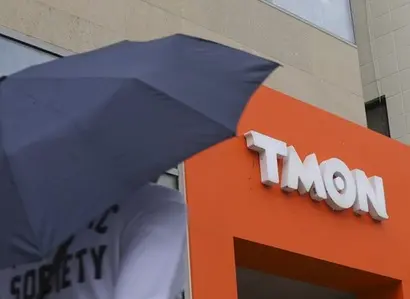
New owner Oasis accelerates TMON normalization
On the 23rd, the Seoul Bankruptcy Court issued a decision to mandate the approval of the rehabilitation plan submitted by the TMON administrator. The court stated, "Even though the (rehabilitation plan) was rejected, we considered that it adheres to the principle of guaranteeing liquidation value, that 59.47% of the total voting rights of rehabilitation creditors agreed to the plan, and that the possibility of executing the plan is very high as the acquisition price was paid in full through an M&A completed before the approval of the rehabilitation plan."
Previously, the rehabilitation plan was rejected at a meeting of interested parties held on the 20th for the review and resolution of the plan. Approval requires consent from at least three-quarters of secured rehabilitation creditors and two-thirds of general rehabilitation creditors. While 100% of secured creditors and 82.16% of the general rehabilitation creditor group agreed, the plan was rejected because only 43.48% of the commercial creditor group, consisting of small business owners and consumers, provided consent.
With the court’s mandatory approval finalizing the acquisition, Oasis plans to speed up the process of normalizing TMON. An Oasis official said, "The legal procedures are almost complete. The acquisition price has already been paid in full, and based on this, the TMON court-appointed administrator and the lead manager for the sale are expected to proceed with the repayment process," adding, "We plan to operate the TMON and Oasis Market platforms separately in the future."
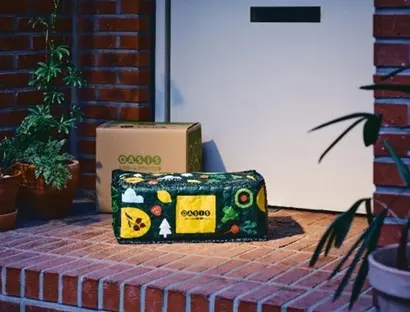
Oasis, which operates the fresh food morning delivery platform "Oasis Market," has been growing profitably ever since its establishment in 2011. It is currently the only profitable company among morning delivery services. Focused on strengthening fundamentals rather than aggressive investment, Oasis began looking toward scaling up starting last year. In July 2024, it attempted to acquire 11Street, but the deal fell through due to disagreements on terms; it subsequently entered the race to acquire TMON and became its new owner.
Oasis is showing confidence in operating TMON. It believes that by applying the operational know-how of Oasis, which has been profitable for 12 consecutive years, to TMON, it can enhance market competitiveness. Oasis stated it would resume TMON platform operations as soon as possible. Industry insiders expect the relaunch to happen in July. An Oasis official said, "We are preparing to resume normal operations soon. However, an exact relaunch date has not been finalized."
'Damages haven't been resolved'—Will sellers who turned their backs on TMON return?
The success or failure of Oasis’s TMON relaunch will likely depend on attracting sellers. Given the nature of an open market, securing sellers is essential to provide a diverse range of products and competitive pricing. However, there are predictions that securing sellers won't be easy, as brand trust in TMON has already plummeted among them.
Oasis is showing determination to go all-out in securing sellers. An Oasis official noted, "We are hiring additional merchandisers (MDs). Since the role of MDs is critical for securing sellers, we are concentrating our efforts there," and added, "While bringing in new sellers is important, we also believe it is crucial for those who previously worked with (TMON) to return. We are persuading sellers by promising the lowest commission rates and fast settlement payments."
Oasis is preparing various incentives to secure sellers. It plans to introduce a settlement system for the day after purchase confirmation and implement commission rates of 3–5%, lower than the industry average of 12–15%. An Oasis official stated, "We cannot pay back the damages the sellers suffered, but we have been thinking about what benefits we can morally provide them. We want to build trust and envision a better future together," adding, "We think that if we quickly finalize and implement these systems and policies, sellers will be able to feel a sense of trust."

However, the reaction from sellers who suffered from the non-payment crisis remains cold. The Tmon-WeMakePrice (T-Wep) victim emergency committee, the "Black Umbrella Committee," predicted that the likelihood of existing sellers returning is low.
An official from the Black Umbrella Committee said, "Sellers whose sales reliance on TMON and WeMakePrice was 70–80% have almost no other sales channels left following the T-Wep crisis. These people have no choice but to go back to TMON, biting the bullet," but added, "Would other, more typical sellers want to go back? Many say they don't even want to look at the platform. Even though Oasis bought TMON, it seems they need to show a more proactive attitude toward communicating with the victims of the non-payment."
Although TMON was saved through corporate rehabilitation, non-payment victims, including sellers, are crying out that they are on the verge of a chain of bankruptcies. With the success of TMON’s corporate rehabilitation, T-Wep victims will receive 0.7562% of their claims. Many express despair at a repayment rate of less than 1% of their losses.
The Black Umbrella Committee official stated, "Last year, the government said it would provide relief funds for T-Wep victims. So, many think the victims were saved. But what victims received at the time were loan products called 'emergency management stabilization funds.' A repayment rate of about 0.75% is less than the interest accumulated in just one week on those loans," adding, "Victims survived for a year on loans while watching how the rehabilitation process would end, and there is a hostile atmosphere due to this absurdly low repayment rate."
The official continued, "There are about 650 sellers in the committee, and 40 of them are already considering bankruptcy or rehabilitation. It seems highly likely that many more victims will file for bankruptcy one after another," and added, "The current crisis occurred because online platforms have been operating without a basic law. However, we cannot change this structural problem overnight. Therefore, it seems necessary for the government to at least enact a special law to protect victims and provide a minimum safety net for damage relief."