

[비즈한국] With reports that the U.S. administration under Donald Trump may restrict Korean semiconductor companies from supplying U.S.-made equipment to their factories in China, attention is focused on the potential impact on the domestic semiconductor industry. Previously, the Biden administration had restricted the export of advanced equipment to curb China's semiconductor ambitions while granting exceptions to firms like those from South Korea. If this policy is finalized, it would effectively cut off the supply of advanced equipment, making a hit to Korean companies with production facilities in China inevitable.
"Exception Withdrawal" Policy Notified to Samsung Electronics and SK Hynix; TSMC Also Included
On the 20th (local time), The Wall Street Journal (WSJ) reported that Alan Estevez, the U.S. Under Secretary of Commerce for Industry and Security, notified Samsung Electronics and SK Hynix this week of a change in policy regarding the supply of U.S.-made semiconductor equipment to China. The notification aims to cancel the previous arrangements that allowed the three companies to receive exemptions whenever they supplied U.S. semiconductor manufacturing equipment to their local plants in China. It is reported that the same policy was also communicated to the world's top foundry (semiconductor contract manufacturing) company, TSMC of Taiwan.
This measure is interpreted as an attempt to effectively block U.S. companies such as Applied Materials (AMAT), Lam Research, and KLA from supplying semiconductor equipment to the Chinese plants of Korean and Taiwanese firms. Even if the import of U.S. semiconductor equipment into China is not completely banned, it is expected that the licensing process will be used to deny the import of advanced equipment.
This policy can be seen as part of a move to exert even stricter control over the flow of U.S. advanced technology to China amidst intensifying strategic competition between the U.S. and China.
During his tenure, former President Joe Biden announced export controls that effectively banned U.S. companies from exporting certain advanced semiconductor equipment to Chinese chipmakers, while granting a reprieve to Korean companies like Samsung Electronics and SK Hynix for their plants in China. While pursuing a "de-risking" policy to curb China’s "technological rise" (excluding China from key technology supply chains), the U.S. utilized the "Validated End-User" (VEU) regulation to minimize collateral damage to allied companies that have been doing business with China.
Disruptions Expected in Local Semiconductor Production in China
As a result, the possibility that the Trump administration might abolish the VEU program implemented by the previous Biden administration cannot be ruled out. As it is suggested that the local plants of Samsung Electronics and SK Hynix will also be subject to these controls, the anxiety among domestic semiconductor companies is mounting. If this policy becomes official, disruptions in the local semiconductor production of Korean companies are predicted. Without the timely supply of U.S.-made manufacturing equipment, the production of semiconductors using advanced processes is impossible.
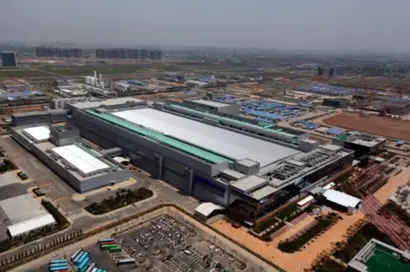
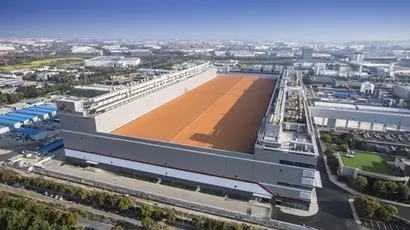
Samsung Electronics operates a NAND flash plant in Xi'an and a semiconductor back-end (packaging) plant in Suzhou, while SK Hynix operates a DRAM plant in Wuxi, a packaging plant in Chongqing, and a NAND plant in Dalian that was acquired from Intel.
Some observers suggest there is a possibility that the U.S. might delay or withdraw the policy. There is also an expectation that even if the import of U.S. equipment is restricted, the damage to domestic firms might not be significant. The view is that since regulations on equipment imports into China have been gradually tightened since the Biden administration, Samsung Electronics and SK Hynix have already been preparing countermeasures.
The WSJ reported that this policy, led by the Commerce Department's Bureau of Industry and Security, has not yet received full consensus from other departments within the U.S. government, meaning it has not been finalized as a policy of the Trump administration. As it is currently at the proposal stage led by the Bureau of Industry and Security, analysts suggest there is still room for the exception to be applied depending on the results of inter-agency consultations.
Kim Yang-paeng, a senior researcher at the Korea Institute for Industrial Economics & Trade (KIET), noted, "Since there have long been restrictions on factory expansions and equipment imports in China, companies have had time to prepare measures," adding, "While the measure to restrict U.S. equipment imports will certainly have an impact, it may not be a matter of major concern."