

[비즈한국] “Even students become workers once they graduate. You should realize that their today will become your future.”
“But we’re law students, aren’t we?”
This is a line from episode 6 of ‘Labor Attorney No Mu-jin.’ In the show, a university uses a ‘liberal arts exam’ unrelated to cleaning work as a scheme to easily fire janitorial staff. When the workers form a union and go on strike with the help of the protagonist, labor attorney No Mu-jin (Jung Kyung-ho), some students demand the strike end, threatening to sue for obstruction of business due to the infringement of their right to learn. The line above is their response to being reprimanded for such behavior.
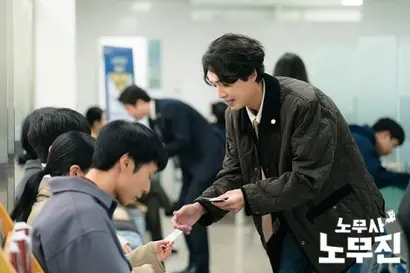
The phrase “But we’re law students, aren’t we?” carries countless implications. The student's expression holds a deep sense of elitism—a belief that “we are different”—along with a blatant disregard for the cleaning staff. There is even a palpable disgust for the word “worker.” But don't we all realize at some point? I don’t mean to harp on age, but as you live, life rarely goes as planned, and in the long run, it doesn’t amount to much. No one is above another, and no one is beneath another. Even that student, overflowing with pride as a law student, is highly likely to end up working in the position of a worker—an employed lawyer—even if they become a professional attorney later. Even if they work at a desk flipping through documents and are treated with respect as “Counsel,” the reality of being a worker does not change. There will come a moment when they, too, are treated as nothing more than a hired hand; will they then try to comfort themselves by thinking, “At least I’m still a lawyer”?

The students’ elitism and rudeness toward the cleaning workers continue in their next line: “Please don’t forget that your salaries come from our tuition fees.” This is nothing short of the apotheosis of money-is-everything ideology, where the ones paying the bills are the masters. This fundamental disregard for workers and obsession with money is at the root of not just the elite university cleaning staff episode in episodes 5 and 6, but most of the labor-related problems depicted in ‘Labor Attorney No Mu-jin.’ I suspect this is also the fundamental reason why an average of 1.6 people die from work-related accidents every day in this country. If there weren’t such disregard for workers, if workers weren’t treated simply as machines to line one's pockets, wouldn't we prevent these systemic structures that allow people to die? In this sense, ‘Labor Attorney No Mu-jin’ is a drama that makes us reflect on why these realities persist while exploring labor issues.
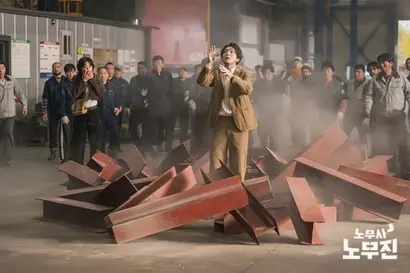
What’s interesting is that the protagonist, No Mu-jin, was originally someone with zero interest in the realities of workers. In fact, he could be seen as someone who occupied a position close to that of the aforementioned “But we’re law students.” He graduated from law school, and although he didn’t pass the bar exam, he was employed by a large conglomerate. With a goal of retiring early, he aggressively dabbled in crypto and futures trading. But after losing everything, he barely managed to pass the certification exam for labor attorneys to put his degree to use. Just looking at how he works with his sister-in-law, Hee-joo (Seol In-ah), and the YouTuber Gyeon-woo (Cha Hak-yeon) to raid high-risk industrial sites to extort “sponsorship fees,” it is clear he is far from the true definition of a labor attorney: a scholar who uses their power to help working people.
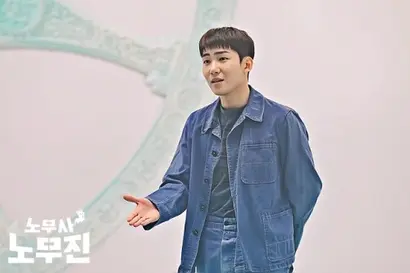
The reason he is reborn as a true advocate for workers ironically lies in the realm of fantasy. After No Mu-jin visits an industrial site and faces death, he enters into an unfair contract with a mysterious shaman (Tang Jun-sang) who saves him, which leads him to start seeing the vengeful spirits of those who died unfairly. The condition of the contract is that he must resolve the grievances of these spirits and help them pass on.
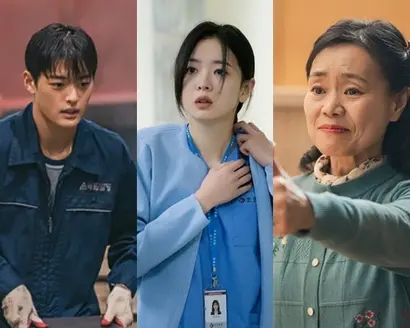
The faces of the spirits he encounters are all heartbreaking. A vocational high school trainee who died caught in factory machinery, a nurse who committed suicide after being bullied and framed for medical malpractice, and the cleaning staff facing the ‘gapjil’ mentioned earlier. It is infuriating that such realities still exist in the 21st century, but in truth, we know. We have repeatedly seen the news reports carrying such stories. We remember the Kim-gun case at Guui Station or the numerous workers who have died in bakery factories trapped in machines. Yet, we have only ever felt pity or minor indignation, likely because of the perception that it doesn't involve us—much like No Mu-jin before he could see the spirits, or the elite law students.
The episodes depicted in the drama are all based on real-life events, and the upcoming ones will be, too. An episode about a worker who passed away while collecting shopping carts in a heatwave is scheduled to appear in episodes 7–8 through Heo Yoon-jae (Yoo Seon-ho). The fact that No Mu-jin’s father, No Taek-yong (Choi Hong-il), works as a security guard is also significant. It is highly likely we will see a story about a security guard suffering from ‘gapjil,’ such as the ‘beaten security guard’ cases often seen on the news. These instances are incredibly heavy. People tend to ignore such heavy and difficult issues if they don’t directly affect them. Perhaps that is why ‘Labor Attorney No Mu-jin’ chose the genre of a comic fantasy action drama. This is also likely why the shaman’s identity is implied to be that of the martyr Jeon Tae-il without ever explicitly naming him.
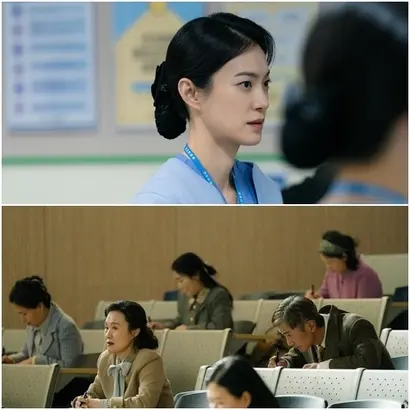
Just as the founders of top-tier conglomerates in Korea once declared, “There will be no unions while I’m still alive,” an uncomfortable gaze toward workers and unions that speak for their rights still exists beneath the surface. ‘Labor Attorney No Mu-jin’ examines whether that uncomfortable gaze is justified. It forces us to face how pervasive these ignored issues are and how they could eventually become our own problems. It does so while pairing the weight of the subject matter with a cheerful resolution.
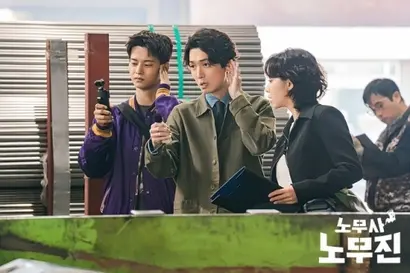
In reality, not every issue is solved by the wit of a labor attorney who sees spirits and his group of energetic creators. And I don’t think the long-held societal view toward workers will change because of this one drama. Nevertheless, this drama is valuable for exploring issues that no one wants to face, especially on a major network. However, it feels a bit ironic when one recalls the controversy regarding labor rights violations by director Yim Soon-rye, or the controversy over workplace bullying of a weathercaster at MBC, the network airing this show. Labor issues are truly as complex and difficult as the perspectives of those involved.
Who is the writer, Jung Soo-jin?
I have covered and written about films, travel, and pop culture across various magazines. I don’t want to fall behind the trends, but I have become an ‘old-timer’ who watches the latest dramas only to predict the obvious clichés in the next scene. I am currently trying to regain my sense of the industry while drifting through the vast world of OTT platforms. My current wish is for a unified OTT subscription plan.