

[비즈한국] Hyundai Motor Company005380 has released a new model of its hydrogen fuel cell electric vehicle (FCEV), the 'Nexo.' While there is a sense of anticipation within Hyundai, it is difficult to guarantee strong performance given that global hydrogen vehicle sales are not what they used to be. The only countries recently seeing an increase in hydrogen vehicle sales are South Korea and China. In the case of China, local manufacturers are heavily invested in hydrogen technology, making it unlikely that Hyundai's foray into the Chinese market will be easy. With the atmosphere surrounding hydrogen vehicles currently unfavorable, the automotive industry is watching to see if the new Nexo can turn the tide.
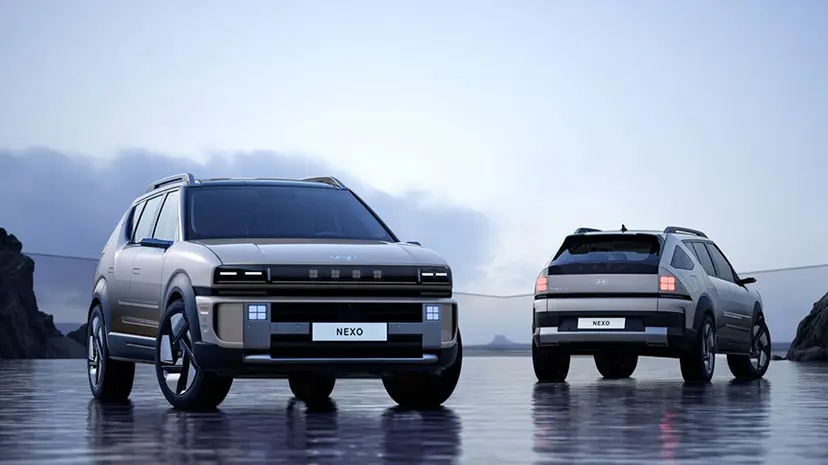
Hyundai Motor Company announced on June 10 that it has unveiled the major specifications and pricing for "The All New Nexo (Nexo)" and has begun full-scale sales. The Nexo is Hyundai's hydrogen vehicle model that was first launched in March 2018; the version released this time is a full-change model. Hyundai explained that this new Nexo symbolizes its vision for hydrogen energy and innovation in eco-friendly mobility.
The Nexo is available in three trims. After applying tax benefits, the prices are: 76.44 million won for the Exclusive, 79.28 million won for the Exclusive Special, and 83.45 million won for the Prestige. When including the government subsidy of 22.5 million won and additional local government subsidies ranging from 7 million to 15 million won, customers could potentially purchase the vehicle starting at approximately 38.94 million won.
The problem is that interest in hydrogen vehicles is not what it once was. While the popularity of electric vehicles (EVs) has also cooled, they are still on a growth trajectory compared to hydrogen vehicles. According to the Ministry of Land, Infrastructure and Transport, the total number of registered vehicles in Korea rose from 26,096,410 at the end of May last year to 26,379,563 by the end of May this year, an increase of 283,153. During the same period, hydrogen vehicle registrations grew from 35,542 to 37,623 (5.8%), while electric vehicles grew from 591,597 to 754,106 (27.4%). Of the vehicles added over the past year, hydrogen vehicles accounted for only 0.73%, while EVs accounted for 57.39%, revealing a significant gap.
The sluggish sales of hydrogen vehicles are attributed to the insufficient charging infrastructure. As of the end of last year, there were only 408 hydrogen charging stations nationwide, compared to 394,123 EV charging stations. An automotive industry official explained, "The decline in hydrogen vehicle sales appears to be the result of a combination of factors, including vehicle price, lack of infrastructure, and safety concerns. Even with subsidies, hydrogen vehicles are expensive and costlier to maintain than EVs."
For Hyundai, there is some hope pinned on President Lee Jae-myung, who made the expansion of hydrogen infrastructure a campaign pledge. In April, President Lee stated via social media, "We will accelerate the transition to eco-friendly future vehicles by expanding hydrogen and electric vehicle infrastructure across the country," adding, "We will also actively support the transition of finished car companies like Hyundai and parts manufacturers to the future vehicle industry."
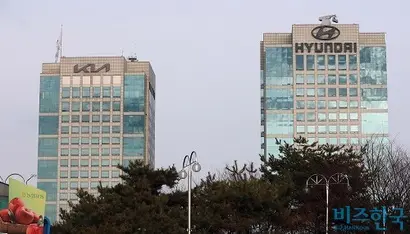
Even if the domestic hydrogen vehicle market recovers, the challenge of breaking into overseas markets remains. According to SNE Research, global hydrogen vehicle sales dropped by 21.61%, from 16,413 in 2023 to 12,866 in 2024. SNE Research noted, "Issues such as a lack of charging infrastructure, the costs of hydrogen production and storage, and difficulties in securing economic feasibility remain as challenges to be solved. For the global hydrogen vehicle market to expand in the long term, strategies such as infrastructure expansion, growth in the commercial vehicle market, and reduced hydrogen production costs must be pursued, and public-private cooperation will be essential."
In the United States, President Donald Trump has previously expressed a negative view of hydrogen vehicles. During a campaign rally in Atlanta last October, President Trump remarked, "We are not going to have hydrogen cars," adding, "There is a problem with hydrogen cars, which is that if they explode, people die."
Unlike the U.S., China has relatively high demand for hydrogen vehicles. Of the 12,866 hydrogen vehicles sold globally last year, 7,113 (55.29%) were sold in China. Chinese automakers are also focusing heavily on hydrogen vehicle research. Last year, Chinese companies sold a total of 5,976 hydrogen vehicles, accounting for 46.45% of total global sales.
In reality, South Korea and China are the only countries seeing an increase in hydrogen vehicle sales. This means that for Hyundai to increase its sales volume, it must succeed in capturing the Chinese market. The problem is that gaining an edge over local Chinese competitors is not easy. China currently boasts high price competitiveness based on low labor costs. Furthermore, the Chinese government is providing unsparing support, such as setting a goal to deploy 1.3 million hydrogen vehicles by 2035.
China is implementing a hydrogen vehicle strategy centered on commercial vehicles. Yutong, a Chinese bus manufacturer, sold 1,137 hydrogen buses last year. Hydrogen vehicles are considered more suitable for commercial use than passenger cars because they offer faster refueling times than EVs and longer driving ranges. While Hyundai also manufactures commercial hydrogen vehicles, such as the Elec City bus, Universe, and XCIENT truck, they have not received as much attention as the Nexo.
Although Hyundai is considered to be ahead in the hydrogen passenger car market, the future is not necessarily optimistic. Japan’s Toyota is aggressively targeting the market with its Mirai and Crown models. Toyota's market share for hydrogen vehicles dropped sharply from 23.39% in 2023 to 14.90% in 2024, but Toyota is showing renewed determination, having signaled the launch of a hydrogen vehicle with a "new system" in 2026.
In this situation, if the Nexo underperforms, there is no guarantee that Hyundai will maintain its leadership in the global hydrogen vehicle market. Conversely, if the Nexo exceeds expectations, it could solidify Hyundai's position in the hydrogen passenger car market at the very least.
Perhaps for this reason, Hyundai has been focusing on marketing since the Nexo's launch. The company is operating the "Nexo Everycare" program, which includes benefits for purchasing, maintenance cost support, and residual value guarantees for used cars. A Hyundai official stated, "We ask for your continued interest and support for the new Nexo, released after seven years. We expect the 'Nexo Everycare' program, which covers every experience with the Nexo, will provide positive reassurance to customers considering a hydrogen vehicle purchase."