

[비즈한국] Shinsung Tongsang005390 has launched a renewed attempt at a tender offer for voluntary delisting, just one year after its first effort. Industry observers are pointing out that this decision may be aimed at allowing Chairman Yum Tae-soon’s family to monopolize the company’s profits.
Character
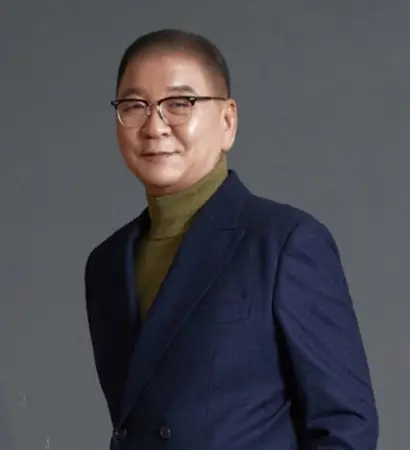
Chairman Yum Tae-soon was born in Seoul in 1953. His parents, who had moved from North Korea, ran a dry goods store in Dongdaemun. After graduating from Kyungdong High School in Seoul, he entered Sogang University in 1973, majoring in political science and diplomacy, and graduated in 1980. During his university years, he was deeply immersed in theater. He was active in the Sogang University drama club, 'Sogang Geukhoe,' and was best friends with actor Moon Sung-keun. This connection led him to serve as a director in charge of funding for the cultural investment firm 'UniKorea' and to continue investing in film production.
He is known for his bold and daring personality. He has often stated that a manager must be a "risk-taker." He generally prefers not to appear in the public eye.
Chairman Yum has designated his youngest son, Yum Sang-won, as his successor. Yum Sang-won has three older sisters (Yum Hye-young, Yum Hye-geun, and Yum Hye-min). Yum Sang-won joined Shinsung Tongsang as a manager in the Management Support Division in 2020 and became an executive director at Canaan in 2022.
Career
After graduating from university, Chairman Yum joined a small bag manufacturer called Hyodong Enterprise. Because he had graduated late due to his passion for theater, he had difficulty finding employment, but Hyodong Enterprise did not have age restrictions. After learning about the bag trade industry, he left the company in 1983 and founded 'Canaan Trading' with 17 million won in capital. Although Canaan Trading's sales were only $2 million in 1984, the year after its founding, Chairman Yum increased profitability by moving production facilities overseas. In the early 1990s, he successfully launched the bag brand 'I-Zzim'.
The 1997 Asian financial crisis became an opportunity for him. As an export company, Canaan Trading held significant dollar reserves, and he made a large fortune as the exchange rate skyrocketed during the crisis. With the funds secured, he acquired Shinsung Tongsang, a Daewoo affiliate that had gone bankrupt, in 2002. At the time, with Canaan recording 100 billion won in sales and acquiring the 300 billion won Shinsung Tongsang, it was described as "a shrimp swallowing a whale."
In 2004, he established Apparel Fashion, a subsidiary specializing in casual clothing. In 2012, he was awarded the Gold Tower Order of Industrial Service Merit, given to businesspeople who have contributed to national industrial development.
Capability
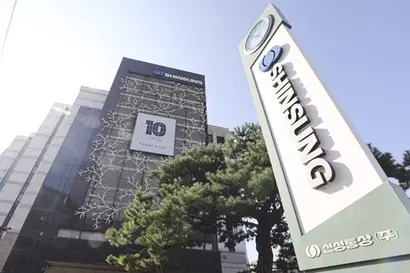
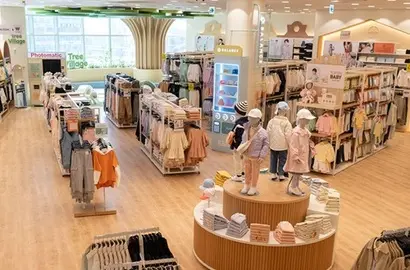
His management ability is viewed positively, particularly for growing 'Top Ten' into a brand with 1 trillion won in sales. Chairman Yum launched the homegrown SPA brand Top Ten in 2012 to compete with the Japanese SPA brand Uniqlo. Chairman Yum considers the first five years after launching Top Ten as the "most difficult period of his business career." While Top Ten recorded losses annually and failed to gain significant attention in the fashion market, its profile was raised after Shinsung Tongsang became known as the manufacturer of the 'PyeongChang Long Padding,' the official merchandise for the 2018 PyeongChang Winter Olympics. During the 2019 boycott of Japanese products, it emerged as a substitute for Uniqlo, leading to a surge in sales.
Chairman Yum’s global sourcing capability played a major role in establishing Top Ten as a value-for-money brand. Shinsung Tongsang consistently expanded its own overseas factories to offer high-quality products at reasonable prices. Chairman Yum is known for personally visiting overseas factories to build the systems.
Critical
In June of last year, Shinsung Tongsang initiated a tender offer with the goal of voluntary delisting, drawing criticism that it was betraying minority shareholders. Despite having accumulated over 300 billion won in retained earnings, Shinsung Tongsang had not issued cash dividends since paying 5 won per share in 2012. As demands for shareholder return policies grew, led by minority shareholders, the company responded with a tender offer and subsequent voluntary delisting. However, the tender offer failed after investors protested that the offer price of 2,300 won per share was too low.
Recently, Chairman Yum has pushed for a renewed attempt at voluntary delisting. Canaan and Apparel Fashion, the first and second largest shareholders of Shinsung Tongsang (both unlisted companies), plan to tender 23,178,102 shares by July 9. The tender offer price is 4,100 won per share. Regarding the background of the voluntary delisting, Shinsung Tongsang stated it aims to "ensure flexibility in management activities and speed in decision-making to maintain and develop competitiveness."
Industry observers point out that this could be an attempt by the owner family to monopolize hundreds of billions of won in profits. If Shinsung Tongsang transitions into an unlisted company, its retained earnings of approximately 380 billion won (as of the end of March 2025) would effectively belong to the owner family. Among shareholders, there is criticism that after using patriotic marketing to grow Top Ten, the company is now making a move that only benefits the owner family.
During last year’s parliamentary audit, allegations were raised that Chairman Yum had gifted shares to his children through illicit internal trading.
Challenges
A positive corporate image has been the driving force behind Shinsung Tongsang’s growth. Through the 'PyeongChang Long Padding,' the company gained recognition among consumers as a "good company" that provides high-quality products at reasonable prices. When the boycott of Japanese products expanded, it received a rebound effect by being perceived as a "patriotic company" and a "homegrown brand."
However, by choosing to pursue a voluntary delisting, Chairman Yum risks destroying the "good company" image he worked so hard to build. Among shareholders, there are fierce reactions, with some even calling for a boycott of companies like Shinsung Tongsang that ignore shareholder value. It remains to be seen how Chairman Yum’s decision—which comes at the cost of brand image damage—will affect Shinsung Tongsang’s future performance.