

[비즈한국] Housing prices in Seoul's Gangnam and Seocho districts have begun to stir once again. The small spark ignited here quickly spread to Gwacheon, and its warmth is now reaching Bundang, Suji in Yongin, and even Yeongtong in Suwon. Anyone who has observed the real estate market for a long time knows that this flow is by no means a coincidence. Much like a current flowing down a river, the rise in housing prices moves according to a certain path and logic. As an investor, you must read the flow of this wave and predict where the next one will head.
The Spark of Gangnam, the Flame of Gwacheon
At the beginning of this year, housing prices in Gangnam and Seocho began to rise again. With various factors overlapping, such as the government’s re-designation of land transaction permit zones, easing of reconstruction regulations, and expectations of interest rate cuts, apartment prices in the Gangnam area soared in an instant. However, the threshold for entering Gangnam remains high. Real demanders and investors lacking sufficient funds naturally seek alternative areas. The first wave hit Gwacheon.
Gwacheon is geographically close to Gangnam, and expectations for future value were high as reconstruction projects began in earnest. In fact, prices for major complexes in Gwacheon rose by hundreds of millions of won in just a few months. As demand pushed out of Gangnam moved to Gwacheon, housing prices there showed an upward trend that rivaled that of Gangnam.
To Bundang, Suji, and Then Yeongtong
Before the heat in Gwacheon could cool down, Bundang began to attract attention once again. Among the first-generation new towns, Bundang boasts excellent infrastructure, school districts, and transportation. Recently, with the added anticipation of reconstruction, young real demanders and investors have been flocking to the area. The visibility of the GTX-A line opening has further enhanced Bundang's value.
The upward trend that started in Bundang continues to Suji in Yongin. Suji is a preferred area for newlyweds and young office workers, and it benefits from overlapping transportation advantages like the GTX-A and the Shinbundang Line. As housing prices in Suji rose, the next wave naturally crossed over to Yeongtong in Suwon. Yeongtong has solid real demand due to its proximity to large-scale industrial complexes like Samsung Digital City. Recently, the announcement of large-scale new housing sales has drawn the intense interest of investors.
Diffusion Paths and Investment Strategies Within
As such, the spark of rising housing prices shows a clear diffusion path starting in Gangnam and moving to Gwacheon, Bundang, Suji, and Yeongtong. This flow is not a simple coincidence, but a result created by transportation infrastructure, reconstruction, and the movement of real demand. Investors need a strategy to pre-emptively secure positions along this path.
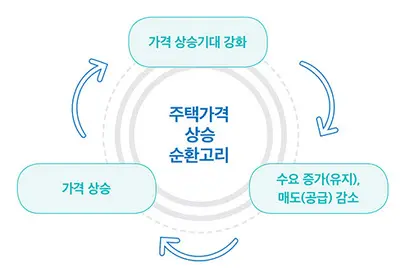
First, when a rising signal is captured in the Gangnam area, one should explore buying opportunities in the adjacent "semi-Gangnam" areas (Gwacheon, Bundang). These regions act as alternatives to Gangnam, and there are many relatively undervalued complexes. Next, focus on regions where transportation benefits and reconstruction issues overlap, such as Bundang and Suji. Large-scale infrastructure projects like the opening of the GTX are powerful drivers of rising housing prices.
Finally, it is important to pre-empt areas where a full-scale rise has not yet begun, such as Yeongtong in Suwon. Target areas include those scheduled for large-scale apartment sales or new town developments, locations near industrial complexes, and areas with active inflows of young populations.
The Essence of Investment and Risk Management
As with any investment, risk management is important. Variables such as government regulatory policies, interest rate fluctuations, and oversupply can change the market flow at any time. In particular, regions that have surged in a short period, like Gwacheon or Bundang, also have a high risk of adjustment. Investors should always keep a close watch on policy changes and set their financial plans conservatively.
Furthermore, rather than being obsessed only with short-term gains, one should examine the growth potential of a region from a long-term perspective. Investing in areas with solid fundamentals—such as expanded transportation infrastructure, the speed of reconstruction project progress, and population inflow trends—ensures stable returns.
An Eye for Reading the Flow of the Wave
The real estate market is always moving. That movement has a certain pattern and logic. The wave of rising housing prices that started in Gangnam continues to Gwacheon, Bundang, Suji, and Yeongtong, providing new opportunities for investors. The important thing is the discernment to read this flow in advance and predict where the next wave will head.
The market is always uncertain, but opportunities exist within that uncertainty. If you understand the logic of housing prices moving along diffusion paths and are prepared to ride that flow, you too can become the protagonist of the next real estate wave.
Investment is not about timing, but the discernment to read the flow. The one who gets on the current first—predicting where the wave of rising housing prices will flow—is the one who ultimately wins.
Kim Hak-ryul, head of the Smart Tube Real Estate Research Institute, known by the pen name "Passong," served as the team leader of the Real Estate Research Headquarters at Gallup Korea. He operates and hosts the Naver blog "Passong's World Exploration" and the YouTube channel "Stube TV." His books include "The Power of Gyeonggi Real Estate (2024)," "The Absolute Principles of Seoul Real Estate (2023)," "The Future of Incheon Real Estate (2022)," "Kim Hak-ryul's Absolute Principles of Real Estate Investment (2022)," "Future Map of South Korea's Real Estate (2021)," "From Now On, Only Places That Rise Will Rise (2020)," and "South Korea's Real Estate Instruction Manual (2020)."