

[비즈한국] With President Lee Jae-myung clearly declaring artificial intelligence (AI) a core national strategic industry, he has entrusted the leadership of his first AI policy to a private-sector expert. On the 15th, the Presidential Office appointed Dr. Ha Jung-woo, former head of the Naver Cloud AI Innovation Center, as the inaugural Senior Presidential Secretary for AI Future. Secretary Ha is regarded as a pragmatic talent who has experienced the full spectrum of technology, policy, and service planning while overseeing Naver’s hyperscale language model (LLM), ‘HyperCLOVA X’.
Secretary Ha’s appointment is highly significant as it marks the starting point of a mega-scale AI development project currently being prepared by the Lee Jae-myung administration. The government has already announced a total of 100 trillion won in public-private joint AI investment, along with a concrete numerical goal of ‘securing 50,000 GPUs.’ Given his experience in the field of technology and industry, Secretary Ha is expected to drive the transition from policy design to implementation with strong momentum.
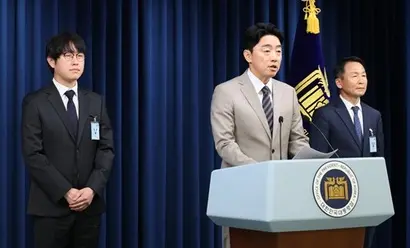
From Technological Sovereignty to Export Strategy… Reflecting the Perception that ‘AI is National Power’
The Lee Jae-myung administration’s AI strategy goes beyond simple industrial promotion; it embodies the philosophy of securing sovereignty in the digital age. The government plans to first secure 50,000 high-performance GPUs to build national-level AI data centers and high-speed computing clusters. At the same time, it will embark on the development of AI-specific NPUs (Neural Processing Units), establishing a foundation for self-reliance starting with computing infrastructure, which is the core of technological sovereignty.
Government-led direct support for AI infrastructure has been a long-standing request from the industry. During his time in the private sector, Secretary Ha repeatedly pointed out that for the AI ecosystem to compete with global big tech, it is difficult for companies to go it alone. Regarding concerns that expensive computing resources like GPUs might be concentrated in specific companies, Secretary Ha has maintained the position that "fair distribution and transparent utilization can be guaranteed based on government assets." His aim was not the monopoly of a few large corporations, but the sharing of open-source achievements and the expansion of the ecosystem by ‘national champion’ companies.
The Lee Jae-myung administration is concretizing this through the ‘AI for Everyone’ pledge made during his candidacy. He promised to provide a Korean-style ChatGPT to the public for free and to support the use of AI in education, administration, and industry by anyone. Creating an environment where the private sector can engage in verification and commercialization through the expansion of AI special zones, the refinement of regulatory sandboxes, and the establishment of AI-specific legislation is also a key pillar.
‘Sovereign AI’, a National Strategy, Not Just Technology… Emerging as a Global Export Item?
The ‘Sovereign AI’ strategy, which Secretary Ha has long emphasized, is also expected to be naturally integrated into government policy. Sovereign AI is the concept of independently developing and operating AI that can understand and reflect a nation’s own language, culture, institutions, and values. It is not just about technological independence, but about overcoming the cultural bias and information errors present in AI models led by global platform companies.
For example, foreign LLMs have often made errors due to a lack of cultural understanding, such as mislabeling the East Sea as the ‘Sea of Japan’ or providing bizarre explanations for Korean artworks. It is pointed out that these issues go beyond mere incidents and can lead to the distortion of learned information, ultimately resulting in misunderstandings about a country’s history, culture, and laws.
In various past media interviews, Secretary Ha has recognized Sovereign AI as a global challenge, not just one for Korea. In fact, countries like France, Germany, and Japan have already begun developing their own AI, and Canada and Italy are creating Sovereign AI ecosystems by having the state directly support startups and technology partners. Korea is also exporting Sovereign AI to the Middle East, Southeast Asia, and Europe, and Naver is expanding full-scale export cooperation starting with Saudi Arabia and the Philippines. Secretary Ha views this strategy as a potential “solution to the neo-imperialism of the digital age.”
Execution Power, Not Just Technology, is the Key… Is ‘Korean AI’ Viable?
In terms of technological competition, Secretary Ha is known to prioritize functionality and serviceability over excessive obsession with technology. He explains that rather than having a compulsion to develop every innovative technology domestically, it is more important to quickly catch up with existing technological trends and possess the ability to connect them into successful services.
In fact, Naver, where Secretary Ha worked, has focused on embedding AI technology into daily life based on its platform-based experience, user data, and service operation capabilities. This aligns with a ‘smart fast-follower’ strategy that uses user-centric utility as a weapon rather than engaging in a head-on collision with global big tech backed by massive capital.
Government-level momentum is also backing this up. Through the presidential ‘National AI Committee’ and the ‘CAIO (Chief AI Officer)’ system, the government is building a control tower for pan-national policy and is also laying the institutional foundation, such as an AI Safety Institute. This system is expected to shorten the technology gap in a short period and contribute to raising the status of ‘Korean AI’ in the global market.