

[비즈한국] With the inauguration of President Lee Jae-myung, who made balanced national development a key campaign pledge, local governments and residents are keenly watching whether the second phase of public institution relocation—which failed under the Moon Jae-in and Yoon Suk-yeol administrations—will finally take place. The regional relocation of public institutions, initiated during the Roh Moo-hyun administration under the Special Act on Balanced National Development, targeted 153 public organizations.
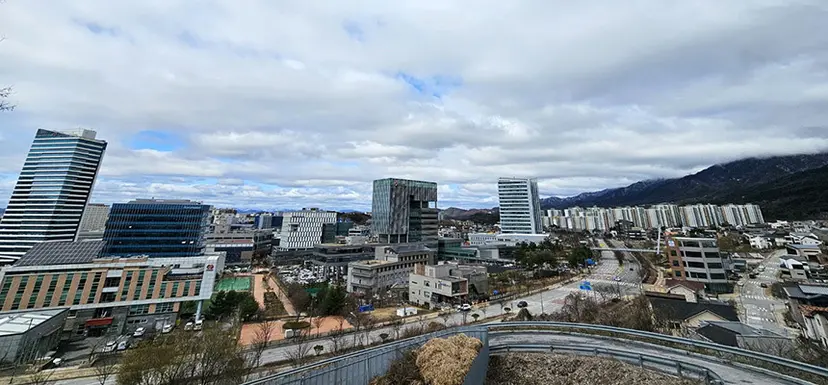
Following the completion of the relocation in December 2019, 51,700 employees are now working in regional areas. Nevertheless, since nearly half of all public institutions remain concentrated in the Seoul metropolitan area, there are strong calls for further relocations. However, experts point out that since many employees' families often continue to live in the capital region, the problems of regional extinction and imbalance may not be resolved unless improvements in educational and environmental infrastructure accompany these moves.
In this presidential election, President Lee promised the second phase of public institution relocation as the sixth of his top 10 pledges, aiming for "balanced national development through a Sejong administrative capital, 5 mega-regions (Capital, Southeast, Daegu-Gyeongbuk, Central, and Honam), and 3 special autonomous regions (Jeju, Gangwon, Jeonbuk)." This follows failed attempts by the Moon and Yoon administrations, where the pledge was made but never implemented. The Moon administration’s plan was halted following the prolonged COVID-19 pandemic, while the Yoon administration’s plan was delayed multiple times citing the 2024 general election, eventually falling apart due to the declaration of martial law and subsequent impeachment.
Currently, all 153 public institutions relocated to provincial areas were those planned and carried out under the blueprint established during the Roh Moo-hyun administration. Under this plan, the relocation process began in 2010 and was completed by the end of 2019. Among these 153 institutions, the largest number—19 organizations (4,073 people)—moved to Sejong City, including the Korea Development Institute (KDI), while 22 individual institutions (6,263 people) relocated to areas such as Osong and Asan.
The remaining 112 institutions settled in "Innovation Cities." By region, 13 organizations (3,262 people) moved to Busan, including the Korea Housing Finance Corporation; 9 organizations (3,179 people) to Ulsan, including the Korea Workers' Compensation & Welfare Service; 11 organizations (4,080 people) to Gyeongnam, including the Korea Land and Housing Corporation; 10 organizations (3,122 people) to Daegu, including the Korea Real Estate Board; 12 organizations (5,561 people) to Gyeongbuk, including the Korea Expressway Corporation; 16 organizations (6,923 people) to Gwangju and Jeonnam, including the Korea Rural Community Corporation; 12 organizations (5,300 people) to Jeonbuk, including the Rural Development Administration; 11 organizations (3,116 people) to Chungbuk, including the Korea Gas Safety Corporation; 13 organizations (6,118 people) to Gangwon, including the Korea Tourism Organization; and 6 organizations (703 people) to Jeju, including the National Institute of Meteorological Sciences.
Although 51,700 employees moved their workplaces to the provinces, population statistics show that the concentration in the capital region has actually deepened. According to Statistics Korea, the population of the Seoul metropolitan area in 2010, when the relocations began, was 24,857,463, or 49.2% of the total population. By 2019, when the relocations were completed, that number had grown to 25,925,799, increasing its share of the total population to 50.0%. Last year, the population in the capital region grew further to 26,047,523, expanding its share to 50.9%.
Because regional hollow-out continues despite these mass relocations and nearly half of all public institutions remain in the capital area, local governments have continued to demand further relocations. As of 2025, there are 331 public institutions under the Act on the Management of Public Institutions, with 123 of them—the largest number—located in Seoul. Additionally, 24 are in Gyeonggi Province and 7 are in Incheon.
However, critics point out that additional relocations alone will not achieve the balanced development or regional revitalization that local governments envision. This is because many employees choose to leave their families in Seoul and work in the provinces alone. In fact, looking at the family relocation rates for employees at institutions moved to Innovation Cities, only Busan (82.4%) and Jeju (82.1%) exceeded 80%. Other regions hovered around 70%, such as Ulsan (71.5%), Daegu (70.9%), Gyeongnam (69.9%), and Gangwon (68.6%). Notably, in Gyeongbuk, the family relocation rate was only 57.0%, and in Chungbuk, it was less than half at 49.4%.