

[비즈한국] Steve Jobs was once ousted from Apple, the company he founded. In 1985, Apple was in the midst of a severe management crisis. The market was changing, and internal conflicts over product strategy and management style were intensifying. Then-CEO John Sculley and the board of directors were concerned about the slump in the Macintosh business pushed by Jobs and his authoritarian leadership style, and eventually, the board stripped Jobs of his management authority. It is a symbolic event demonstrating that even a founder and primary visionary does not own the organization that is a company.
However, such a scene is hard to imagine in Korea. The 'Chairman's' will is often synonymous with the company's will, and boards are more accustomed to rubber-stamping than providing oversight. This structural backwardness is considered a primary reason for the persistent 'Korea Discount.' Despite decades of rapid economic growth, this grim reality remains unchanged.
There is a saying: "Escaping the fox only to meet the tiger." That is exactly how the business world is reacting to the Commercial Act amendment currently nearing a vote in the National Assembly. Unlike the previous amendment that faced a veto during the Yoon Suk-yeol administration, this version adds the '3% rule' (limiting major shareholder voting rights when electing audit committee members) and mandates cumulative voting. In short, this amendment is a powerful signal and a starting point for substantive change, hitting the chronic problems of the Korean management culture head-on.
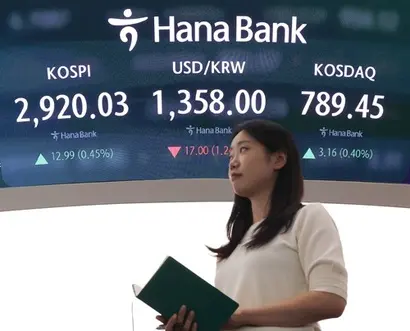
The 'Korea Discount' label that the Korean capital market has been unable to shake off cannot be explained solely by external variables like geopolitical risks. Above all, global investors have not trusted the governance structures of our companies. No matter how good the performance and asset value a company shows, as long as a closed, major-shareholder-centric management culture persists, a 'discount' is inevitable. It is difficult to expect long-term, confident investment from foreign investors in a market where the board is swayed by the will of major shareholders and protections for minority shareholders remain formalistic.
This amendment contains a clear will to break this cycle. In particular, the 3% rule and mandatory cumulative voting are the parts the business world reacts to most sensitively. The 3% rule is essentially a mechanism to prevent major shareholders from dominating the audit committee. The audit committee should function as the last bastion to check deviations by management and major shareholders, but in reality, it is common for major shareholders to seize control through friendly stakes. Limiting this to 3% makes it difficult for major shareholders to exert overwhelming influence in electing audit committee members.
Mandatory cumulative voting is a measure that can create cracks in the overall composition of the board. Until now, many companies excluded cumulative voting in their articles of incorporation, effectively blocking paths for minority shareholders to meaningfully nominate and elect director candidates. If cumulative voting becomes mandatory, it opens at least a channel to reflect shareholder opinions. It becomes a minimum necessary mechanism for ensuring the diversity and independence of the board.
Adding the explicit definition of a director's fiduciary duty toward shareholders makes the change even more structural. Previously, the target of a director's fiduciary duty was defined as the 'company,' but in the reality of Korean management, 'company' was often equated with the 'major shareholder.' By now specifying shareholders as the target, the board takes on the legal responsibility to consider the interests of all shareholders. This aligns with global standards for investor protection.
Of course, there is no small amount of concern from the business world. Complaints are being voiced that it could shrink management activity, increase litigation risks, and lead to excessive management oversight. Indeed, there is a possibility that unnecessary litigation could frequent if the principles of business judgment cannot be convincingly explained to the courts. Therefore, follow-up supplementary legislation and sophisticated application of judicial judgments, such as regarding breach of trust, are absolutely necessary.
However, we must not water down or retreat from the essence of reform as in the past. The essence of the Korea Discount ultimately lies in the backwardness of Korean management culture. Foreign investors do not distrust the entire Korean stock market, but rather take issue with the transparency of specific companies and their governance structures. If this is not improved, Korea will remain a market ignored by global capital despite its outward growth.
This Commercial Act amendment is therefore 'bitter medicine.' It demands fundamental changes to a management structure that has been postponed and avoided until now. The changes—the 3% rule, mandatory cumulative voting, and the explicit fiduciary duty—all converge in one direction: checking management power. It is not an easy transition, but if we do not swallow it now, we will lose another opportunity to restore trust.
Change is uncomfortable. However, one cannot cure an illness without bitter medicine. This amendment could be the first step for the Korean capital market to shed the stigma of being a 'major shareholder's paradise' and approach global standards. I urge both the business world and politicians to face the essential value of this amendment and process it properly without political strife or delay. True market trust stems not from declarations but from structural change. Now is the time to start that change.