

[비즈한국] The election of President Lee Jae-myung is not necessarily welcome news for Taiwan. Although Taiwan's current ruling party, the Democratic Progressive Party (DPP), is classified as a progressive party, its foreign policy stance has mirrored that of South Korea's conservative administrations. In fact, the DPP faced controversy in December 2024 when it posted a message on social media supporting South Korea's emergency martial law.
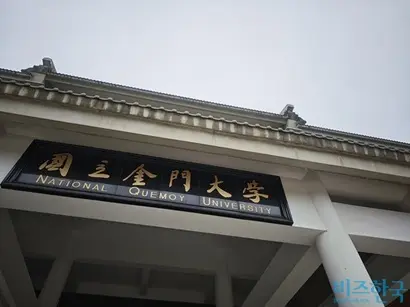
So, how does Taiwan view the launch of the Lee Jae-myung administration? On June 5, immediately after the presidential election, Bizhankook visited Kinmen, a Taiwanese border island located just 2km from mainland China, to meet with international relations experts at the National Quemoy University. As a symbolic military site where cross-strait shelling occurred during the Cold War, Kinmen remains a region where Taiwan’s security perceptions and diplomatic trends regarding China are first reflected.
Liu Pei-yi, Director of the Department of International and Mainland China Affairs, assessed that "the South Korean presidential election symbolically represents the flow of geopolitical changes over the past three years." He noted, "Former President Yoon Suk Yeol did not follow the Moon Jae-in administration's 'Three Noes' policy (no additional THAAD deployment, no participation in the U.S. missile defense system, and no formation of a trilateral military alliance with the U.S. and Japan) and clearly took a pro-U.S., anti-China stance. Yet, Lee Jae-myung has now defeated that very Yoon Suk Yeol."
Director Liu pointed out that the relationship between the U.S. and South Korea holds significant implications for Taiwan. "The Yoon Suk Yeol government pursued a clearly pro-U.S. policy, but the result was President Trump’s 25% tariff. This is evidence that South Korea’s pro-U.S. policy was ineffective. This is exactly what Taiwan needs to ponder right now," he emphasized.
Director Liu observed, "The ROK-U.S. relationship is a vital reference point for thinking about Taiwan-U.S. relations. It shows how Taiwan should position its relationship with the U.S. moving forward. In conclusion, the implication of this election is that despite the Yoon administration’s clear pro-U.S. orientation, what the U.S. gave South Korea was a '25% tariff,' and that President Lee Jae-myung was elected after the impeachment of former President Yoon, who had been pushing that pro-U.S. policy."
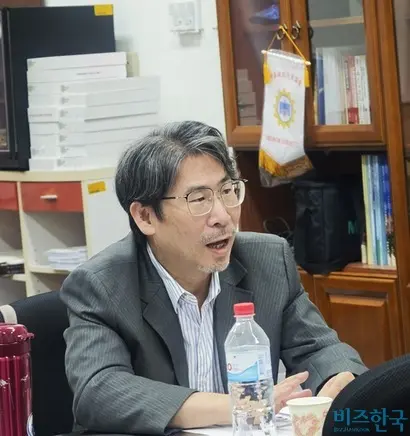
Director Liu sees the situations of Taiwan and South Korea as closely intertwined. "Taiwan and South Korea are representative pro-U.S. nations. This pro-U.S. stance is not just a simple relationship but a structural issue. Both countries rely on the U.S. militarily, economically, and culturally," he said.
Tsai Tsung-hsien, a professor in the Department of Tourism Management and Dean of Academic Affairs, said he does not view the launch of the Lee Jae-myung administration as a threat for this reason. "I don’t see the election of President Lee Jae-myung as threatening to Taiwan. Ultimately, I believe Taiwan and South Korea are a 'community of shared destiny' that faces joint pressure from the U.S. However, there was informal communication between the Taiwanese and South Korean governments during the Yoon administration, and I’m not sure what will happen to that in the future," he said.
Vice President Kao Jui-hsin also expressed, "If there is a problem on the Korean Peninsula, Taiwan is affected, and if there is a problem in Taiwan, the Korean Peninsula falls into a precarious situation. The Korean Peninsula and the Taiwan Strait are linked. Given their high strategic importance, it is difficult to maintain peace in these regions."
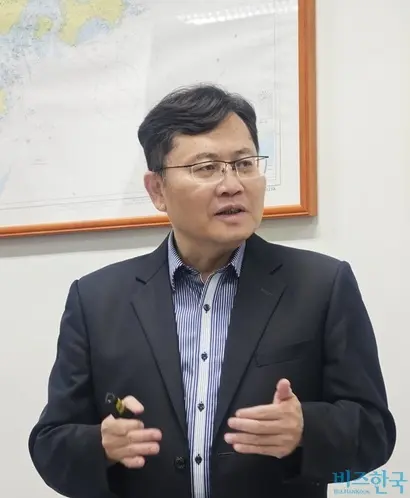
Director Liu Pei-yi cited China's response as the reason for South Korea’s pro-U.S. policy. "The most important factor behind the Yoon administration’s reliance on the U.S. and resistance toward China was that the Chinese government did not effectively control North Korea. I believe China’s response forced [South Korea] to lean on the U.S. Taiwan also has structural factors that distance it from China and push it toward the U.S. due to ethnic issues," he explained.
The diplomatic strategy the Lee Jae-myung administration will choose is also a matter of keen interest in Taiwan. Vice President Kao Jui-hsin said, "I think the current task is to find a way to navigate paths where one can go from Taiwan to China, and from South Korea to North Korea. It is not easy to solve the structural problems coming from the U.S. Unlike the Yoon administration, the Lee Jae-myung government is expected to resolve the North Korean issue through cooperative relations with China rather than overly relying on the U.S. It is a matter of interest how this direction will change future Taiwan policy."
Liu Ming-feng, a director specializing in Taiwan culture, analyzed, "Samsung wants to expand investment, such as building semiconductor factories in China. It is also important to consider what South Korea's stance will be when President Trump pressures them not to do so. Taiwan and South Korea share not only security issues but also challenges in the semiconductor industry."
Director Liu Pei-yi also emphasized, "How South Korea employs its intermediary diplomatic strategy is a truly critical issue for Taiwan."