

[비즈한국] As the burden of delivery app commissions weighs heavily on franchisees, the atmosphere of adopting a dual pricing system is spreading throughout the chicken industry. Even bhc, which claimed just a few months ago that it had no plans to introduce a dual pricing system, has finally begun adjusting delivery menu prices starting this month. bhc explains that instead of a blanket price hike at the corporate level, it has broadened the range of choices by allowing franchisees to set prices autonomously. However, some franchisees point out that the burden of price increases has simply been offloaded onto them.
Stores with the highest delivery sales are ironically unable to raise prices
Chicken franchise bhc introduced a delivery-app-specific pricing system (dual pricing) starting this month. The move was made to address concerns over declining franchisee profits caused by the burden of delivery app commissions, allowing delivery menu prices to differ from in-store prices.
What is noteworthy is that franchisees can autonomously determine the delivery app-exclusive prices. In the past, most franchises that introduced dual pricing had the price increase margins for delivery menus specified by the head office. bhc explained that since the choice of delivery menu pricing rests with the franchisees, they can increase or decrease prices according to their individual circumstances.
A bhc official stated, "As the burden of delivery app commissions on store owners has grown, there have been requests to operate stores flexibly according to their situation. We introduced this delivery-app-specific pricing system so that owners can adjust prices upward or downward to fit their shop's conditions."
A check of bhc prices on delivery apps revealed that many franchisees have raised delivery menu prices by 2,000 to 3,000 won compared to in-store prices. The popular 'Prinkle Combo' menu has a recommended retail price of 23,000 won, but many franchisees have adjusted the selling price to between 25,000 and 26,000 won. The food service industry estimates that approximately 30% of all bhc franchisees have changed their delivery app prices starting this month.
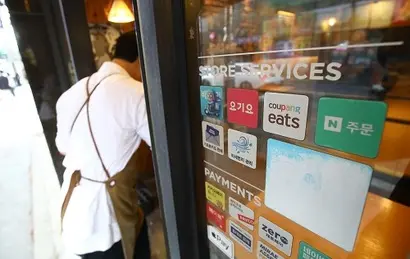
Although bhc claims to have left pricing to the autonomy of franchisees to preserve their profits, not a few franchisees feel burdened by this policy. Many are unable to raise prices for fear of losing customers due to competition with nearby franchisees. In the Gangnam area of Seoul, where many top-tier delivery-performing stores are concentrated, competition is intense, and the prevailing atmosphere is one of enduring declining profitability without being able to raise prices.
One franchisee said, "If I only think about profits, I need to raise prices, but it's not easy. If other nearby stores raise their prices, I would do the same, but I'm worried that if I'm the only one to raise them, my orders will drop. It would have been better if the prices had been raised uniformly," adding, "In the end, it's a guessing game between franchisees. I'm still just worrying about whether to raise prices or not."
bhc stated, "From the head office's perspective, our principle is to adhere to the recommended retail price. However, there are some franchisees who are struggling, and conversely, some who strategically want to lower prices," adding, "There are various opinions from franchisees, and since we are currently in the initial implementation stage, we are observing the situation."
Among consumers, there are complaints about increased inconvenience. Since selling prices can vary from store to store, it has become a hassle to compare prices every time they order. There is speculation that this pricing policy might spread throughout the chicken industry, starting with bhc. However, most other companies have stated their position to maintain existing pricing policies.
A Kyochon Chicken official stated, "There is no consensus among franchisees regarding delivery prices. The head office has no plans to introduce such a system." BBQ also indicated that it would maintain its existing pricing policy of recommending consumer prices from the head office rather than leaving delivery menu pricing to individual stores.
Spread of dual pricing: "It only increases delivery app profits"
Unable to bear the burden of delivery app commissions, the food service industry has been adopting delivery-app-specific pricing one after another since last year. At most fast-food chains like Lotteria, McDonald's, Burger King, KFC, and Popeyes, delivery app prices are higher than in-store prices. The coffee industry, including Mega MGC Coffee, Compose Coffee, and Ediya Coffee, has also raised delivery app prices, and brands like Baskin Robbins, Subway, Bonjuk, and Hansot Dosirak have also implemented differential pricing for delivery menus.
While the industry agrees that introducing a delivery-app-specific pricing system only increases the burden on consumers and boosts the profits of delivery apps, they have yet to find a suitable alternative. An industry official pointed out, "If we raise delivery menu prices to preserve franchisee profits, it just increases the commission amount that delivery apps take. In the end, the only ones profiting are the delivery apps."
Brands that do not implement delivery-app-specific pricing are adopting a strategy of revitalizing their own apps to preserve franchisee profits. However, the share of orders through brand-owned apps remains insignificant compared to delivery apps. Even for Kyochon Chicken, which is considered to have a high utilization rate of its own app in the chicken industry, the proportion of orders through their own app remains at around 10% of total orders.
Attention is also focused on whether the government will be able to introduce a cap on delivery app commissions. President Lee Jae-myung proposed a delivery app commission cap as one of his top 10 campaign pledges. Currently, a mutual growth plan for delivery apps is being prepared through the Democratic Party's Euljiro Committee, and it is expected that if negotiations fail, discussions on legislation for a delivery app commission cap may take place.
Experts point out that if legislation is discussed, ways must be found to reduce the actual burden on the self-employed. Lee Eun-hee, a professor of consumer science at Inha University, remarked, "Although a mutual growth plan was derived through the delivery app mutual growth consultative body last year, the platform companies raised delivery fees instead of lowering commissions, which actually worsened the situation for the self-employed. Only limiting commissions is like 'trying to cover the sky with one's palm.' We must come up with plans to resolve the real pain of the self-employed," adding, "A structure where all costs for consumers' convenient delivery service are offloaded onto the self-employed is not ethical."