

[비즈한국] The atmosphere surrounding Dongkuk Steel Group460860 is grim. With U.S. President Donald Trump raising tariffs on steel products, the outlook for the domestic steel industry has dimmed. While Hyundai Steel004020 and POSCO have begun establishing local plants in the U.S., Dongkuk Steel currently has no such plans.
Whether Dongkuk Steel Group can overcome this crisis will likely play a major role in the assessment of Chairman Chang Sae-joo. In 2015, Chairman Chang stepped down from management after being sentenced to 3 years and 6 months in prison for charges including embezzlement. Due to employment restrictions, he could not return to management for some time even after his release. After receiving a special presidential pardon on Liberation Day in 2022, he returned to management by taking office as an executive director of Dongkuk Holdings001230 in 2023.
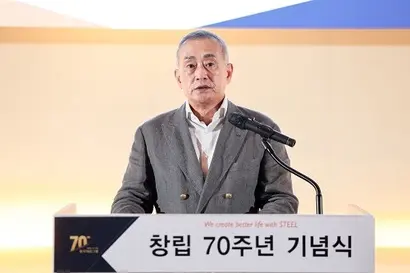
Chairman Chang's return to management has not yet led to improved performance. According to business reports, Dongkuk Holdings' revenue was 2.0989 trillion won in 2022, 1.8411 trillion won in 2023, and 1.9994 trillion won in 2024. Operating profit has been declining every year, from 86.8 billion won in 2022 to 60.1 billion won in 2023, and 58 billion won in 2024.
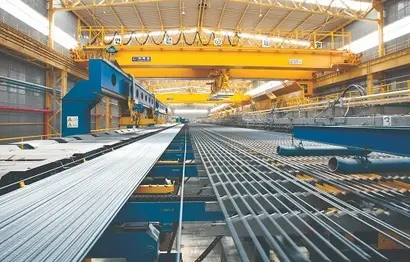
The recent atmosphere is unfavorable. Dongkuk Steel announced that it will suspend all operations at its Incheon plant from July 22 to August 15 to address oversupply. The Incheon plant is a core base that accounts for approximately 40% of the company's revenue. This is the first time since the company's founding that the Incheon plant has halted production. A Dongkuk Steel official stated, "We are monitoring market changes in August, and if the oversupply issue is not resolved, we will have to consider extending the suspension period," adding, "It is a point where we can no longer delay the decision to address excess inventory and supply-demand imbalances."
The future outlook is also not bright. U.S. President Donald Trump recently raised tariffs on imported steel and aluminum products from 25% to 50%. Park Sung-bong, a researcher at Hana Securities, analyzed, "Because the price competitiveness of domestic steel products will decline compared to U.S. manufacturers, setbacks in exports to the U.S. are inevitable," and added, "It is highly likely that the European Union will also announce stricter import regulations following the U.S., so there are concerns about setbacks in exports to Europe as well."
Dongkuk Steel Group is also mindful of the changes in the U.S. market. Earlier this year, Dongkuk Steel established a special export headquarters, a dedicated organization to expand exports. However, there are no visible moves to build a local plant in the U.S. Chang Sae-wook, Vice Chairman of Dongkuk Steel Group and younger brother of Chairman Chang Sae-joo, told reporters at the Dongkuk Holdings general shareholders' meeting in March, "There are currently no concrete overseas investment plans for the U.S. or elsewhere," adding, "I think a strategy that focuses on strengthening business capabilities through our existing overseas plants in places like Poland and Mexico is better."
This contrasts with competitor companies. Hyundai Motor Group and POSCO Group signed a memorandum of understanding (MOU) in April for mutual cooperation in the steel and secondary battery sectors. They announced plans to jointly invest approximately 8.5 trillion won to build a steel mill in Louisiana, USA.
Since Chairman Chang Sae-joo's return, Dongkuk Steel Group's investments have leaned more toward non-steel sectors. Last year, Dongkuk Holdings established its subsidiary, Dongkuk Investment. In March of this year, Dongkuk Investment created the 'Dongkuk Future Growth Venture Fund No. 1', totaling 67.5 billion won. Dongkuk Investment stated that it plans to use the fund to invest in semiconductors, displays, secondary batteries, bio, core materials for future mobility, and new energy businesses.
This appears to be a move with the group's new businesses in mind. At the time of the fund's creation, Bae Chang-ho, CEO of Dongkuk Investment, said, "Dongkuk Investment will act as an 'investment infrastructure' that provides opportunities for Dongkuk Steel Group to enter new future growth sectors," adding, "We plan to create a shared growth model through cooperation between Dongkuk Steel Group and the companies we invest in."
Currently, the steel business accounts for an absolute majority of Dongkuk Steel Group's portfolio. While group affiliate Intergis129260 operates a transportation business, its share is not significant compared to Dongkuk Steel. Furthermore, Intergis is highly dependent on Dongkuk Steel, as it handles the sea transport of raw materials for Dongkuk Steel. In other words, if the steel industry falls into a recession, Dongkuk Steel Group lacks a sufficient alternative source of revenue.
In this context, Dongkuk Steel Group's pursuit of new businesses is important. However, it will take considerable time for these new ventures to get on track, and their success cannot be guaranteed. In the meantime, if Dongkuk Steel's profitability worsens, it could negatively impact the entire group. While investing in new business is important, managing the existing steel business is equally critical. For this reason, some have raised the opinion that Dongkuk Steel should also consider establishing a local U.S. plant like POSCO. A Dongkuk Steel official stated, "We are watching the situation cautiously," adding, "There are no specific investment plans yet."