

[비즈한국] Apple held its Worldwide Developers Conference (WWDC) 25 and unveiled new operating systems and technologies during its keynote. As Apple's biggest event, WWDC garners more attention than ever because it reveals the technological direction the company intends to pursue over the next year, and potentially for several years to come.
Expectations were particularly high this year regarding the outline of Apple Intelligence. Apple unveiled its AI model, Apple Intelligence, at last year's WWDC and has been integrating it into various devices and operating systems. However, AI technology required some time to mature, and Apple was unable to deliver everything it had promised for Apple Intelligence. In particular, it showed some instability as it failed to fully enhance its voice assistant, Siri, or complete features that respond based on individual context.
Strengthening Personalization While Protecting Privacy
It was a natural expectation that this year's WWDC would serve as an opportunity for significant developments in Apple Intelligence. However, it seems that securing high-quality AI models for languages around the world is not easy. Senior Vice President Craig Federighi opened the keynote by addressing this, stating, "Efforts to improve Siri's understanding of personal context are ongoing," but hedged by adding, "More time is still needed to achieve a high level of performance."
Is Apple Intelligence falling behind services like ChatGPT? In reality, Apple Intelligence is not a competitor to massive large language models (LLMs) like ChatGPT or Gemini. It is a compact, on-device AI model that runs on PCs and smartphones with as little as 8GB of system memory. Its fundamental direction is different from the start.
Apple has long targeted the personalization of the iPhone, and it recognized early on that machine learning is the best tool for this. Apple's generative AI acts as a tool to break down language barriers, allowing users and their devices to communicate based on personal information learned in this manner.
At its core is the premise of complete privacy protection based on on-device AI. An example is the ‘Wait for Me’ feature for automated phone systems (ARS) demonstrated in the keynote. The iPhone recognizes when a user is connected to an automated customer service line and offers to wait on the line for them. When a representative eventually connects, the iPhone notifies the user to resume the conversation. Handling this recognition locally on the device is the role of Apple Intelligence.
If this were processed by a cloud-based large language model, the entire conversation would have to be sent externally. Even if it is AI, sending private calls to a server to analyze context is essentially akin to wiretapping. This is a task that must be handled entirely on the device.
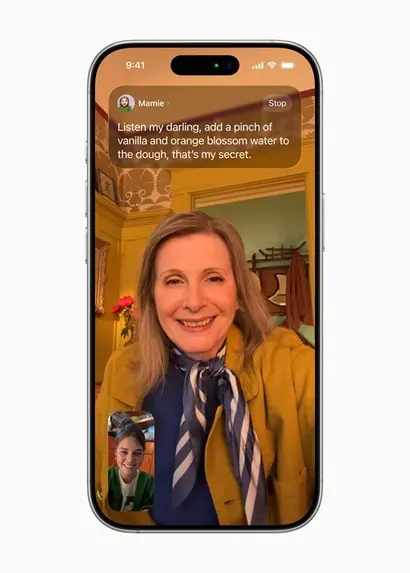
Similarly, Apple handles consecutive interpretation during voice calls to translate into other languages, and processes real-time translation via captions during FaceTime video calls. It also enables users to communicate in their own languages while chatting via messages. All of this is processed by on-device AI. It is about understanding the context of communication while safeguarding privacy.
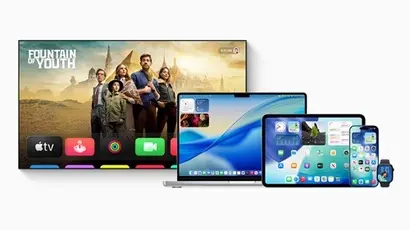
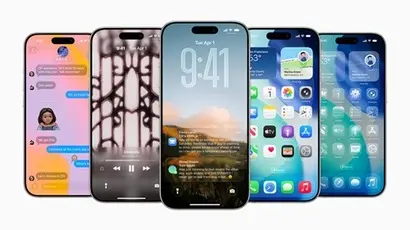
However, no startling, massive changes to Apple Intelligence were visible at this keynote. In fact, the most significant part of this keynote was the refinement of operating systems, including their design. Apple named versions of all its operating systems—iOS, macOS, watchOS, and tvOS—as "26" instead of the traditional sequential numbers. It is a name that symbolizes the year 2026. Apple releases new operating systems every year to capture that year's technology trends; using year-based version naming is an appropriate way to explain this. It also carries the meaning of unifying the operating systems across all devices.
Apple completely overhauled the design of its operating systems. The new design is based on a new design language called "Liquid Glass." Liquid Glass is centered around transparent buttons with rounded, droplet-like corners. Apple places importance on ensuring that UI buttons do not obscure content areas; by making them transparent, they allow users to focus more on the content.

Apple Intelligence Opened to the App Ecosystem, What’s Next?
The current Apple operating system design is based on iOS 7, which was unveiled in 2013. Since then, Apple has put a great deal of effort into unifying the experience across all devices and OS platforms, and this integration—including continuity—has reached a level of maturity. However, since elements have been layered onto this design for a long time, it was the right moment for a design cleanup.
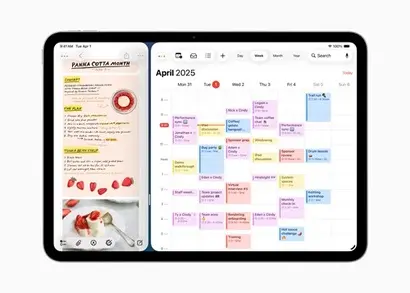
In particular, as AI features including Apple Intelligence have become a new platform, design changes have become a critical factor. Apple is currently incorporating Apple Intelligence into almost all of its apps, including Phone, Messages, Mail, Maps, Notes, and Voice Memos. The role of Apple Intelligence is to delve deeply into private information rather than grasping general information like ChatGPT, and this requires both on-device AI processing and an appropriate interface that can effectively integrate with apps.
Through this new design, Apple has completed the process of unifying the operating system experience and laid the foundation to broadly accommodate Apple Intelligence. Furthermore, it has opened this not only to Apple's own use but also to the app ecosystem through various APIs and development tools.
Though not immediately obvious, the core of WWDC25 is that Apple Intelligence has been opened to the app ecosystem. Apple Intelligence is processed only within the device, with privacy protection as a prerequisite. Instead, based on the same authorization and security policies, it has opened AI-based personal context analysis to the app ecosystem. App developers can now more actively access personal information within iPhones and Macs to provide better answers through AI. Apple Intelligence serves as a tool to help process this securely. In a way, this is comparable to the opening of the App Store.
Of course, it may be difficult to discuss satisfaction with the results immediately, but machine learning models are bound to be refined over time and cost, and will eventually reach a satisfactory level. In the meantime, Apple's ecosystem can expand context-based personalization, and users can make more active use of personal information analysis while alleviating anxieties about privacy.
The direction of Apple Intelligence was clearly set through WWDC25. At the same time, it was designed to connect more flexibly to external services, including ChatGPT, for information outside the device. This, too, is a role of the new design. While this is currently somewhat passive due to privacy concerns, one can easily read the design direction of making it easier to access external AI models based on user consent and sufficient awareness. While everything is being compressed into the word "AI," can Apple's unique policy of separating AI that handles internal information from that which handles external information lead to a more active use of personal information, at least at this stage? That is the innovation and the challenge assigned to the Apple operating system and app ecosystem of 2026.