

[비즈한국] The Korea Art Promotion Project, which began as an initiative solely to support artists, has continued for 10 years. Keeping true to our original intent, we have supported over 230 artists. This was a unique endeavor that no other media outlet, cultural organization, or government agency in Korea had ever attempted. We take pride in the fact that this decade of persistence has been etched into the 21st-century Korean art scene as a distinct value. Consequently, it is recognized that “the 10-year history of the Korea Art Promotion Project has become a perspective for observing the flow of contemporary Korean art.” Now, in Season 11, we intend to pave yet another path for Korean art.
The driving force of art is imagination. The imagination demonstrated by art has infinitely expanded humanity's thinking and led to the evolution of science through realistic fruition. The development of human civilization and the improvement of the quality of human life are also due to the imagination cultivated by art.
Traditionally, painting has served as the spearhead for expanding imagination. However, in the last century, comics have taken its place. Cartoon imagination provides motifs for the diverse development of all arts. The role of comics has also been significant in the innovative development of movies and dramas. The world of imagination provided by comics is being realized through the power of modern science and is expected to continue to do so.
It was Japan that firmly established the animation field based on cartoon imagination. The robot boy ‘Astro Boy’ (Atom), conceived in Japan in the 1950s, is now being put to practical use in reality.
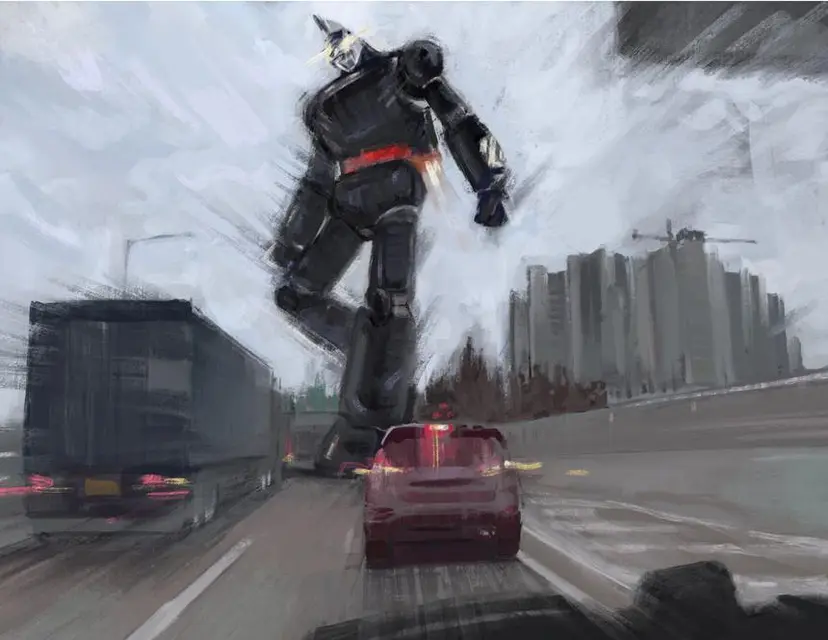
The cartoon imagination of ‘Galaxy Express 999,’ which conceived a train running through space in the 1970s, foresaw the era of space travel that is now in its beginning stages. The characters featured therein, who combined mechanical bodies with human spirits, were products of cartoon imagination that predicted the world of AI, which is a major topic today.
It is perhaps a natural outcome that comics are treated as fine art and occupy a domain of contemporary art. It was Pop Art that established comics as a language of contemporary art.
American Pop Art artists took note of comics, which demonstrated the power of popular imagery, and adopted cartoon phrasing as a method of contemporary art. The most representative artist is Roy Lichtenstein. Inspired by his own children’s enthusiasm for Disney comics, he turned cartoon expression techniques into an artistic language. That was in the last century.
Entering the 21st century, cartoon expression techniques are used as a methodology not only in Pop Art but throughout painting as a whole. Korea is no exception, and artists who have become stars in the art market using cartoon techniques have emerged.
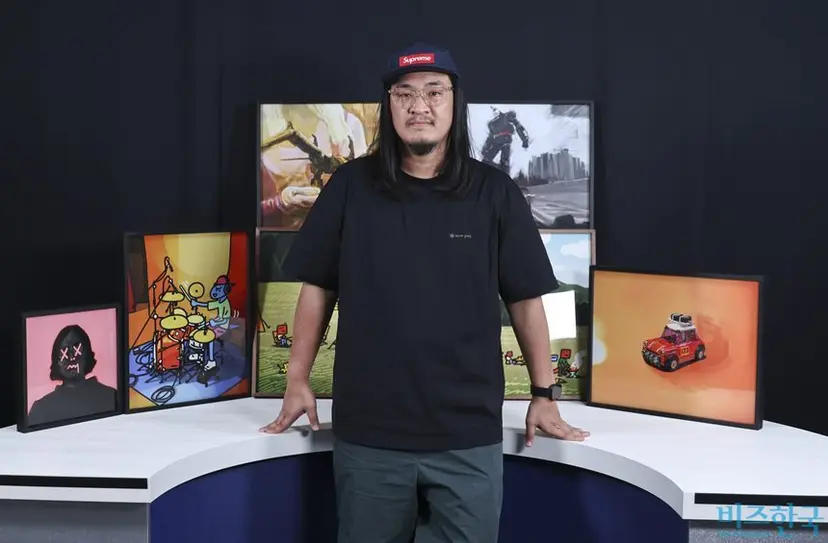
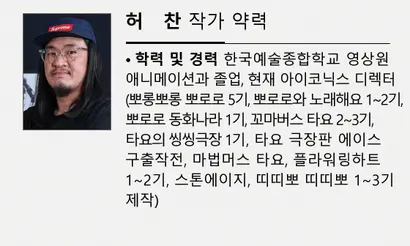
Young artist Heo Chan, who works professionally in animation, is also carving out his own paintings using cartoon techniques. However, he shows a different path than those who simply use existing cartoon methods as a technique.
Instead of focusing his painting work solely on cartoon expression techniques, he presents a new attempt by adopting cartoon imagination—the essence of animation—as a language for painterly expression.
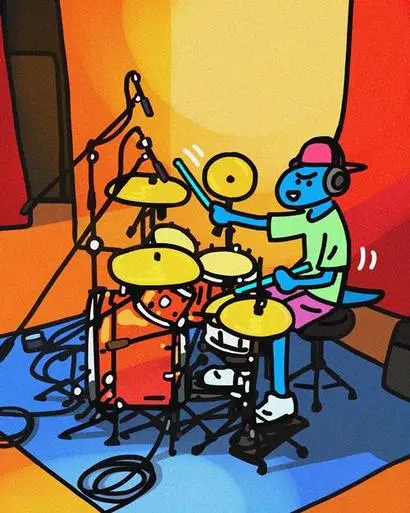
His representative series, ‘Dino and Ryan,’ features animated characters developed by Heo Chan. Expressed in simple lines and colors, this series clearly demonstrates what cartoon imagination is. It depicts a fictional world where dinosaurs did not go extinct but evolved to live as highly intelligent animals like humans. He expresses situations such as camping or traveling while keeping a lion as a pet, using his own cartoon phrasing. This is why Heo Chan’s work, which pioneers cartoon imagination as a language for painting, is gaining attention.