

[비즈한국] Youth Relief Housing, a project promoted by the Seoul Metropolitan Government, is designed to reduce the housing cost burden on young people by providing affordable rental homes in areas near subway stations. However, recent cases have emerged where some Youth Relief Housing units were leased without the legally required guarantee insurance, leading to situations where buildings have been put up for auction or tenants have been unable to recover their security deposits. With young people who trusted the city's actively promoted project now suffering damages, the Seoul Metropolitan Government's responsibility for post-management has come under fire.
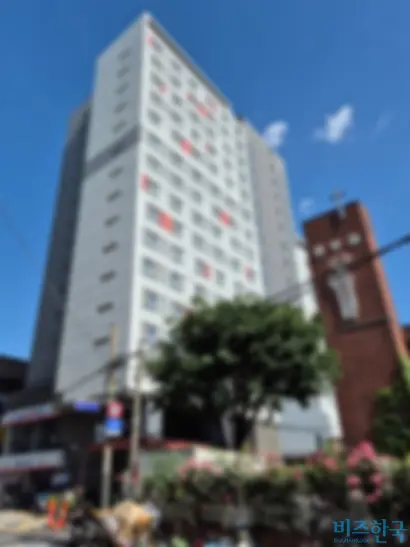
Youth Relief Housing Remains Uninsured Despite Mandatory Guarantee Insurance
Youth Relief Housing is rental housing supplied near subway stations by the Seoul Metropolitan Government to ensure housing stability for young people and newlyweds. Each complex is a mix of public rental units operated by the Seoul Housing & Communities Corporation (SH) and publicly supported private rental units operated by private developers.
For public rentals, the rent is 30–70% of the local market rate. For private rentals, the rent for general applicants is 85% or less of the market rate, and 75% or less for special applicants who meet specific income and regional criteria. In exchange for charging lower-than-market rents, private developers receive benefits such as increased floor area ratios and various tax incentives.
The problems arise with the "publicly supported private rental" units. In these cases, rental agreements are made directly between the private operator and the tenant. Following an amendment to the Special Act on Private Rental Housing in 2020, it became mandatory for rental operators to subscribe to guarantee insurance. However, even after signing rental contracts, some Youth Relief Housing operators have failed to secure this insurance due to financial difficulties. This lack of coverage has led to scenarios where buildings are put up for auction or operators fail to return security deposits.
Youth Relief Housing Put Up for Auction
On February 24, a Youth Relief Housing building in Songpa-gu was put up for auction. It was the first instance of a Youth Relief Housing unit facing such a fate.
The rental operator failed to pay a portion of the construction costs to the contractor, eventually leading the construction firm to initiate the auction. It is reported that the unpaid amount owed to the contractor is approximately 8 billion won, which is about 10% of the total construction cost.
While security deposits are currently being returned to tenants who leave mid-term, those still residing there are anxious about when these payments might stop. The Seoul Metropolitan Government explained that because tenants have been granted priority rights, the security deposits should be paid out first if the auction is finalized, and there should be no issues with refunds. However, tenants are concerned that security deposit refunds could be blocked while the auction is ongoing or that the auction itself might be canceled.
The developer of the building is attempting to sign up for guarantee insurance, but their applications are being rejected due to tax arrears. Because the insurance is not in place, the return of security deposits remains vulnerable to the unstable financial situation of the rental operator.
Tenants have expressed frustration with the Seoul Metropolitan Government's response. One tenant complained, "At the time of moving in, I requested a special clause stating the contract would be nullified if issues like a failure to join the guarantee insurance occurred, but it was rejected. The city's stance was that they couldn't intervene because it was a private contract."
Failure to Return Security Deposits Also Occurring
In September 2023, a failure to return security deposits occurred at a Youth Relief Housing building in Dobong-gu. Six households whose contracts had expired requested their deposits back, but the rental operator refused, citing financial difficulties. It is known that the operator faced management troubles after construction costs exceeded expectations and problems arose in other business projects.
Some victims managed to recover their deposits by seizing the operator's rental income account, but encountered difficulties when the operator changed the account for rent payments mid-process. Remaining victims have yet to receive their money back, even after winning lawsuits. This site also suffered from the lack of mandatory guarantee insurance.
Victims stated they were shocked that fraud resulting in the loss of security deposits could occur in a project led by the Seoul Metropolitan Government. They also criticized the city for merely issuing directives to operators to sign up for insurance without taking proactive measures, even though the building had remained uninsured since its completion in 2022.
Absence of Post-Management by Seoul City
As a series of security deposit issues have emerged in Youth Relief Housing, there is growing criticism that Seoul's management and oversight after project approval are inadequate. Observers point out that the city fails to properly check whether buildings are used as collateral for loans or whether mandatory insurance has been secured after project approval. Ultimately, this has led to uninsured housing units and situations where tenants cannot recover their deposits.
Since Youth Relief Housing is a project where the city provides benefits to developers and actively promotes the units, there are calls for the city to take greater responsibility. The Seoul Metropolitan Government maintains that it is taking action by issuing official letters to district offices, requiring that guarantee insurance be secured before recruitments are announced.
Additionally, the city is in negotiations with the Korea Housing & Urban Guarantee Corporation (HUG) to ease the subscription requirements for guarantee insurance for Youth Relief Housing. The goal is to adjust the debt-to-value ratio requirements for buildings to facilitate the process for developers.
However, critics argue that easing requirements is not a fundamental solution. Seo Dong-gyu, chairperson of the Min-dal-paeng-i Union, criticized the move, stating, "Allowing insurance subscription despite high debt levels does not stabilize the financial or fiscal condition of the building. It cannot be considered a proper tenant protection measure."