

[비즈한국] The Democratic Party of Korea has signed a policy agreement with the labor union of GM Korea (GM Korea's Korean business operations). One of the key points of this agreement is the introduction of a labor director system. However, it is well known that labor-management relations at GM Korea are currently strained. Because of this, resistance from management is expected if the labor director system is introduced at GM Korea. If GM Korea opposes the system, it could lead to conflict with the political sphere. Nevertheless, it is difficult for politicians to deal with GM Korea lightly. Rumors about GM Korea's potential withdrawal from Korea have been circulating in the automotive industry for years. The withdrawal of GM Korea could have a severely negative impact on the domestic industrial sector, which is a significant burden for policymakers.
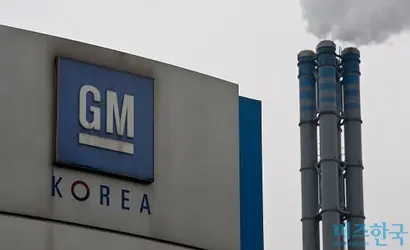
The Korean Metal Workers' Union, GM Korea branch, announced on May 28 that it had signed a policy agreement with the Democratic Party. The main contents of the agreement include: △formation of a party-government task force (TF) to ensure the sustainability of the automotive industry, △introduction of a labor director system, △mandating the publication and disclosure of annual ESG management reports, △guaranteeing the realization of labor rights and fundamental human rights, and △promoting the establishment of an automotive industry history museum in Bupyeong-gu, Incheon.
The Democratic Party and the GM Korea union did not discuss this agreement with GM Korea management before signing it. For the Democratic Party to implement this agreement in the future, it would need the cooperation of GM Korea or would have to pursue full-scale legislation. It is understood that the goal for provisions like the labor director system, the publication of annual ESG management reports, and the guarantee of labor and fundamental rights is to apply them not just to GM Korea, but to foreign-invested companies as a whole.
Among these, the introduction of a labor director system is expected to cause friction. The labor director system refers to a scheme where labor unions appoint directors to serve on the board of directors. It is a system intended to guarantee worker participation in management, where worker representatives join the corporate board to participate in major business decision-making alongside executives.
Public enterprises and quasi-governmental organizations introduced the labor director system following legal amendments in 2022. However, this only applies to public enterprises and is not mandatory for private companies. In reality, most private companies have not adopted the labor director system. Under these circumstances, legislating the labor director system specifically for foreign-invested companies is expected to provoke their opposition.
As it is, labor-management relations at GM Korea are known to be poor. On May 28, GM Korea announced that it would sequentially sell its nine direct-service centers nationwide. In response, Ahn Gyu-baek, head of the GM Korea union, criticized the move, stating, "The management's unilateral notification (of the sale) ahead of wage negotiations and the union's anniversary event is an act of provocation that goes beyond rudeness, ignoring our 7,000 members. We take this as a declaration of war by the management, and the union can no longer overlook GM Korea's bad habits."
If discrimination against foreign-invested companies is the issue, one could consider legislating the labor director system for all domestic companies. However, this would also face fierce opposition from the business community. When the labor director system for public enterprises was introduced in 2022, the Korea Enterprises Federation (KEF) pointed out, "Given our country's adversarial and conflict-prone labor-management relations, the labor director system risks turning the board of directors into a venue for conflict and hindering the professionalism and speed of management decision-making. Therefore, rather than making it mandatory, it is desirable for companies to decide autonomously based on their needs." They further added, "To prevent side effects, new regulations should be established to ensure that workers lose their union membership status during their tenure as labor directors, and measures must be taken to prevent the adoption of the system in the public sector from leading to expansion into the private sector."
It is also difficult for the Democratic Party to simply pressure GM Korea. Rumors of GM Korea's withdrawal have persisted in the auto industry for years. If GM Korea were to withdraw, numerous related workers would lose their jobs, and the domestic industry would suffer a severe negative impact. GM Korea alone has 3,000 partner companies. If conflict with the government escalates, GM Korea could potentially choose the extreme option of withdrawal.
Some analysts link the asset sale plan recently announced by GM Korea to rumors of a withdrawal. On May 28, GM Korea explained, "We plan to sequentially sell our nine direct-service centers nationwide and continue to provide customer support services through 386 authorized repair centers. Furthermore, we will consult with various stakeholders regarding the sale of idle assets and underutilized facilities and land at the Bupyeong plant."
However, GM Korea denies the rumors of withdrawal. A GM Korea official stated, "Asset sales and withdrawal are completely unrelated." The company did not state a specific position regarding the labor director system.