

[비즈한국] The year 2026 will be recorded as a historic inflection point for the Seoul metropolitan housing market. According to comprehensive statistics from the Korea Real Estate Board, Real Estate R114, and KB Real Estate, the number of apartments slated for move-in in Seoul is expected to plummet by 47.6% from 46,710 units in 2025 to 24,462 units in 2026, the lowest level since records began. During the same period, Gyeonggi Province is projected to see a 43.2% decline from 129,449 units to 73,575 units, while Incheon is expected to see a 36.9% decrease. Amid an unprecedented drop in overall supply across the metropolitan area, experts are characterizing this not as a simple cyclical downturn, but as a “structural supply cliff.”
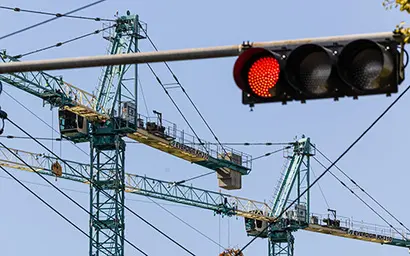
This phenomenon is not merely a result of reduced pre-construction sales by builders or a public aversion to housing. Rather, it is the combined outcome of government regulations accumulated over several years, credit crunches due to high interest rates, conflicting directions in real estate policy, and delays in permitting procedures.
Essential Causes of the Supply Decline
First is the sharp drop in new construction starts and the Project Financing (PF) crisis. When discussing housing supply, the primary metric is "housing starts." Indeed, the 2022 freeze in the PF market crippled the cash flow structure of construction companies, causing numerous projects on the verge of breaking ground to grind to a halt. In 2022, housing starts for apartments in the Seoul metropolitan area were 428,000 units, but that number fell by a staggering 23% to 330,000 units in 2023. Given that the average housing construction period is approximately 2 to 3 years, the impact of this shock will begin to be felt in the market in 2025 and reach its peak in 2026.
Bottlenecks in redevelopment and reconstruction projects are also problematic. While urban renewal projects centered in Seoul seemed to be regaining momentum, the reality is difficult. The number of complexes passing safety inspections for reconstruction surged from an annual average of 2 in 2019–2022 to 71 in 2023; however, it takes an average of 4.6 years to actually begin construction. The complex entanglement of administrative procedures, resident consent, union establishment, and contractor selection delays the start of construction, which in turn pushes back the timing of unit availability. As of the first half of 2024, only 23% of Seoul's redevelopment project sites had actually commenced construction.
Uncertainty in the pre-construction sales market and the risk of high sales prices also persist. Another reason builders are reluctant to launch sales is the regulation on high sales prices and concerns over unsold units. With the price ceiling system in place, material and labor costs continue to rise, inevitably driving up sales prices. However, since consumer purchasing power remains stagnant, high prices lead directly to unsold inventory. Builders are increasingly opting to postpone sales or shelve projects entirely rather than shoulder these risks.
2026: A Turning Point for Price Increases?
The premium for "new" apartment scarcity will expand. Buyer preference remains heavily focused on "new" apartments. Yet, the supply of new apartments in the Seoul metropolitan area in 2026 is expected to be half that of 2025, which may cause premiums for new apartments to skyrocket. In fact, the Bundang Kumho Eoullim Green Park recorded a competition rate of 45-to-1 in 2024, and some complexes in the Gangnam area have exceeded market expectations by surpassing a pre-construction price of 100 million won per 3.3㎡ (1 pyeong).
Structural instability in the jeonse (lump-sum deposit rental) market will intensify. Seoul's jeonse demand for 2026 is projected at approximately 235,000 units, while supply is expected to be only 89,000 units. This implies a supply-demand imbalance of about 140,000 units, which could trigger a sharp rise in jeonse prices. Notably, while jeonse demand remains consistently stable or even increases due to factors like the reduction of jeonse supply by multi-homeowners, the overall supply is trending downward. Consequently, the upward trend in jeonse prices that began in 2024 could become even steeper in 2026.
Distortions in demand for low-to-mid-priced housing will occur. Demand for apartments on the outskirts of the metropolitan area and for low-to-mid-priced units may also rise in tandem. The jeonse price at Sanggye Jugong Complex 6 in Nowon-gu once fell to 245 million won in 2023, but it has rebounded since 2024 as buyers flock back to lower-priced homes. If supply shortages worsen, there is a high probability of simultaneous increases in both jeonse and purchase prices.
How Effective Are Government and Private Sector Responses?
Public-led supply expansion has its limits. The Korea Land and Housing Corporation (LH) is pushing to purchase 110,000 new units by 2025, with plans to concentrate over 80% near subway stations. They have stated they will shorten the timeline by issuing recruitment notices for "purchase-to-sale" rental housing immediately after construction starts. However, the fact that 143,000 units—or 76.5%—of the 187,000 private housing units slated for sale in 2024 are targets for LH purchase makes it difficult to avoid criticism regarding the stifling of market autonomy. While public-led expansion may have short-term effects, it risks distorting the market in the medium to long term.
Systemic reforms are needed to encourage private sector participation. The government is attempting to incentivize private participation through reductions in redevelopment levies, simplification of permitting procedures, and expanded PF support. Shortening the urban planning establishment period from 24 to 18 months and increasing the integrated review items to 15 are positive changes. However, major regulations such as the Restitution of Reconstruction Gains and the Price Ceiling System remain in place, keeping barriers to entry high for the private sector.
Long-term Solutions Require a Qualitative Shift
Rather than simple supply expansion, an "Urban Regeneration 2.0" strategy is needed to transition aging low-rise residential areas into high-density mixed-use developments. For instance, development should focus on complexes that allow floor area ratios of over 500% and integrate infrastructure for transportation, education, and jobs. Cases like the Godeok International City in Seoul could serve as a rudder for future policy.
Securing demand-supply consistency based on digital technology is essential. A system is needed to predict and manage upcoming move-in volumes and demand in real-time through digital twin technology. The "Move-in Volume Disclosure System" launched by the Seoul Metropolitan Government in 2024 should be expanded nationwide and integrated into a data-linkage system led by the Ministry of Land, Infrastructure and Transport. This would allow for the real-time adjustment of supply excesses or shortages by region.
2026: A Intersection of Crisis and Opportunity
2026 will be a turning point where structural crises in the metropolitan housing market and policy shifts occur simultaneously. The sharp drop in move-in units will likely lead to short-term price hikes and jeonse instability, potentially exacerbating housing insecurity for end-users. At the same time, however, it is a year of opportunity for South Korea's housing policy to transition from "quantitative supply" to "qualitative innovation."
While maintaining a balance between market autonomy and public intervention, the government must prepare predictive, policy-oriented strategies and medium-to-long-term plans utilizing digital technology. It is time to establish an integrated housing supply-demand strategy that includes not only the capital region but also metropolitan areas nationwide. Only user-centered, effective policies can mitigate the shocks of 2026 and open the next chapter for the South Korean real estate market.
Kim Hak-ryeol, the head of the Smart Tube Real Estate Research Institute known by the pen name "Pasyong," previously served as the team leader of the Real Estate Research Division at Gallup Korea. He operates and hosts the Naver blog "Pasyong's World Exploration" and the YouTube channel "Stue TV." He is the author of books such as "The Power of Gyeonggi Real Estate (2024)," "The Absolute Principles of Seoul Real Estate (2023)," "The Future of Incheon Real Estate (2022)," "Kim Hak-ryeol's Absolute Principles of Real Estate Investment (2022)," "The Future Map of South Korean Real Estate (2021)," "Only Areas That Will Rise Are Rising Now (2020)," and "The South Korean Real Estate User Guide (2020)."