

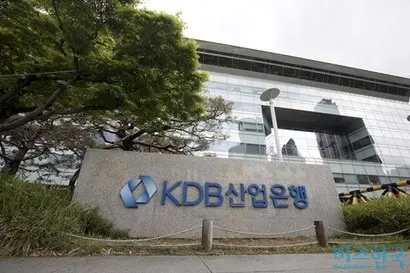
[비즈한국] Democratic Party presidential candidate Lee Jae-myung proposed on the 1st that he would "push for the establishment of a Southeast Investment Bank (tentative name) in the maritime capital, Busan." The idea is that instead of relocating the Korea Development Bank (KDB) to Busan, he would establish a Southeast Investment Bank to handle policy finance, driving the growth of the Busan, Ulsan, and Gyeongnam (Bu-Ul-Gyeong) region.
The financial sector suggests that if it goes well, it could become like the ‘Korea Ocean Business Corporation’, but if it fails, it could end up like the ‘Korea Finance Corporation’. Since KDB and the Korea Ocean Business Corporation are already handling related tasks, there are concerns that an investment bank with redundant functions could easily be absorbed elsewhere.

Proposal for a ‘National Policy Investment Bank’ Specialized for Bu-Ul-Gyeong
The Southeast Investment Bank proposed by Democratic Party presidential candidate Lee Jae-myung is a state-run bank model. The initial capital is approximately 3 trillion won, with a structure where the central government, local governments, KDB, the Industrial Bank of Korea, and the Export-Import Bank of Korea jointly invest.
Candidate Lee explained on his social media, "We will establish it as a state-run bank that supports Arctic shipping routes through maritime finance, leads the industrial transformation of the Southeast manufacturing belt through industrial finance, and drives a virtuous cycle in the local economy." He continued, "Busan, Ulsan, and Gyeongnam have grown as centers for heavy chemical industries such as shipbuilding, automobiles, petrochemicals, and machinery, but their competitiveness in the global market is weakening due to industrial restructuring and rapid changes in the global industrial environment." He emphasized the need for the Southeast Investment Bank, stating, "To nurture the future industries of Bu-Ul-Gyeong and revive the local economy, we must urgently establish a customized financial support system for the region."
The proposal is to create a state-run bank dedicated to policy finance that can provide customized investments for industries in Busan, Ulsan, and Gyeongnam. In the financial sector, it is viewed as an 'alternative' presented by Lee's camp, which officially opposes the 'relocation of KDB to Busan.' A financial official explained, "Isn't it an alternative put forward to persuade voters who support the relocation of KDB to Busan? In a sense, it's a more plausible 'Bu-Ul-Gyeong specialized model'."
Is the Role Model the Korea Ocean Business Corporation?
Concerns are being raised in the financial sector regarding the overlap of tasks with KDB or the Korea Ocean Business Corporation. KDB has already moved its Maritime Finance Headquarters to Busan with the relocation in mind, and it is also operating a Southeast Investment & Finance Center. There is also the Korea Ocean Business Corporation, which was newly launched in 2018.
The Korea Ocean Business Corporation was launched as a new entity on July 5, 2018, during the Moon Jae-in administration, to support the shipping industry that had stagnated before and after the bankruptcy of Hanjin Shipping. Its legal capital is 5 trillion won, its initial capital is 3.1 trillion won, and it has about 100 employees. As of December 2024, the government holds a 50% stake, KDB holds 20%, and the Export-Import Bank of Korea holds 17%.
There is speculation that the Southeast Investment Bank will also become a 'policy finance corporation' similar to the Korea Ocean Business Corporation. A political source noted, "Unlike the Ocean Business Corporation, which only handles shipping, this aims to broaden the scope by considering the nature of industrial complexes in Busan, Ulsan, and Gyeongnam. In this case, there is room for overlap with KDB or the Export-Import Bank of Korea." The source added, "If it uses a method of raising capital by issuing public bonds with government guarantees, it would take on the nature of a corporation or quasi-corporation, which could easily end up like the Korea Finance Corporation."
The Korea Finance Corporation was established in October 2009 during the Lee Myung-bak administration as part of measures to strengthen the policy finance functions of KDB, having been separated from KDB. However, it was re-absorbed into KDB on January 1, 2015. Although it was launched for the purpose of facilitating financing for small and medium-sized enterprises, regional development, expansion of social infrastructure, and fostering new growth industries, it was absorbed back into KDB during the Park Geun-hye administration in 2015 under the justification that "the policy functions of the Korea Development Bank, which possesses expertise and experience, must be strengthened."