

[비즈한국] The real estate market is currently in a wait-and-see mode ahead of the new government that will emerge following the June 3 presidential election. This is because, since the inception of the first civilian government under Kim Young-sam, conservative administrations that implemented various deregulation policies saw national apartment prices rise only slightly or fall, whereas progressive administrations, which introduced strong regulations to curb prices, saw prices jump by more than 30%, showing contrasting results. It seems the policy effects in progressive governments have been the exact opposite of their intentions; perhaps mindful of this, Democratic Party presidential candidate Lee Jae-myung did not include real estate-related policies in his top 10 campaign pledges.
On the other hand, People Power Party presidential candidate Kim Moon-soo included a pledge in his top 10 to supply 200,000 housing units annually for young people, newlyweds, and families with young children. This is a significant retreat compared to the real estate pledges made by each party during the 20th presidential election. Consequently, market experts predict that market activity will only pick up once the new government is launched and its real estate policies are unveiled.
According to the Korea Real Estate Board, the weekly national apartment sales price fluctuation rate for the third week of May remained unchanged at 0.00% compared to the previous week. Although apartment prices in Seoul rose by 0.13%, prices in the five major metropolitan cities fell (-0.06%), resulting in a stagnant trend nationwide. This wait-and-see sentiment has continued since the end of last year. In August of last year, national apartment sales prices rose 0.24% compared to the previous month, increasing the growth rate, but it fell to 0.17% in September and 0.07% in October, before dropping further to 0.01% in November.
Subsequently, as the real estate market froze in the aftermath of the martial law declaration by former President Yoon Suk-yeol, the trend turned to a decline of -0.07% in December, followed by -0.10% in January of this year and -0.6% in February. Despite a 0.01% rise in March, prices fell by 0.02% in April, indicating that the market is in a wait-and-see phase, conscious of the presidential election.
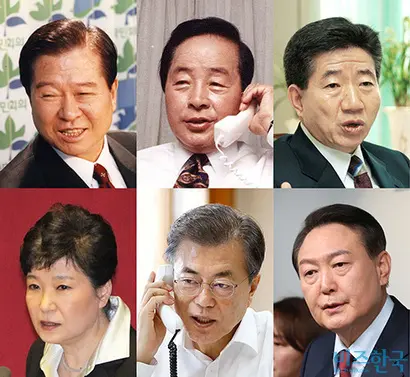
This wait-and-see approach is due to the high market volatility depending on real estate policies. According to NH Investment & Securities and KB Real Estate, since the inauguration of the civilian government, the real estate market has shown completely different trends depending on whether the administration was progressive or conservative. The Kim Young-sam administration implemented deregulation policies, such as expanding housing supply in the metropolitan area and liberalizing sale prices; during this period, apartment sales prices rose by only 3% nationwide and 2% in Seoul.
Following this, the progressive Kim Dae-jung and Moon Jae-in administrations implemented regulation-oriented policies to curb real estate prices, such as the introduction of the Loan-to-Value (LTV) and Debt-to-Income (DTI) ratios, the Comprehensive Real Estate Holding Tax, mandatory reporting of actual transaction prices, and the restitution of gains from reconstruction. However, despite these regulatory policies, real estate prices skyrocketed instead. Under the Kim Dae-jung administration, apartment sales prices rose 38% nationwide and 60% in Seoul. This trend continued under the Roh Moo-hyun administration, with prices rising 34% nationwide and 57% in Seoul.
The subsequent Lee Myung-bak and Park Geun-hye administrations implemented supply policies such as "Bogeumjari" housing and "New Stay," along with deregulation measures like lifting restrictions on speculative zones, easing loan regulations, and reducing capital gains and acquisition taxes. As a result, apartment sales prices rose only 16% nationwide under the Lee Myung-bak administration, while falling 3% in Seoul. Under the Park Geun-hye administration, apartment sales prices nationwide and in Seoul rose by only 10% each.
The Moon Jae-in administration strengthened regulations to curb even these rates of increase, such as imposing heavier taxes on multi-home owners and introducing the Debt Service Ratio (DSR), but apartment sales prices actually surged, jumping 38% nationwide and 62% in Seoul. The Yoon Suk-yeol administration then moved to ease regulations on reconstruction and redevelopment, during which apartment sales prices fell 11% nationwide and 5% in Seoul.
As such, real estate prices have repeatedly reversed depending on the administration, and the impact on elections has been significant—particularly under the Roh Moo-hyun and Moon Jae-in governments, where the surge in prices was cited as a cause for their election defeats. Perhaps for this reason, it is difficult to find real estate pledges in this presidential election. In the case of candidate Lee Jae-myung, he pushed for the supply of 3.11 million housing units as the 4th item in his top 10 pledges during the 20th presidential election, but he did not include real estate policy in his top 10 for this 21st presidential election. He also appears to be refraining from mentioning regulations, such as by retracting his previous intention to introduce a national land tax, which he had mentioned during the 20th election.
Candidate Kim Moon-soo included the annual supply of 200,000 housing units for young people, newlyweds, and families with young children as the 3rd item in his top 10 pledges, but this is also a reduction compared to former President Yoon's pledge to supply over 2.5 million units during the 20th presidential election.