

[비즈한국] The "Hometown Love Donation System," which allows people to receive tax deductions and gifts in exchange for donations to local governments of their choice, has entered its third year. As donations become concentrated in regions outside the Seoul metropolitan area, evaluations suggest that the system is gradually approaching its original purpose of "balanced regional development." In particular, following massive forest fires that recently struck the Yeongnam region, the usefulness of the Hometown Love Donation System as a channel for disaster recovery support has also been highlighted.
However, fundraising through the Hometown Love Donation System is actually impossible in situations involving natural disasters, leading to legal confusion and administrative chaos in the field. Although discussions on amending the law to improve the effectiveness of the system have begun, the gap between the core ministries remains unbridged.
Benefits for Donors and Local Governments alike… Expanding to Disaster Response
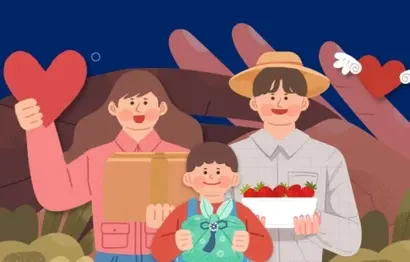
The Hometown Love Donation System is a system that allows individuals to donate to local governments other than the one where their residential address is registered. Donors can receive a full tax deduction for donations up to 100,000 won annually, and a 16.5% deduction for amounts exceeding that. Additionally, gifts equivalent to 30% of the donation amount are provided. For example, if you donate 100,000 won, you effectively receive benefits worth 130,000 won in return.
For local governments struggling with declining populations and financial difficulties, the Hometown Love Donation System is a valuable means of securing resources. According to the Ministry of the Interior and Safety, the amount of donations collected in regions outside the capital area last year was three times that of the capital area, and in particular, 89 regions facing population decline collected 1.7 times more donations than other local governments.
This system is also being used effectively to raise funds for disaster response through the "designated donation" function, which allows donors to send funds directly to areas where disasters have occurred. In fact, when a large forest fire occurred last March, eight affected local governments launched recovery donation campaigns through the "Hometown Love e-Eum" platform, and 4.3 billion won was raised for seven of them, excluding Andong, North Gyeongsang Province. If private platforms and Andong are included, the actual amount collected is estimated to be even higher.
As local governments can proactively manage the donations and there are incentives such as tax benefits and gifts for donors, the potential for activating disaster donations is considered high.
Donation Eligibility Depends on Disaster Type
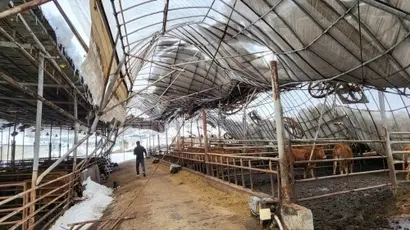
However, legal conflicts surrounding disaster donations are causing confusion on the ground. A representative case is Anseong, Gyeonggi Province. Last December, Anseong sought to use the Hometown Love Donation System to raise funds for recovery from heavy snow damage, but it was immediately sanctioned by the Korea Disaster Relief Association and the Disaster Relief Division of the Ministry of the Interior and Safety. This was because, under Article 18, Paragraph 1 of the "Disaster Relief Act," local governments are prohibited from directly soliciting voluntary contributions.
This provision was created to prevent states or local governments from politically exploiting or unfairly distributing voluntary donations. However, the Balanced Development Promotion Division of the Ministry of the Interior and Safety, which is in charge of the Act on Hometown Love Donations, held the position that Anseong's fundraising was not a problem. In the end, the "conflict between laws" was acknowledged and fundraising became possible, but concerns remain that similar cases could happen again at any time.
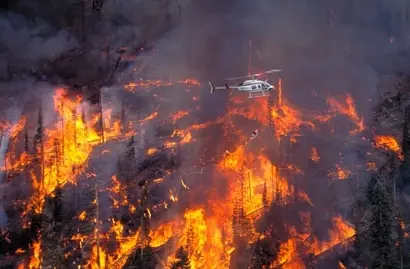
The same applies to donations for forest fire damage. If a forest fire is classified as a "natural disaster," fundraising through the Hometown Love Donation System is legally impossible, but donations became possible because the forest fire at the time was classified as a "social disaster." This situation, where the possibility of donation depends on the classification of the disaster, can act unfairly to both donors and local governments.
Are Distinctions Between Natural and Social Disasters Really Necessary?
The Disaster Relief Division of the Ministry of the Interior and Safety maintains that, according to the spirit of the Disaster Relief Act, the solicitation of donations by the state and local governments is restricted in principle. However, they stated that fundraising through the Hometown Love Donation System is possible only for social disasters.
In response, the Balanced Development Promotion Division of the Ministry of the Interior and Safety, which is in charge of the Hometown Love Donation System, is providing guidelines so that local governments can receive donations within a range that does not violate the Disaster Relief Act. While some in the National Assembly are discussing legal amendments to allow donations through the Hometown Love Donation System even in natural disaster situations, the Disaster Relief Division is opposed to this, citing concerns about undermining the purpose of the law.
On the ground, it is pointed out that such distinctions do not match reality. While disasters can be divided into natural and social disasters based on their causes, there is a great need for donations in both cases because the massive damage needs to be restored. An official from Yeongdeok-gun, North Gyeongsang Province, who conducted a designated donation campaign for forest fire damage, said, "There are parts of the current operating method that do not fit the situation on the ground."
Complex legal applications also lead to an increased workload for local government officials. An official from Andong, North Gyeongsang Province, confessed, "Before starting the designated donation for forest fire damage, I had to search for materials and study the difference between natural and social disasters one by one."
Song Chang-seok, Chairman of the Local Decentralization Institute, emphasized, "The Hometown Love Donation System should move in a direction that guarantees the autonomy of local governments," adding, "Improvements to the system are needed so that the Hometown Love Donation System can be utilized even in natural disaster situations."