

[비즈한국] The Corporate Value-up Program, designed to resolve the "Korea Discount," has marked its first anniversary. The Korea Exchange (KRX) held a first-anniversary event on May 27 and announced the results of the reshuffling of the "Korea Value-up Index" on the same day. A total of 32 stocks were removed, and it is noteworthy that Hyundai Marine & Fire Insurance001450, a company under the Pan-Hyundai group, was among the financial firms excluded. Hyundai Marine & Fire Insurance failed to meet the criteria for the Korea Value-up Index because it did not pay a year-end dividend for 2024.
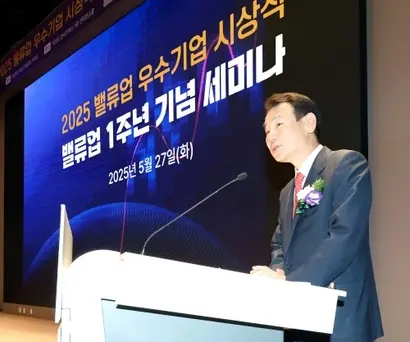
The Corporate Value-up Program was introduced to resolve the discount phenomenon in the domestic stock market by encouraging firms to voluntarily create a culture that respects shareholder value. The government provides incentives, such as tax support, to encourage participation and has constructed an index to allow investors to invest in companies committed to shareholder returns.
May 27, 2024, was the date financial authorities began Value-up disclosures. As of May 22 of last year, a total of 152 companies had participated (147 main disclosures, 5 preliminary disclosures). The Korea Value-up Index is a collection of companies that are active in shareholder returns and generate steady profits. The criteria for index inclusion are fivefold: market representativeness (market capitalization), profitability (net income), shareholder returns (dividends, share buybacks and cancellations), market valuation (Price-to-Book Ratio, PBR), and capital efficiency (Return on Equity, ROE). Calculation began on September 30, 2024, and the index components are updated once a year.
The Korea Exchange held a stock index steering committee meeting on May 26 to deliberate on the regular changes to major representative indices (KOSPI 200, KOSDAQ 150, KRX 300) and the Korea Value-up Index. For the Korea Value-up Index, 27 new stocks were added, and 32 existing stocks were removed. While there were a total of 105 stocks following a special inclusion in December 2024, the count was adjusted to 100 this time. The changes will be reflected starting June 13.
The Korea Exchange also disclosed the status of the top 10 business groups participating in Value-up disclosures. The groups that participated in the disclosures include HD Hyundai267270, LG, SK, Lotte, Samsung, Shinsegae, POSCO, Hanwha, and Hyundai Motor Company005380. GS Group did not participate. Among all companies that made disclosures, the top 10 groups account for 31% (47 companies).
The Pan-Hyundai family of groups appears to be actively participating in the Value-up program. Out of the 47 companies from the top 10 groups, 14 are affiliates (8 from HD Hyundai, 6 from Hyundai Motor Group). Hyundai Motor Company was the first among the top 10 groups to disclose its Value-up plan, earning it the reputation of a "Value-up top student" in the market. HD Hyundai Electric267260 (awarded by the Deputy Prime Minister for Economy) and Hyundai Glovis086280 (awarded by the KRX Chairman) were also included in the 10 "2025 Value-up Excellent Companies" selected by the Korea Exchange.
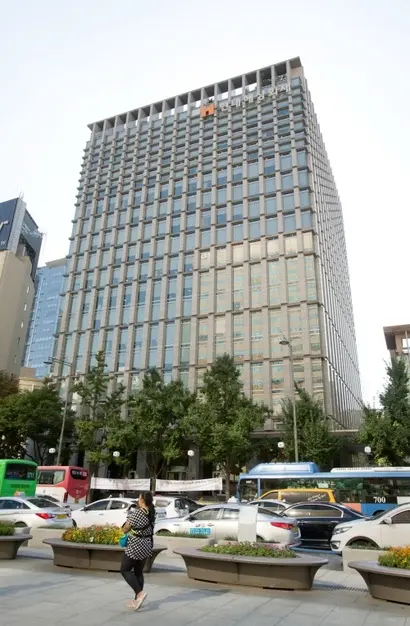
In the midst of this, it is notable that a Pan-Hyundai company was included among the stocks removed from this year's Korea Value-up Index. Hyundai Marine & Fire Insurance, ranked 149th on the KOSPI (as of May 29), is the only insurer among those removed. Hyundai Marine & Fire Insurance did not pay a 2024 year-end dividend, failing to meet the index construction criteria. A Korea Exchange official stated, "According to the Korea Value-up Index criteria, dividends must be paid for two consecutive years," adding, "If even one of the five criteria is not met, the stock can be removed."
It has been 23 years since Hyundai Marine & Fire Insurance failed to pay a dividend. Its dividend yield over the past three years was 4.1%. The backdrop for the lack of dividends lies in the changed international accounting standards. Starting in 2023, IFRS 17, a new international accounting standard that evaluates insurance liabilities at market value, and the new Korean Insurance Capital Standard (K-ICS) based on it, were introduced. The new standards reflect interest rate drops and increased loss ratios in an insurer’s financial structure and solvency. As the measurement of potential risks for insurers has been strengthened, the capital that insurers must reserve (required capital) has also increased.
In its business report, Hyundai Marine & Fire Insurance explained, "We have maintained a policy of paying out more than 20% of net income as cash dividends to shareholders based on our financial statements. However, following the introduction of the new standards, capital decreased due to falling market interest rates and strengthened financial supervision regulations, while reserves such as the reserve for cancellation refunds increased, exhausting our distributable profits." The reserve for cancellation refunds refers to funds set aside by insurance companies in preparation for contract cancellations.
As a result, the stock price has fluctuated, and shareholder dissatisfaction is growing. While the shareholder return rate was maintained between 15% and 25% thanks to dividends, it fell to 0% last year. Hyundai Marine & Fire Insurance has never conducted share buybacks or cancellations. It has not announced any separate shareholder return plans. In a previous disclosure, the company stated, "We will strengthen our capital power through profitability improvements, while communicating with financial authorities to accelerate the timing of securing distributable profits for dividends."
Regarding shareholder return measures, the company mentioned, "We plan to establish mid-term shareholder return policies after securing dividend visibility. Currently, we have no plans for share buybacks due to the lack of distributable profit limits under the Commercial Act. We will review share disposal or cancellation in consideration of future management environments."
In the securities industry, both concern and expectation coexist regarding Hyundai Marine & Fire Insurance. With the outlook that dividends will remain difficult this year and poor performance dragging down the stock, target prices have been lowered repeatedly. Hyundai Marine & Fire Insurance's first-quarter net profit was 203.2 billion KRW, a 57% decrease compared to the same period last year (477.3 billion KRW). During the same period, insurance profit also shrank by 67% (from 532.9 billion KRW to 175.9 billion KRW).
Jung Jun-seop, an analyst at NH Investment & Securities, analyzed, "The first-quarter non-consolidated net profit fell below market expectations. The visible indicators are still disappointing. Since dividend profits have decreased alongside capital, it is not easy to gauge when dividends will resume based on the current financial statements." Kim Do-ha, an analyst at Hanwha Investment & Securities, forecasted, "Profitability and stability are expected to improve as insurance profit improves through the normalization of Contractual Service Margin (CSM) and as liability growth is limited."